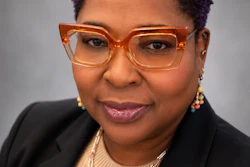
Dr. Donna Y. Ford
— Mandisa, TobyMac, & Kirk Franklin, Bleed the Same
As we step into a new year, one truth remains unavoidable: educational inequities are not accidental—and they are not acceptable. They are the predictable result of systems that continue to privilege some students while marginalizing others, particularly Black students.
Despite decades of reform, Black students remain underrepresented in gifted, advanced, and honors programs while being overrepresented in exclusionary discipline and special education. These patterns limit opportunity, produce trauma, and undermine students’ academic and psychological well-being.
Advanced Learning: Barriers by Design
Access to advanced coursework often begins with educator referrals. When referrals rely on subjective judgment, implicit bias shapes who is seen as capable or “gifted.” Federal data have told the same story for decades: Black students are consistently under-identified for gifted and advanced programs.
Three barriers appear repeatedly:
What schools must do now:
Equity in advanced learning is not about lowering standards—it is about removing barriers that never belonged there.
Discipline Should Never Block Opportunity
Discipline continues to function as a gatekeeper to opportunity. Black students are disciplined more frequently and more harshly than their peers for similar behaviors, often resulting in lost instructional time and widened achievement gaps.
These patterns are rooted in dehumanization, low expectations, and adultification bias. Creativity, cultural expression, and curiosity are too often misread as defiance.
To disrupt inequitable discipline, schools must:
Discipline should never be a barrier to opportunity. Restoration—not removal—must become the norm.
Special Education Is Not Neutral
Special education too often functions as a modern form of resegregation. Students of Color—particularly Black students—are disproportionately identified, placed in restrictive settings, and denied access to rigorous, meaningful instruction.
What is framed as “support” frequently becomes exclusion.
Immediate actions schools must take:
Trauma Is Not a Side Effect—It Is a Signal
Educational trauma is real. Repeated exposure to biased discipline, exclusion, and deficit-based narratives produces lasting harm. Trauma responses—flight, freeze, fight, or fawn—are frequently misinterpreted as misbehavior or inability, reinforcing inequitable systems.
To reduce trauma and close opportunity gaps, schools must:
A Responsibility, Not a Resolution
Closing inequities is not a New Year’s resolution. It is a responsibility.
Equity work demands courage—the willingness to confront harmful systems, abandon practices that privilege compliance over care, and act with urgency. As we enter a new year, the question is no longer what needs to change, but whether we are willing to change it.
_______
Dr. Donna Y. Ford is a Distinguished Professor of Education and Human Ecology at The Ohio State University.
Dr. Erik M. Hines is a Professor at George Mason University.
Dr. Nicholas Bell is an Assistant Professor at The University of Connecticut.
Dr. Tanya A. Middleton is an Assistant Professor at The Ohio State University.