There was a Thursday morning ritual in Washington, D.C., in the early 1990s that I suspect not enough people remember. Inside the sanctuary of Shiloh Baptist Church — that proud fortress of faith and justice on 9th and P Street in Northwest — the Reverend Jesse Louis Jackson would stand before a small group of the faithful, the hungry, and the politically alive, and he would remind us, with a cadence that felt like thunder and a tenderness that felt like grace, that we were somebody. That we mattered. That the doors of America's great institutions — its boardrooms, its ballot boxes, its college campuses — belonged to us, too.
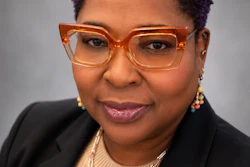
 Dr. Jamal Watson
It was there, in that sanctuary on Thursday mornings, that I first encountered the Reverend Al Sharpton — a young, controversial, larger-than-life figure who seemed to absorb everything Jackson said and radiate it back at twice the volume. Few could have predicted then that Sharpton would one day carry Jackson's mantle as the nation's most prominent civil rights voice. But watching them together, mentor and protégé, you could see the transmission happening in real time. A movement was being passed from one generation to the next, sermon by sermon, rally by rally.
Reverend Jesse Jackson died on Tuesday, February 17, 2026, surrounded by his family, at the age of 84. His body had been failing him for years — Parkinson's disease, then progressive supranuclear palsy, eventually robbing him of the instrument that made him: that extraordinary voice. In his final months, he communicated by squeezing the hands of those he loved. It was a painful and poignant diminishment for a man whose voice was, for more than half a century, among the most consequential in America.
To understand Jesse Jackson is to understand that his entire political and moral philosophy was rooted in a specific, personal encounter with the gates of learning, and what it felt like to be turned away from them. Growing up in Greenville, South Carolina, he was a child of segregation, forced to ride in the back of the bus, denied entry to the white-only public library when he returned home from college to retrieve a book he needed for his studies. That library incident, that moment of being literally locked out of knowledge, hardened something in him.
He enrolled at the University of Illinois on a football scholarship but left, feeling isolated and diminished, before finding his intellectual home at North Carolina Agricultural and Technical State University. It was there, at an HBCU that the broader establishment did not fully reckon with, that Jackson's transformation occurred. Under the mentorship of university president Dr. Samuel DeWitt Proctor, and shaped by the intellectual giants of Dr. Benjamin Mays and Dr. Howard Thurman, Jackson became something more than a football star or a student body president. He became a revolutionary organizer. He led sit-ins, wade-ins, eat-ins. He helped desegregate Greensboro. He absorbed the idea — and never let it go for the rest of his life — that the university was not merely a place of study, but an instrument of liberation.
 Reverend Al Sharpton with Dr. Jamal Watson and Reverend Jesse Louis Jackson, Sr.
Phillip, one of the most formidable journalists of her generation, does something in this book that the historical record had long failed to do: she takes Jackson's political campaigns of 1984 and 1988 seriously as intellectual and strategic achievements, not merely moral gestures. Focusing on his two presidential runs — the first of which I was riveted by as a young Black boy, not yet a teenager but already aware that something seismic was happening — Phillip makes the persuasive case that Jackson's coalition politics laid the ideological groundwork for the Democratic Party's future and, two decades later, for Barack Obama's election.
What I found most compelling in Phillip's narrative, and most relevant to this moment, is her meticulous documentation of how education was not merely a policy position for Jackson, but a personal crusade born of lived experience. His time at A&T, his unlikely rescue by an HBCU president who made what Jackson himself called "some very special arrangements" for a broke but brilliant student, informed every speech he ever gave about access to higher education. His advocacy for investments in minority higher education, his push for tuition-free quality schooling, his insistence that HBCUs were engines of social mobility and not second-tier institutions — these were not talking points. They were autobiography.
Phillip also traces with great care the Jackson-Sharpton relationship, which I had the privilege of witnessing up close. She documents how Sharpton, who has described himself as Jackson's student "since I was 12 years old," absorbed not merely Jackson's tactical approach to civil rights but his outsider's understanding of power. Both men, Phillip notes, came from circumstances that the civil rights establishment had long kept at arm's length — Jackson born out of wedlock, Sharpton from similarly marginal origins. That shared sense of exclusion, she argues, created a bond between mentor and protégé that transcended political alliance. Watching Sharpton mourn Jackson this week — "our nation lost one of its greatest moral voices," he said, "a man who carried history in his footsteps and hope in his voice" — I thought of those Thursday mornings at Shiloh Baptist Church and felt the full weight of the lineage.
Jackson's entry into presidential politics in 1984 was, among other things, a sustained argument about who deserved access to the American university. He would take the stage at rallies and indict states that ranked "number 50 out of 50 in education" in the same breath that he called for expanding Pell Grants and protecting HBCUs from federal neglect. Through Operation PUSH, which he founded in 1971 after leaving the Southern Christian Leadership Conference, Jackson created what amounted to an alternative educational infrastructure — a "political education division" that brought Black celebrities, politicians, and intellectuals together for civic panels and community programming that filled the gaps left by underfunded public schools and inaccessible colleges.
The Rainbow PUSH Coalition, the organization that grew from that work, has paid out more than $6 million in college scholarships over the years. For thousands of young people who could not have otherwise gone to college, Jesse Jackson's name on a scholarship letter was the key that opened the door.
"A part of our life's work was to tear down walls and build bridges," Jackson told the Associated Press in 2011. "Sometimes when you tear down walls, you're scarred by falling debris, but your mission is to open up holes so others behind you can run through."
Jackson understood, perhaps better than any political figure of his generation, that the college campus was not incidental to the civil rights struggle — it was central to it. The same logic that kept Black people out of lunch counters kept them out of lecture halls. The same logic that denied them the vote denied them the financial aid. Education equity was not a policy appendage to the freedom struggle. It was the freedom struggle.
Jackson died into a moment of particular darkness for the ideals he spent his life defending. The Supreme Court has gutted race-conscious admissions. Federal diversity, equity, and inclusion programs are under sustained political siege. The student debt crisis — which I have argued in my own recent book is not merely an economic emergency but a moral and civil rights imperative — has left millions of borrowers, disproportionately Black and brown, in a labyrinth of debt that the nation has yet to find the political will to resolve. The very HBCUs that Jackson championed as engines of possibility face budget pressures, enrollment uncertainty, and a political climate increasingly hostile to their foundational mission.
In this context, the loss of Jesse Jackson is not merely the loss of a biographical icon. It is the loss of a living rebuke. His very existence — the fact that an illegitimate child from segregated Greenville, South Carolina, could stand before the Democratic National Convention and nearly win a presidential nomination by arguing for universal healthcare, tuition equity, and the moral dignity of the poor — was a daily argument against the forces of contraction and exclusion that now press upon higher education from every direction.
In the title of Phillip's book lies both an elegy and a challenge. The dream was deferred, yes — deferred in 1984, and again in 1988, as Jackson built a coalition that the party was not yet ready to fully honor. But Jackson himself never read deferral as defeat. He understood it as a relay. He passed the baton to Barack Obama, who passed it to a generation of progressive politicians who still speak in the cadences Jackson taught them. The question his death puts to us, urgently and uncomfortably, is whether we are willing to run the next leg.
My first encounter with Jesse Jackson was from a distance — a television screen in our Philadelphia home in 1984, the mesmerized wonder of a young Black boy watching a man who looked like him take the stage of American presidential politics with his chin up and his voice full of fire. By 1988, I was old enough to feel not just awe but something more like recognition: here was a man arguing for the same things I already believed, and doing it in a way that made belief feel like action.
By the time I found myself at Georgetown, I had already been formed by Jesse Jackson in ways I was only beginning to understand. On at least one occasion, a classmate of mine and fellow editor on Georgetown's student newspaper The Hoya, named Ken Thomas — now a national political reporter at The Wall Street Journal — came with me to a Thursday morning rally at Shiloh. We were young men—I was Black and he was white —in our early twenties, drawn to that sanctuary for reasons we probably could not have fully articulated at the time but which had everything to do with wanting to be in the presence of something true. The theology minor I was pursuing, the questions I was asking about faith and justice and the obligation of institutions to the people they claim to serve — these were, I now recognize, deeply Jacksonian inquiries. He was asking: what does it mean for a great university to exist in the same city as the impoverished? What does it mean for access to that university to be rationed by wealth and race?
Those Thursday mornings at Shiloh were, in their own way, a graduate seminar. Jackson taught us not just what to fight for, but how to fight — with coalition, with moral clarity, with an insistence that the personal was always political and the political was always personal. When I sat across from Al Sharpton at those rallies, watching him absorb the lesson, I did not know I was watching the succession unfold. But I was.
The Jackson family asked, in their statement announcing his death, that we honor Jesse Jackson's memory "by continuing the fight for the values he lived by." For those of us who work in higher education — who labor every day to keep the gates open, to push back against debt burdens that foreclose on futures before they begin, to defend the idea that a college education is a right and not a luxury — the assignment is clear. The dream may be deferred. The dreamer has passed on.
But we are still running.
—
Dr. Jamal Watson is a Professor and Associate Dean of Graduate Studies at Trinity Washington University and a longtime higher education journalist and editor. He is the former executive editor of Diverse: Issues In Higher Education (now the EDU LEDGER) and the author of The Student Debt Crisis: America's Moral Urgency (Broadleaf Books, 2025).