Welcome to The EDU Ledger.com! We’ve moved from Diverse.
Welcome to The EDU Ledger! We’ve moved from Diverse: Issues In Higher Education.

Create a free The EDU Ledger account to continue reading. Already have an account? Enter your email to access the article.

Surviving the DEI Storm

Dr. Katherine Penn

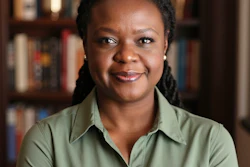
Growing up on the island of St. Thomas, I lived through several hurricanes. During Hurricane Hugo, I huddled in the bathtub as windows shattered and the roof tore from the building. In the morning, we pushed the door open against the debris and saw nothing but devastation. People often talk about the calm before a storm, but there is also an eerie calm after. No birds chirping. No breezes blowing. Just the reality that somehow you made it through as you stand in the midst of the ruin.Katie Penn Headshot l Zph Noyge X   

That is the feeling for those doing diversity, equity, and inclusion work in higher education right now. The vicious and unrelenting attacks on DEI, through political theater and coordinated disinformation, felt like a hurricane.  As with Mother Nature, when the force of the federal government bears down, you hunker down and pray you survive the onslaught. President Trump declared in his State of the Union address that he “ended DEI.” Nothing could be further from the truth.  

While the storm is far from over, recent legal developments undercutting the constitutionality of some of the challenges that fueled this frenzy suggest we may be emerging from the most intense and destructive part of the storm. We’re taking stock. We’re standing in the damage, trying to find our footing again. As higher education professionals dedicated to the institutions we serve, we must now seek not simply to survive, but to rebuild.      

Here is what we must do now: 

Identify and reinforce landmarks. When the landscape is so altered that you lose your bearings, what helps is finding familiar markers. These guideposts let you redraw the map and find a path through the rubble.   

Our academic landmarks are still here if we look for them — and if we choose to fortify them. The dialogue or restorative justice program that never stopped meeting, even if it operated under a different name. The faculty member advocating for resources while others stayed out of the spotlight. The student support office that quietly kept international students afloat when public attention turned hostile. Find those landmarks. Recognize their efforts and return their funding. And use them to chart our way back not just to where we were, but to where we said we were headed.   

Find community and formalize it.  When fences blow away, everyone becomes family. You check on your neighbors, share resources, trade information. That instinct kept many in higher education going. Professional associations, local practitioner groups, and online spaces became lifelines. My membership in NADOHE, for example, has been a consistent source of support to make sense of this moment together.   

But in the rebuild, community cannot remain informal and ad hoc. Institutions should formalize these networks through regional collaborations, shared training experiences, protected time for practitioner convenings, and cross-divisional response teams that can mobilize when political threats emerge. Informal solidarity helped us endure; formal structures will help us prevail.   

Rebuild stronger. In the Caribbean,  foundations sit of homes flattened by massive storms. Not everyone has the means or will to rebuild. Those who do build with the next storm in mind.   

Higher education must apply that same discipline. The capacity-building and policy work many institutions undertook in the aftermath of 2020 still exists, but we must move beyond cosmetic renaming and euphemism. Needed now are explicit commitments, clear governance, and budget lines that can withstand political pressure.  

Build the equivalent of storm shutters through equity-centered hiring and promotion processes embedded in HR systems. Bury the “power lines” by reducing single points of failure by training chairs, deans, and board members in equity literacy so the work does not live only with one office. Restore the “mangroves” by funding community partnerships, affinity-based mentoring, and student emergency grants that buffer vulnerable populations when the winds pick up. Reinforce the “retaining walls” through general counsel guidance, academic freedom protections, and shared governance protocols that keep policy anchored.   

Survival is not a strategy. Survival is a temporary state institutions pass through when the winds are too strong to do anything but put your head down and hold on tight. Many campuses did exactly that. Given the circumstances, restraint was prudent. But the most acute phase of this storm has passed, and higher education is now faced with a choice: remain crouched indefinitely or come out of hiding and rebuild with intention.    

Higher education leaders have an obligation to re-enter the public square with clarity and courage. That means naming diversity, equity, and inclusion as essential to academic excellence and organizational effectiveness. Identifying the harm that has been done and restoring programs and offices dismantled under political pressure. Ensuring academic freedom and equity is reinforced through policy and governance structures.    

The work ahead is not easy, and it will not look the same in every state or every institution. If we want universities that can thrive amid uncertainty, we must move beyond survival and begin building toward the future we claim to serve. The lessons we learn now will ensure that when the next storm comes, as we all know it will, we’ll do more than survive.   

Katherine Penn is vice president and chief diversity and inclusion officer at Bentley University in Waltham, Mass. 

The trusted source for all job seekers
We have an extensive variety of listings for both academic and non-academic positions at postsecondary institutions.
Read More
The trusted source for all job seekers