Dr. Adriel A. Hilton
Catlett’s work is uncompromising. Her portraits of Black women are regal and resistant. Her depictions of labor are raw and righteous. She did not make work for museum walls alone. She made work for movements. She made art to shake a society out of its apathy. Her prints and sculptures are as political as they are poetic. They are Black art with a clenched fist.
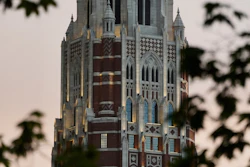
Where did she learn to make art that speaks truth? She learned it at Howard. At a time when Black women were being silenced, she was being trained to speak through form, color, wood, and steel. At Howard, she studied under visionaries like Lois Mailou Jones and James A. Porter. She was part of a lineage that saw no contradiction between beauty and justice. She was taught that art is not neutral. It is never neutral. It either supports the status quo or it challenges it. Catlett chose the latter, and she was trained to do so at an HBCU.
Too often our institutions are treated as lesser. As backup plans. As places Black students go when they cannot go somewhere else. That lie has cost this country more than it will ever admit. HBCUs are not just degree-granting entities. They are centers of resistance. They are birthplaces of movements. They have produced Supreme Court justices and senators, inventors and organizers, poets and revolutionaries. And yes, they have produced artists who could shake a nation’s conscience.
The Art Institute has done something bold by centering Catlett’s revolutionary spirit. But we must go further. We must follow that spirit back to its roots. We must acknowledge the role that Black institutions played in her formation. Howard did not just prepare Catlett to make a living. It prepared her to make a mark.
This is why support for HBCUs cannot be performative. It cannot be seasonal. It must be sustained and structural. When we invest in HBCUs, we are investing in future Catletts. Future voices that will challenge injustice not just through protest but through powerfully creative vision.
Catlett once said that her art was meant to serve her people. That service began the moment she stepped onto Howard’s campus. It did not end when she walked across the stage. It did not end when she crossed the border into Mexico. It continues today as her work sits in the halls of one of the world’s most respected museums, still speaking, still unsettling, still liberating.