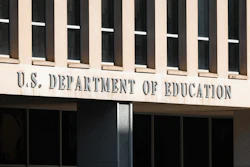
The Department of Education issued a proposal for a new accountability system Monday that it claims will “break the cycle of low return on investment for students and taxpayers.”
Under the system, institutions would have to show that graduates from their undergraduate degree programs earn more per year than a typical high school graduate. Programs that fail on this metric would lose access to federal student loans and possibly Pell Grants, the department stated. “The Trump Administration’s proposed accountability framework is grounded in common sense,” said Under Secretary of Education Nicholas Kent. “If postsecondary education programs do not leave graduates better off, taxpayers should not subsidize them.”
The department is accepting public comments on a draft of the new accountability framework through May 20.

The bigger picture:
Few topics have gotten more attention in higher education over the past decade than accountability and making sure that taxpayers, students and families can discern which programs pay off economically. When the Obama administration launched the College Scorecard in 2015, President Obama touted the online tool as one that would “help all of us see which schools do the best job of preparing America for success.”
It’s with similar objectives in mind that the Trump administration is introducing its proposed Student Tuition and Transparency System, or STATS. Under the system, “all college and university programs qualifying for federal student aid would be required to report program-level data, including tuition, fees and financial aid details such as grants and scholarships,” notes the American Association of Community Colleges. “The data would help inform the public about the value of programs.”
Under the One Big Beautiful Bill Act, or OBBBA, the new accountability framework is set to take effect on July 1, which means the first earnings premium calculations under the new rule will be released by July 1, 2027, notes the National Association of Student Financial Aid Administrators, or NASFAA. “Because programs only lose Direct Loan eligibility if they fail the metric in 2 of 3 consecutive years, the earliest a program could lose eligibility is July 1, 2028,” NASFAA states.
Although the Education Department says the new framework represents a “once-in-a-generation opportunity to rein in unsustainable student loan borrowing” it will not include a debt-to-earnings metric. That’s because, according to The Institute for College Access & Success, or TICAS, the Education Department argued that adding the metric would “have little impact on the program pass/fail rate beyond what was already captured by the earnings test, and therefore is not worth the additional administrative burden.”