Despite ongoing efforts by the Trump administration to root out campus-based initiatives that foster diversity, equity and inclusion, institutional leaders should not confuse the administration’s anti-DEI rhetoric with the law of the land.
Log in to view the full article

Despite ongoing efforts by the Trump administration to root out campus-based initiatives that foster diversity, equity and inclusion, institutional leaders should not confuse the administration’s anti-DEI rhetoric with the law of the land.
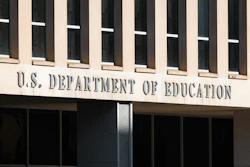
That’s the collective take of a law professor, two higher education association leaders and a college president who all spoke with The EDU Ledger following the Department of Education’s withdrawal of a letter that sought to use the Supreme Court’s 2023 ban on race-conscious affirmative action in admissions to further restrict DEI efforts on campus.
“Much of the administration’s rhetoric is bluster and universities should not take it at face value,” says Vinay Harpalani, the Don L. & Mabel F. Dickason Endowed Chair in Law at the University of New Mexico School of Law.
Harpalani was referring to the Trump administration’s controversial “Dear Colleague” letter from February 2025. The letter had urged institutions to end what it termed as their “reprehensible” and “repugnant race-based preferences” or risk federal funding. Among other things, the letter condemned awarding of scholarships based on race and racially “segregated” graduation ceremonies – known among supporters as affinity graduations. Without ruling on the contents of the letter, a federal judge found in 2025 that it circumvented certain federal rulemaking procedures and violated academic freedom and freedom of speech. The Department of Education dropped its appeal of that ruling in February.
Harpalani said although the Trump administration has “effectively rescinded” the Dear Colleague Letter, that doesn’t mean DEI initiatives on campus are no longer in the crosshairs of the administration, which has vowed to continue its campaign against DEI.
“The Administration can still direct future funding priorities in ways that discourage DEI, for example, by eliminating future federal grants and funding sources with a DEI-related focus,” Harpalani says. “So while the Trump Administration misrepresented the law in their ‘Dear Colleague’ memo and other places, they can still do much damage to DEI and their threats should be taken seriously.”
Dear Colleague Letter impact
Jon Fansmith, senior vice president for government relations at the American Council on Education, also known as ACE, a national higher education association based in Washington, D.C., said the administration’s Dear Colleague Letter – and its subsequent statements on DEI – has created a lot of confusion for institutions of higher learning.
In certain cases, Fansmith noted, the administration has gone beyond just telling institutions that they are engaging in DEI practices that run afoul of the law, but has rather launched formal investigations into some institutions for the same.
Case-in-point: In March 2025 – a month after it issued the Dear Colleague Letter – the Department of Education’s Office for Civil Rights opened investigations into 45 universities for partnering with The Ph.D. Project, alleging that the organization “purports to provide doctoral students with insights into obtaining a Ph.D. and networking opportunities, but limits eligibility based on the race of participants.”
The project subsequently took race and ethnicity out of its application criteria.
Still, in February 2026 – less than a year after those investigations began – 31 of the 45 universities had either severed ties with The Ph.D. Project or agreed to do so through resolution agreements. The Office of Civil Rights is still negotiating with the remaining 14 schools.
“All of those schools involved with The Ph.D. Project, they didn’t just get a notice, they got investigated for violating Title VI of the Civil Rights Act,” Fansmith said of the law that prohibits discrimination on the basis of race, ethnicity or national origin in federally funded programs. “That is a serious thing and, of course, schools will look at that and be very concerned.”
Fansmith said even schools with “great legal counsel” understand that defending against a federal investigation comes with a lot of risks.
“It takes lots and lots of time, it takes lots and lots of money,” Fansmith said. “You have to do incredible amounts of document review and production. You have to hire outside counsel to represent you.
“And so a lot of schools, frankly, are worried about being put in the crosshairs, about the cost of being targeted by this administration, even if they don’t think that what they’ve done is either illegal or the wrong thing to do.”
Fansmith said he can empathize with universities that acquiesced and severed ties with The Ph.D. Project rather than duke it out with the Trump administration in court.
“I don’t blame a lot of schools for being cautious in this area for thinking about what may draw attention, because this is an administration that weaponizes their powers in ways we’ve never seen before,” Fansmith said.
Harpalani expressed similar concerns, arguing that the Trump Administration “uses everything as a bargaining ploy.”
“The attempts to shutter DEI come in conjunction with admissions investigations and antisemitism investigations at Harvard and many other universities,” Harpalani says. “So what happens with DEI per se might not just be about DEI: it could involve negotiation around those other attacks on higher education by the Trump Administration.”
Dr. Charles L. Welch, president and CEO of the American Association of State Colleges and Universities, said his organization encourages its campuses to “comply with federal and state laws while also ensuring that all students can succeed.”
“Because much of the anti-DEI rhetoric is not based on facts of what is law or actually occurring at many campuses, it is important to understand clearly what the different laws require,” Welch said. “The top priority must remain ensuring that all students have the resources and support necessary to be successful in college and beyond.”
A matter of principle
Danielle R. Holley, the president of Mount Holyoke College, a private, liberal arts college for women that is located in South Hadley, Massachusetts, took a more defiant stance. A legal scholar, Holley argued that institutions must stand on the principles on which they were founded.
“At the bedrock of almost every single mission for a college and university, is academic freedom, and a pledge to only do things in our curriculum and in our academic spaces that are in the best interests of students and for the growth of knowledge,” Holley says. “You have to, as educational institutions, stand up for your own mission and values. And if you don’t, at the end of a crisis … any educational institution that folded their mission, that abandoned their values only to pay homage to one leader or to politics, all of those places will be seen as not worthy of the mission that they accepted.”
But complicating matters further is the fact the federal government is not the only entity seeking to root out DEI programs and practices they see as racially preferential. In states with Republican-controlled legislatures, such as Texas and Florida, state law and policy can come into play.
“As far as shuttered programs, one has to remember that some states are shuttering programs as a matter of state policy,” Harpalani said.
“For example, various universities, such as the University of Iowa, are shutting down their African American studies programs,” Harpalani continued. “Such programs do not need to be shut down as a matter of law, because any student can take African American studies classes and no preference is given to Black students for enrolling in them. The universities claim that low enrollment is a reason, and in the case of the University of Texas, the state is involved also.
“But some of these universities are being investigated by the Trump Administration and may also feel pressured as such,” Harpalani said. “So the anti-DEI movement is certainly being promoted heavily by the Trump Administration, but it is also happening in various states.”