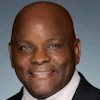
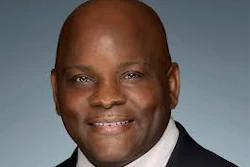
While researching the topic of “paths to the college/university presidency,” I came across an interesting article in the Huffington Post. The article was called “20 Things Every Aspiring HBCU President Should Know,” and it was written by Dr. Charlie Nelms, former chancellor at North Carolina Central University and the founder of Destination Graduation, a nonprofit organization focused on increasing retention and graduation rates at historically Black colleges and universities. Recently, I sat down with him to discuss his suggestions for aspiring college/university presidents.
Q: What do you see as the key prerequisites for presidential leadership at colleges and universities?
A: Presidential leadership in higher education is unlike executive leadership in any other organization with which I am familiar. First, the president is expected to personally attend to the interests and needs of a wide array of constituents, including students, parents, alumni, donors, trustees, faculty and elected officials. Second, there is an added layer of complexity known as faculty governance. Not only are presidents expected to do what is in the best interest of the institution, they are expected to do so with the input and concurrence of the faculty. Needless to say, there are often major differences between how the president and the faculty think the president should proceed. Yet the president is the person held accountable for the effectiveness of the institution. Seldom is that accountability shared.
There are, I believe, four key prerequisites for transformational presidential leadership. The first prerequisite is prior executive leadership experience, where the leader has had to focus on the well-being of the total university, not just a single department, division or program. The second prerequisite is the possession of academic credentials, which demonstrates the president’s appreciation for the tripartite mission of the university relative to teaching, research and service. The greater the extent to which the president can relate to the work of the faculty, the greater the likelihood they will be successful in establishing effective working relationships with them. The third prerequisite is a demonstrated passion for excellence and the ability to enlist the support of the university’s many constituents. Central to this prerequisite is the president’s ability to build consensus across faculty, administrative, student and alumni boundaries. A president’s vision is not likely to become a reality without the active engagement of all members of the university community — even those with whom he or she disagrees. The fourth prerequisite is a demonstrated ability to procure and manage fiscal resources. The present is the chief university friend-raiser and fundraiser, a task that can never be completely delegated to the chief development officer.
Q: Does presidential leadership differ at PWIs and HBCUs?
A: While there are many similarities between presidential leadership at PWIs and HBCUs, based on my experience as CEO at both types of institutions, I observed three primary differences.
First, because of funding inadequacies at most HBCUs, a disproportionate amount of presidential time at HBCUs is devoted to resource procurement or institutional challenges related to the lack of funding.
Second, at many HBCUs, there is a lack of respect and appreciation for the chain of command. Too often, students, parents, alumni and other constituents expect the president to address their issues personally rather than working with the person to whom the president has delegated the authority for resolving issues.
Third, there is often inadequate infrastructure in the areas of finances, technology, institutional research and enrollment management, for example, to ensure institutional effectiveness. Thus, HBCU presidents have to devote more time to routine institutional management than their counterparts at PWIs.
Q: What responsibility, if any, do you believe current HBCU presidents and chancellors have for ensuring the availability of a pool of well-qualified HBCU presidential candidates?
A: Without question, one of the long-term measures of effectiveness of a college or university president is how he or she mentors the next generation of university executives. In 1999, under the auspices of the American Association of State Colleges and Universities, a group of Black college presidents and chancellors, of which I was a member, established the Millennium Leadership Initiative (MLI). Since that time, over 400 participants have graduated from the program and over 65 of those graduates have been appointed presidents or chancellors. Sixteen graduates are now in their second or third CEO appointment. Of course, many MLI participants now serve in executive-level positions in finance, academic affairs, institutional advancement and student affairs, among others.
Throughout my 40-year career in the academy, I have been the beneficiary of excellent mentors. I have sought to pay my mentors back by mentoring others. Effective June 1, 2013, my 15th protégé was named a university president.
Q: In your article, “20 Things Every Aspiring HBCU President Should Know,” you advise aspiring presidents to “keep yourself some go-to-heck money.” Please expound upon this statement. How many months’ salary do you consider “sufficient?”
A: Two of the most important lessons I learned from my parents were to live within my means and to always share my financial resources with others. When I accepted my first university administrative position in 1968, my mentor and friend, the late Dr. L.A. Torrence, advised another colleague and myself to always set aside some “go to heck money.” His rationale was simple, “Be prepared for the uncertainty associated with being an administrator — whether those factors are within or beyond your control.” I have passed this same advice along to my protégés and to my son, who serves as an administrator in the international non-profit sector. The actual amount of money that should be set aside depends on where a person is in his or her career. Most financial planners advise that enough funds should be set aside to cover from 6 to 12 months of living expenses for young professionals and larger reserves for longer-serving professionals.
Q: You go on to write, “You must live a balanced life.” During your tenure as the chancellor at three different universities, what are some of the ways that you kept your life balanced?
A: Living a balanced life starts with not confusing who we are with what we do. Elements of a balanced life for me entail daily exercise, meditation, weekly worship, reading non-work related materials and mentoring young professionals, among other activities.
This concludes part I of my interview with Dr. Charlie Nelms. In Part II, he will continue to share expert advice for aspiring college/university presidents.