When it comes to how public schools systematically shortchange Black students and stymie their intellectual growth, few scholars have been as outspoken on the topic as Dr. Ivory Toldson, a professor of counseling psychology at Howard University.
Log in to view the full article
When it comes to how public schools systematically shortchange Black students and stymie their intellectual growth, few scholars have been as outspoken on the topic as Dr. Ivory Toldson, a professor of counseling psychology at Howard University.
 Dr. Ivory Toldson
In promoting “Possibility and Statistics,” a new book set to be released in June, Toldson invokes Shirley Chisholm’s mantra of being “unbought and unbossed.”
At last year’s annual gathering of the American Association of Blacks in Higher Education, where Toldson received the association’s “Distinguished Cultural Award,” he exhorted attendees to “resist” and not let governments, donors or their own personal fears prevent them from saying what needs to be said.
Nevertheless, Toldson’s role as “chief of research” of Concentric Educational Solutions — a Baltimore-based company — is being called into question given accusations Concentric Educational Solutions falsified records concerning how many home visits the company had with students it was supposed to be helping.
“I’m not authorized to speak to the media on this matter,” Toldson texted to The EDU Ledger when asked for comment about the Concentric scandal.
“Also, everything alleged happened prior to me working with them, under leadership that is no longer with the company,” Toldson continued. “So I’m not the best person to interview.”
Toldson’s claim, however, is debatable. While six former Concentric employees told The Baltimore Sun that the falsification of records took place between 2021 and 2024, a seventh who came forth was hired in January 2024 – just one month before Concentric hired Toldson as its chief of research. The seventh whistleblower continued to work for the company until being laid off in summer of 2025.
Toldson — a tenured professor at Howard — regularly represents Concentric throughout the nation.
For instance, during a talk he gave in December 2025 at Lane Community College in Eugene, Oregon, Toldson relied on AI-generated videos to tell stories he said were based on what parents and students supposedly told Concentric during home visits.
Some education scholars say Toldson risks his credibility by working for Concentric, a company that contracts with school districts throughout the nation to provide tutoring, mentoring and home visits to chronically absent and academically struggling students.
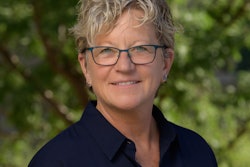
“Scholars jeopardize their reputations when they have side hustles in the industry that they research,” posits Dr. Nicholas Tampio, a political science professor at Fordham University who regularly writes on various issues in public education and matters of academic freedom. Dr. Nicholas Tampio
Tampio says Toldson’s employment with Concentric must be disclosed as a potential conflict of interest in any of his scholarly publications.
In 2025, one of Toldson’s two scholarly publications was actually a book about Concentric, according to a review of Toldson’s Google Scholar profile. Toldson co-authored the book — called “One Door at a Time: The Story of Concentric and How Putting Students at the Center of Education Works” — along with Dr. David Heiber, who founded Concentric in 2010, and Concentric’s chief of staff and customer engagement, Dr. Michael Gary.
“He has a financial incentive not to criticize the company,” Tampio said. “Professor Toldson could have been an advocate for the students in Baltimore City Public Schools; instead, he is cashing a check from a company that may be fleecing them.”
Toldson rebuffed requests for comment, instead providing a prepared statement in which Concentric says it “takes credible allegations regarding documentation and billing practices extremely seriously” and plans to conduct a “thorough review to ensure that our processes and procedures continue to meet the highest standards of integrity and follow all applicable laws and regulations.”
When a reporter indicated there was still a need to send questions to Toldson as a matter of due diligence, Toldson referred the reporter to Stephen Wakefield, whom he identified as Concentric’s chief communications officer. The EDU Ledger sent an email to Stephen Wakefield but did not get a response.
If the ex-employees’ allegations against Concentric are true, it means Concentric purposefully shortchanged the very students who are at the heart of Toldson’s work. Concentric has indicated that it repaid the Baltimore school district for services not rendered once discrepancies were brought to the company’s attention, but that was nearly a year prior to the latest allegations that surfaced in January.
Education scholars say the situation raises broad concerns that go beyond Toldson’s role at the company.
“Especially since COVID, students need extra support to succeed,” says Dr. Morgan Polikoff, a University of Southern California professor of education who specializes in K-12 education policy and accountability. Dr. Morgan PolikoffPHOTO COURTESY OF CENTER ON REINVENTING PUBLIC EDUCATION
“Tutoring is one of the main strategies that districts are turning to, because high-quality tutoring is one of the best interventions we have for getting students back on track,” Polikoff says. “But there are big logistical hurdles in doing high-quality tutoring at scale, and so districts are forced to turn to outside vendors for this kind of work.
“One hopes that private providers are conducting their work ethically, billing only for work they actually do, and delivering high-quality learning experiences to children,” Polikoff says. However, he said, the news reports about Concentric suggest that not all vendors do their work ethically.
“These allegations certainly look troubling and may well represent fraud,” Polikoff says. “Hopefully there will be audits and investigations, as indeed there should always be accountability for how public dollars are spent.
“Regardless, if Concentric was getting dollars for services they weren’t providing, that means other children may not have received services they may have needed, and they may have been left behind as a result.”
Tampio says the Concentric scandal raises questions about whether limited school resources should be used for private vendors whose work is tied to raising test scores.
“It is always worth asking how else resources could be used,” Tampio says. “These funds could have been used to hire more teachers so that students could have smaller class sizes. The money could have been used to pay for theater or music programs or for elective classes that help students earn admission to selective colleges.
“What are Baltimore students lacking that could have been provided by money overspent on tutoring services?” Tampio said.
This article originally appeared in March 5, 2026 edition of The EDU Ledger.