The first time Damon Williams encountered Dr. Norman C. Francis, he was just a high school student standing at a college fair, uncertain about his future. Francis, who had already spent decades building Xavier University of Louisiana into one of the nation's most distinctive institutions, saw something in the young man that Williams himself hadn't yet recognized.
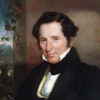
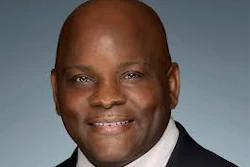
 Dr. Norman C. Francis
It was quintessentially Francis, a man who possessed an almost supernatural ability to see possibility before others could see it in themselves.
Dr. Norman C. Francis, the longest-serving university president in American history, died on February 18, 2026, entering what his family described as "eternal rest." He was 94. His passing was announced by his children, Michael, Timothy, David, Patrick, Kathleen, and Christina, who remembered him not primarily as the civil rights giant, educator, and presidential advisor that the nation knew, but simply as "Daddy."
"While many knew him as the former president of Xavier University, as a civil rights leader, and as a respected voice for justice and equality," his family wrote, "we knew him simply as Daddy — a man whose greatest joy came from family gatherings, quiet moments of prayer, and encouraging those around him to live with purpose and kindness."
Francis was born on March 20, 1931, in Lafayette, Louisiana, the son of Joseph and Mabel Francis. Growing up in the segregated South, the obstacles before him were considerable. But Francis — affectionately known throughout his life as "Doc" — met those obstacles with a quiet, resolute determination that would become his trademark.
He graduated as valedictorian of St. Paul High School before earning his undergraduate degree from Xavier University in 1952. Three years later, he made history at Loyola University in New Orleans, becoming one of the first two Black students to graduate from its formerly segregated law school. The other was Benjamin Johnson, also a Xavier alumnus.
In 1955, he married Blanche Macdonald, who would become his partner in faith and family until her death. The values that anchored their household — faith, education, and service — would animate everything Francis built in the decades that followed.
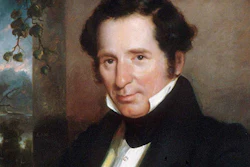
 Dr. Norman C. FrancisFile Photo
Long before he became Xavier's president, Francis was already at the front lines of America's civil rights struggle. He joined the Louis A. Martinet Legal Society in 1957, the same year he began serving as Xavier's dean of men, and litigated civil rights cases in Louisiana in the years before and after Brown v. Board of Education.
In 1961, he made a decision that reverberated through the civil rights movement. When Freedom Riders — members of the Congress of Racial Equality conducting nonviolent actions to challenge segregation on interstate buses — came under violent attack, Francis opened Xavier's doors to shelter them. In an era when most HBCU administrators avoided such open associations with activists, fearing both segregationist backlash and potential funding losses, Francis acted without hesitation. At the request of senior class president Rudy Lombard, he allowed the riders to safely retreat to St. Michael's Residence Hall.
His civil rights work extended into the economic sphere as well. In 1972, Francis co-founded Liberty Bank and Trust Company, explicitly designed to extend financial services to underserved Black communities. The institution would survive the recessions of the 1980s and 2000s and the devastation of Hurricane Katrina, eventually becoming one of the largest Black-owned banks in the United States.
Forty-Seven Years at the Helm
Francis assumed Xavier's presidency on April 4, 1968 — the very day Dr. Martin Luther King Jr. was assassinated. The weight of that coincidence was not lost on those who knew him. He would spend the next 47 years building an institution worthy of that moment and that legacy.
Under his leadership, Xavier became the nation's leading producer of Black undergraduates who go on to earn medical degrees — a distinction that stands today as perhaps his most tangible gift to American society. He led the university not with spectacle, but with what his successor, President C. Reynold Verret, called "unwavering principle, intellectual rigor, and moral clarity."
"President Emeritus Norman C. Francis dedicated his astounding effort to the flourishing of the human community, to full freedom of the oppressed, especially the descendants of the enslaved," Verret said in a statement. "The nation is better and richer for his having lived among us."
His national footprint was enormous. Francis served as a task force member for the National Commission on Excellence in Education, which produced the landmark 1983 report A Nation at Risk. He chaired the board of the Educational Testing Service, the Southern Association of Colleges and Schools Commission on Colleges, and the United Negro College Fund. He stood alongside Father Theodore Hesburgh at the historic Land O'Lakes convening of Catholic college leaders, helping shape the conversation on Catholic identity in American higher education. In 2006, President George W. Bush awarded him the Presidential Medal of Freedom, the nation's highest civilian honor.
Following Hurricane Katrina, Louisiana Governor Kathleen Blanco appointed Francis to lead the Louisiana Recovery Authority. When the city's future felt most uncertain, it was Francis — calm, principled, collaborative — who helped anchor New Orleans' recovery. Former Mayor Mitch Landrieu, whose father Moon Landrieu had been among Francis's oldest friends, recalled what that leadership meant.
"After Hurricane Katrina, when so many had given up on New Orleans, it was Norman Francis who stood in the breach," said Landrieu. "And when I was mayor, I looked to Dr. Francis often for advice and counsel, including my toughest moments."
For all his national recognition — the Presidential Medal of Freedom, the University of Notre Dame's Laetare Medal in 2019, an honorary renaming of Jefferson Davis Parkway in New Orleans as Norman C. Francis Parkway in 2020 — those who knew him personally remember something quieter and more enduring.
Former New Orleans Mayor Marc Morial, who knew Francis as a second father after his own father's passing, offered a portrait of a man whose greatness was inseparable from his humanity.
"He was a loving and devoted father, a passionate sports fan, and a man who took joy in the simple pleasure of mowing his own lawn," said Morial, who now leads the National Urban League. "He led with humility, lived with purpose, and loved with his whole heart."
For students like Williams, who went on to serve Xavier professionally before departing to work at other institutions, Francis was always present.
"Dr. Francis never made Xavierites feel invisible or unclaimed," Williams said. "He knew our names, believed in our futures, and reminded us that we belonged — to our ancestors, to our community, and to something greater than ourselves."
One of Williams's last conversations with Francis came as he was preparing to leave Xavier for Emory University, wrestling with how difficult it was to go. Francis's counsel was characteristically generous and forward-looking.
"He told me to go learn as much as I could, to grow, and then to return to lead in Xavier's mission," Williams recalled. "That was his way: forming leaders not for titles, but for service."