The Supreme Court’s decision to end affirmative action in college admissions did not affect all institutions equally. Its consequences have been most acute in colleges and schools of education at Predominately White Institutions (PWIs). As teacher preparation programs struggle with declining enrollment, budget cuts, and closures, Historically Black Colleges and Universities are experiencing growing demand. This divergence reveals how race neutral admissions policies are reshaping not only who enrolls, but where future teachers are prepared and whose communities are prioritized.
 Dr. Antonio L. Ellis
Selective universities quickly reported sharp drops in Black student enrollment. Early national data show declines of twenty to thirty percent at some institutions, as reported by The New York Times in its first-year analysis of post affirmative action admissions outcomes. These losses did not simply affect campus diversity metrics. They directly weakened education programs that rely on racially diverse cohorts committed to teaching as community based and justice-oriented work.
Education majors are not driven primarily by income potential or elite branding. Many students who pursue teaching do so because of personal experience in under resourced schools, a desire to give back, or a commitment to social change. When admissions policies narrow access for Black, Latino, and Indigenous students, colleges of education are often the first units deemed unsustainable.
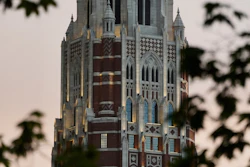
This pattern is increasingly visible at urban PWIs, including The George Washington University Graduate School of Education and Human Development. GSEHD has long positioned itself as a hub for equity driven leadership, urban education, and public service. Yet like many education schools housed within elite institutions, it operates within broader enrollment and budget pressures that intensified after the end of affirmative action. As GWU has navigated shifting enrollment patterns and rising institutional costs, education programs face heightened scrutiny precisely because they are less lucrative and more mission driven than programs in business, policy, or international affairs.
This is not unique to GWU. Across PWIs, education schools are being asked to justify their existence using market logic, even as their social value grows more urgent. Program pauses, cohort reductions, and faculty attrition are often framed as neutral budget decisions. What remains unspoken is how race neutral admissions have narrowed the pipeline of students most likely to choose teaching.
The outcomes are deeply racialized. Without affirmative action, many PWIs have reinforced admissions practices that prioritize standardized test scores, legacy status, and donor networks. Research from the Brookings Institute shows that these criteria overwhelmingly advantage white and affluent applicants. Education programs suffer as campuses become less attractive to students of color who once saw PWIs as sites for institutional change but now experience them as politically constrained or indifferent to equity.
As PWIs retrench, HBCUs are experiencing the opposite trend. In the wake of the affirmative action ruling, many Historically Black Colleges and Universities reported record breaking application numbers, particularly from high achieving Black students who previously would have enrolled at selective PWIs. Inside Higher Ed documented these enrollment surges as students actively sought environments where their racial identity and educational purpose were affirmed.
Education programs at HBCUs have been among the primary beneficiaries. Teaching has always been central to the mission of Black colleges, grounded in traditions of racial uplift, collective responsibility, and community leadership. Students frequently cite a sense of belonging, faculty representation, and a commitment to equity centered pedagogy as key reasons for enrolling.
The implications for the national teacher pipeline are significant. Public school students are more racially diverse than ever, yet the teaching force remains overwhelmingly white. Research from the Learning Policy Institute demonstrates that teachers of color improve academic outcomes for all students and reduce disciplinary disparities for Black students. If PWIs continue to shrink education programs while HBCUs shoulder increased responsibility without adequate funding, the inequities facing K to 12 schools will deepen.
HBCUs already produce nearly half of the nation’s Black teachers despite enrolling less than ten percent of Black undergraduates, according to data from the United Negro College Fund .They cannot be expected to absorb the full consequences of affirmative action’s demise while remaining chronically underfunded.
The quiet dismantling of education programs at PWIs should concern anyone committed to democracy. Colleges of education sit at the intersection of race, labor, and civic life. When they disappear, it signals not just institutional belt tightening, but a retreat from the public good.
Institutions like The George Washington University must decide whether their education schools are expendable or essential. If universities claim a commitment to equity, they must reinvest in education degree programs, redesign admissions practices that value lived experience and community engagement, and stop treating teacher preparation as a financial liability.
The end of affirmative action did not end racial inequality. It merely shifted where it shows up and who is left to address it. How universities respond will determine not only who teaches America’s children, but whose futures those teachers are prepared to protect.
___________
Dr. Antonio L. Ellis is a senior professorial lecturer at American University School of Education and director of the Summer Institute on Education Equity and Justice.