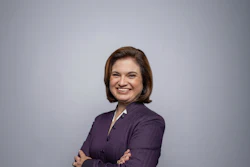
Dr. Vernon C. Lindsay
Log in to view the full article
Dr. Vernon C. Lindsay
Woodson created Negro History Week in 1926 which expanded into Black History Month. Last year, the Trump administration issued executive orders that corresponded with pauses in diversity month observances, before reinstating Black History Month and hosting a commemorative event at the White House. The decision to cancel Black History Month and restart it with Trump’s permission modifies the 100-year narrative and perpetuates propaganda.
Despite any forthcoming anti-diversity policies, we can continue the legacy of Woodson by remembering Black history, highlighting the current generation, and engaging in fruitful collaborations. We cannot limit observations and celebrations to the twenty-eight days of February. Daily, we can recognize, honor, and contribute to the history of the African diaspora.
Umoja’s Black Student Education Summit
As 2025 ended, we sat at circular tables in a convention center, with black tablecloths, to discuss challenges facing Black students. Students and professionals from Ed-Trust West, the United Negro College Fund (UNCF), Black Students of California United (BSCU), the BLU Educational Foundation (BLU), the Umoja Community Education Foundation (UCEF), the African American Male Education Network and Development (A2MEND), and the California Community College Historically Black College and University (HBCU) Transfer Initiative occupied seats. The ancestral legacy, Black History Month advocates, of Woodson attended Umoja’s Black Student Education Summit.
Delegates from Ed-Trust West led the event and shared data from their Black Minds Matter report. They highlighted challenges and stressed the importance of diversity education. Ed-Trust West indicated how low completion rates reflect structural problems in California schools.
The leadership team informed us that, “California’s education systems create opportunity gaps by 1) fostering low levels of inclusion and engagement for Black students and their families and 2) operating with inadequate resources.” These problems build barriers to colleges for Black students.
Woodson critiqued the shortcomings of the school system in his era. He wrote in chapter ten of The Mis-Education of the Negro, “History shows, then, that as a result of these unusual forces in the education of the Negro he easily learns to follow the line of least resistance rather than battle against odds for what real history has shown to be the right course.” Systemic inequalities and irrelevant curriculum are the unusual forces Woodson refers to in this quote, and the current anti-DEI movement provides evidence of their longevity.
Following Ed-Trust West’s introduction, organizational leaders outlined their missions, strategies, and impact. BSCU supports student leadership in K-12 schools. UCEF fosters African-centered programs for students in California and Washington. A2MEND guides mentorship for African American male college students. BLU promotes civic engagement and career-readiness. The HBCU Transfer Initiative helps students transfer from community colleges to HBCUs. UNCF offers scholarships and advocates for supportive policies.
The summit culminated with group discussions about educational concerns, policies, implementation, and research. Students, educators, and non-profit professionals identified problems and proposed solutions. The Ed-Trust West team reported the findings.
Here are four key actions from the summit we must engage in during and after Black History Month:
1. Teach about the African diaspora in TK-16 schools.
2. Create support systems where FAFSA applications evaluate eligibility for other social supports, such as SNAP/Section 8, etc.
3. Provide culturally responsive faith-based clinical resources to families and individuals with mental health challenges.
4. Implement Youth Participatory Action Research (YPAR) to create awareness and shape school policies.
Similar to the summit’s takeaways, Woodson’s recommendations from The Mis-Education of the Negro offer us a call to equip students with the tools to repair education and improve society. He wrote, “What this age needs is an enlightened youth not to undertake the tasks like theirs but to imbibe the spirit of these great men and answer the present call of duty with equal nobleness of soul.” If we replace Woodson’s use of “men” with “people,” teach about Black history regardless of the season, and pursue collective actions, we can silence opposition and establish platforms to share our stories for current and future
generations.
Dr. Vernon C. Lindsay is the Umoja Community Education Foundation’s Scholar in Residence.