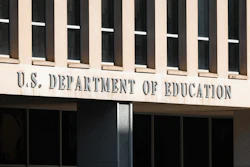
The U.S. Department of Education announced Tuesday that the Office of Special Education and Rehabilitative Services (OSERS) is moving to the Department of Health and Human Services, and the Office for Civil Rights (OCR) is moving to the Department of Justice.
Education Secretary Linda McMahon has described the broader effort as "peeling back the layers of federal bureaucracy," but for the millions of students whose schooling depends on these two offices, the language of efficiency obscures a much narrower question: who actually benefits, and who absorbs the cost?
OSERS administers the Individuals with Disabilities Education Act, the law guaranteeing students with disabilities a free and appropriate public education. OCR enforces the civil rights protections — covering race, sex, national origin, and disability — that obligate school districts and universities to treat students equitably. Both offices have already spent the past year cycling through staffing cuts and reversed cuts under this administration, before Tuesday's transfer was even announced.
It matters, specifically, where OSERS is headed. HHS is currently led by Secretary Robert F. Kennedy Jr., who has built much of his public health career on the discredited claim that vaccines cause autism. Relocating the office responsible for autistic students and millions of other children with disabilities into an agency run by a vaccine-autism conspiracy theorist is not a neutral administrative choice. It is a statement about whose expertise this administration now trusts to govern disability policy. And an administration that has vowed to eliminate the Education Department gets to claim another step toward that goal.
State and local officials who chafe at federal oversight get less of it — regardless of whether that oversight was the thing standing between a student and discrimination. Beyond that, it is difficult to identify a constituency of students this move actually serves.
Denise Forte, president and CEO of Ed Trust, named said in a statement that the latest move "risk[s] weakening implementation of the Individuals with Disabilities Education Act and decades of hard-fought civil rights progress," for "traditionally underserved students — including students with disabilities, Black and Latino students, multilingual learners, students from low-income backgrounds, and students in rural communities — [who] will bear the greatest burden created by this reckless decision."
Neither move comes with a published transition plan, which means general counsel offices and disability services directors are, for now, expected to keep complying with statutes whose enforcing agency is itself in flux.