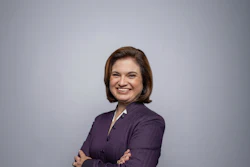
When Dr. Michael Gavin stepped away from the presidency of Delta College in Michigan at the start of this year, he described his transition less as a career move and more as an obligation.
Log in to view the full article
When Dr. Michael Gavin stepped away from the presidency of Delta College in Michigan at the start of this year, he described his transition less as a career move and more as an obligation.
“My whole career has been focused on equity and how higher ed is situated in the democratic experiment,” Gavin said at the time. “When I was asked to do the next thing, I felt compelled to do it.”
That “next thing” is the Alliance for Higher Education, a newly launched national coalition that Gavin is now leading as president and chief executive officer. With a sweeping vision and an ambitious structure still taking shape, the Alliance positions itself as something the higher education sector has long lacked: a big-tent, cross-sector coalition that defends colleges and universities not simply as economic engines, but as foundational pillars of American democracy. Dr. Michael Gavin
The timing is no accident. Colleges and universities across the country face a relentless wave of political pressure — from state-level bans on diversity, equity and inclusion programs to federal threats targeting accreditation and Title IV funding eligibility. The Trump administration’s Department of Education has moved aggressively to reshape the sector, including its recent decision to stop defending the 2025 Dear Colleague Letter that accused colleges of breaking civil rights laws by addressing race and inequality in institutional policies.
Against that backdrop, Gavin and the Alliance’s founders argue that the sector needs more than scattered institutional responses. It needs a unified, strategic, and ideologically coherent voice.
“The current systems, organizations, and associations that comprise higher education and its relationship to democracy need a coalitional force,” Gavin says. “That force should anchor current responses to threats in an opportunity-focused model, to re-establish higher education as the fifth pillar of democracy.”
Building the tent
The Alliance spent roughly three years in development before its formal January 2026 launch, during which time Gavin and his team worked behind the scenes to build relationships across both the higher education and democracy sectors. According to Gavin, the organizations now in the Alliance’s orbit collectively touch nearly all of the more than 3,000 post-secondary institutions in the United States — spanning trade schools, community colleges, four-year public institutions, and highly selective research universities.
The Alliance’s board reflects a deliberate effort to bridge worlds that do not always speak to each other. Members include Dr. Todd Wolfson, president of the American Association of University Professors; Paulette Granberry Russell, the former president of the National Association of Diversity Officers in Higher Education; Skye Perryman, president and CEO of Democracy Forward; and Dr. Khalil Gibran Muhammad, professor of African American studies and public policy at Princeton University. That breadth is intentional. Where existing higher education associations tend to organize around specific institution types, student populations, or professional roles, the Alliance positions itself as the sector’s unifying entity — a place where the concerns of a rural community college and a flagship research university can coexist under one organizational roof.
Dr. George R. Boggs, superintendent/president emeritus of Palomar College and former President and CEO of the American Association of Community Colleges, currently serves on the Alliance’s board. He sees the organization as uniquely positioned to address a structural gap in the sector’s defenses. Dr. George Boggs
“Higher education has been an important pillar of our democracy, yielding remarkable innovations in a wide variety of fields, promoting cultural awareness and social responsibility, and providing career and job preparation,” Boggs says. “However, the institutions were not designed to protect themselves from the unprecedented political interference we have experienced in the past few years.”
For Boggs, the Alliance’s independence from a membership model is precisely what gives it room to maneuver.
“Because the new Alliance for Higher Education is not dependent on memberships, it is free to speak out to promote institutional improvements, to push back against political intrusion, and to advocate for higher education and the programs and services that are important for our students.”
Patricia McGuire, president of Trinity Washington University, a minority-serving institution in the nation’s capital, is equally blunt about the stakes.
“Higher education’s ability to pursue research, teaching and learning free of political constraints imposed by an authoritarian government is in jeopardy like never before,” McGuire says. She argues that the sector’s own timidity has compounded the crisis.
“The alarm bells have been sounding for a long time, but too many collegiate leaders have chosen to pursue a course of conciliation and silence rather than strong, affirmative assertion of the values that are essential for higher education to support democracy,” she says.
Those values, McGuire adds, include the freedom of faculty and students to teach and learn as they choose, the autonomy of institutions to live up to their distinctive missions, and the promotion of access for all Americans to the highest possible levels of intellectual achievement. McGuire sees the Alliance as a long-overdue corrective. Patricia McGuire
“Thankfully, with the courageous leadership of Mike Gavin, an accomplished group of faculty and administrators have come together to form the Alliance for Higher Education to advocate for and strengthen the position of American higher education at this critical moment. The future of our democracy compels our voices and demands our actions without fear and with a bold sense of purpose for our nation and the students we serve.”
The Alliance’s near-term agenda is organized around three work streams. First, it is developing what it calls a forward-looking “blueprint” for higher education’s role in democracy and economic life, to be released in the fall of 2026 under the banner of “Democracy’s Campus 2036.” Second, it is proactively identifying risks to the sector and engaging partners to help institutions understand and respond to shifting policy landscapes. Third, it is building a fellowship-based think tank that will generate research at the intersection of higher education and democracy.
In practical terms, the Alliance plans to host regular webinars on a variety of topics including the increasingly urgent question of accreditation and potential ideological requirements for Title IV eligibility. It is also developing a series of toolkits, including one focused on accreditation, to give institutions actionable guidance.
Notably, the Alliance is not — at least for now — a membership organization. Gavin says that structure is intentional, allowing the organization to focus across the full sweep of the sector without becoming beholden to the sometimes conflicting priorities of paying institutional members.
Before leading Delta College, Gavin served as vice president of learning at Anne Arundel Community College in Maryland and as a tenured English professor at Prince George’s Community College. He is the author of The New White Nationalism in Politics and Higher Education: The Nostalgia Spectrum. He also founded Education for All, a grassroots network of community college leaders that grew from a handful of concerned presidents into a network of roughly 500 higher education administrators sharing strategies for resisting anti-DEI legislation. That organizing experience — building something concrete out of urgency and informal networks — is precisely what he says shapes the Alliance’s model.
The case for skepticism
Yet for all its promise, the Alliance is not without vulnerabilities, and several observers raise pointed questions about whether the organization can ultimately deliver on its vision.
The most immediate concern is financial. Gavin says the Alliance is currently engaged with major funders who have expressed “very strong interest,” but offers no specific commitments, dollar figures, or timelines. In an era when philanthropic support for progressive and democracy-focused causes is being carefully scrutinized — and in some cases reduced — the absence of a disclosed funding base is not a minor detail. History is littered with ambitious higher education coalitions that arrive with fanfare and depart quietly when foundation money dries up.
There is also the structural question of differentiation. The higher education advocacy space in Washington is already crowded with well-resourced organizations: the American Council on Education, the Association of American Universities, NASPA, AAUP, and dozens of others, each with decades of relationships, institutional knowledge, and political capital. Gavin argues that the Alliance is not competing with these groups but complementing them, serving as a “unifying entity” rather than a rival. But the line between complementary and redundant can be difficult to hold, and without a dues-paying membership base to anchor institutional loyalty, the Alliance may struggle to demonstrate that its voice carries distinct weight when it matters most.
Critics on the political right will predictably dismiss the Alliance as a liberal advocacy operation dressed in the language of democracy. That framing, while politically motivated, is not entirely without merit. The issues the Alliance has prioritized — DEI, academic freedom, opposition to accreditation ideological tests — map closely onto the concerns of the progressive wing of higher education. If the Alliance cannot credibly engage with the legitimate critiques of higher education coming from across the political spectrum, including concerns about affordability, administrative bloat, and the perceived ideological conformity on some campuses, it risks preaching to a choir that is already well-served by existing organizations.
There is also the question of timing and triage. With the sector facing immediate, concrete threats — funding cuts, executive orders, politically motivated investigations — some higher education leaders express private frustration with long-horizon projects like a 2036 campus democracy blueprint. When institutions are scrambling to preserve federal funding and protect faculty from investigations, a think tank fellowship model and a fall 2026 report may feel, to some, like bringing a whiteboard to a blazing brushfire.
None of this is to diminish what Gavin and his colleagues are attempting. The Alliance is tackling a real problem: higher education’s chronic failure to speak with a unified voice in moments of political crisis
“Even if there were not necessarily attacks on the sector right now,” Gavin says, “we still would have a need for an organization like this.”
He’s probably right about that. But critics warn that the harder task is proving, in the short time the sector may have, that the Alliance is the organization to fill it.
This article appeared in the March 5, 2026 edition of The EDU Ledger.