Title: Assistant Professor of Engineering Education, Virginia Tech
Log in to view the full article
Title: Assistant Professor of Engineering Education, Virginia Tech
Education: Ph.D., Higher Education Leadership — Concentration Mexican-American Studies, College of Education, University of Texas at Austin; M.S., Educational Leadership and Policy Studies, College of Education, Health and Human Sciences, University of Tennessee; B.A., English and Spanish, College of Humanities, Social Sciences and Arts, Texas A&M University – Commerce; Certificate, Intensive Spanish Language, Culture and Civilization, Universidad de Granada; Trinity Valley Community College
Age: 38
Career mentors: Dr. Jeremy McMillen, Grayson College; Dr. Margaret Sallee, University of Buffalo; Dr. Victor Saenz, University of Texas at Austin; Dr. Diane Rover, Dr. Larry Ebbers, and Dr. Robert Reason, Iowa State University; Dr. Eboni Zamani Gallagher and Dr. Lorenzo Baber, University of Illinois Urbana Champaign; Dr. Linda Sax, UCLA; and Dr. Xueli Wang, University of Wisconsin-Madison
Words of wisdom/advice for new faculty members: It’s very important to distinguish yourself from your mentors and your advisor and carve out your own scholarly identity.
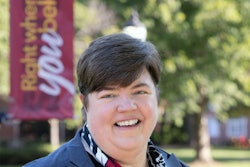
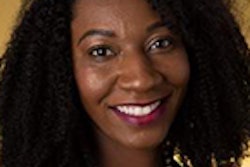
 Dr. Sarah L. Rodriguez
“It’s extraordinary that an early career scholar can have so much success; to obtain federal research funding, particularly from the NSF (National Science Foundation),” says Dr. Victor B. Saenz, associate dean in the College of Education at the University of Texas at Austin. “It speaks to the caliber of her scholarship and also the saliency of her research agenda, and how important it is to workforce outcomes nationally and growing the pipeline in STEM education, particularly for underrepresented student populations in higher education.”
Saenz notes that Rodriguez’s work is transcendent across different fields, which is clear in her move to Virginia Tech in 2022. Prior to that, she had been an associate professor in the College of Education and Human Services at East Texas A&M University, thinking about and teaching higher education administration with a wide scope, considering institutions as a whole.
“Over the years, I started doing more and more projects that focused on engineering and computing,” says Rodriguez. “I was very concerned about what was happening with students, particularly marginalized students not feeling as though they had a connection to the kind of work that they wanted to do. I wanted to see students be successful in that space.”
Despite her longtime focus on engineering and computing, Rodriguez considers the move to Virginia Tech a field shift. “When you study engineering and colleges of engineering and computing, it’s a very different context,” she explains. “It’s highly focused on grant funding. … It was a definite mind shift ... to thinking about engineering very specifically, computing very specifically. Right now, with the emergence of AI and the changes in the job markets, engineering and computing conversations are essential to what’s going to happen in the next 10 years.”
Rodriguez has several current research projects. One is a Scholarships for STEM project, which is a collaboration between a regional comprehensive university and two community colleges in Dallas. It is focused on understanding computing identity for low income students who are given a scholarship. Another project relates to being named a Microsoft Artificial Intelligence Economy Institute fellow, for which she is partnering with the National Applied AI Consortium to understand what community colleges are doing in terms of capacity building around AI workforce development.
She is also wrapping up work on an NSF/HSI grant focused on AI workforce development and creating stackable certificates. The last project is about rural Latine students in engineering and computing for which she has been interviewing students all over the nation.
Rodriguez also teaches graduate students that have STEM degrees and are seeking to enter or are already in engineering or computer science education.
Her awards and honors are numerous, but hearing from people who have utilized her research and had positive results provides the best satisfaction. “I really care about students, their experiences and how we can do things at a systems level to serve them,” Rodriguez says.