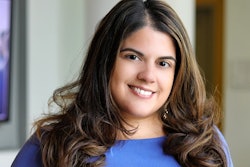
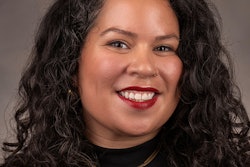
Title: Associate Professor, Secondary and Middle Grades Education, Kennesaw State University.
Log in to view the full article
Title: Associate Professor, Secondary and Middle Grades Education, Kennesaw State University.
Education: Ph.D., Curriculum and Instruction, Texas State University; M.Ed. Mathematics, Texas State University; and B.S., Mathematics, Texas Southern University
Age: 38
Career mentors: Dr. Taylor W. Acee, Texas State University; Dr. Belinda P. Edwards, Kennesaw State University; Dr. Jillian Ford, Kennesaw State University; Dr. Nichole Guillory, Kennesaw State University; Dr. Jennifer Suh, George Mason University; Dr. Corey Wadlington; Dr. Cindy Jong, University of Kentucky
Words of wisdom/advice for new faculty members: Toni Morrison teaches us that joy is something we must claim for ourselves. In academia — where urgency, scarcity, and comparison often dominate — choose to cultivate joy as a grounding practice. Regardless of your field, your presence already expands what is possible for others. Trust that you belong, not because the institution grants you permission, but because you carry a wisdom and purpose that no one else can replicate. Let joy be the theorem you revisit, the proof you refine, the constant that steadies you amid shifting expectations. You are not here by accident. Lean into the joy that brought you to your field, and let it illuminate your teaching and research path ahead. Last, your joy is not just a reflection of what you do; it is what makes the work possible.
When Dr. Darolyn Flaggs was in her master’s program in math, she often found herself as the only African American woman in the room.
“The isolation I felt, coupled with the lack of support, was overwhelming at times,” Flaggs says. “It often felt like I didn’t belong in that space, like I was constantly fighting to prove I had a right to be there.”
That sense of alienation led her to reflect on the challenges th Dr. Darolyn Flaggs
“I found that African American students often perceive the campus climate as less supportive compared to their peers,” Flaggs says. “But what really stood out to me was how strongly a sense of belonging influenced students’ decisions to stay in school.
“For African American students, especially those who already felt disconnected, this sense of belonging was a major factor in whether they persisted or not,” Flaggs says. “This study deepened my belief that, for students to succeed, institutions need to actively foster a sense of belonging, not just improve academic support.”
Those findings also helped set Flaggs on a lifelong mission of building a sense of belonging for future math teachers and the students they will teach. She does this as an associate professor of education at Kennesaw State University.
Evidence of Flaggs’ dedication to this work can be seen by perusing the schedules of the various conventions at which she’s presented, such as the 2023 annual conference of the Association of Mathematics Teacher Educators, or AMTE, held in New Orleans, Louisiana that year.
“We share prospective teachers’ experiences with ‘not belonging,’ including feeling ‘invisible’ and ‘not smart’ to bring awareness to systemic forms of inequalities that underrepresented students experience, along with possible strategies to address them,” Flaggs and her colleagues at Kennesaw State University stated in the program booklet for a session titled “Battles of Belonging: Voices of Underserved Students.”
Flaggs has also helped redesign the way teachers gain valuable experience in the field.
Corey M. Wadlington, a mathematics professor at West Kentucky Community & Technical College in Paducah, Kentucky, says Flaggs does this in her capacity as field experience coordinator and program leader for the Mathematics Teacher Education Partnership, which is a network of math teacher preparation programs across the country that is seeking to redesign how math teachers are prepared. In this role, Flaggs has led efforts to redesign field experience into “paired-placement” — a model in which teacher candidates are placed with a mentor teacher, in this case at a local high school — as a way to better support teacher candidates.
Wadlington lauds Flaggs for her leadership in building a vibrant learning community for educators who prepare future math teachers.
“For example, she emphasizes the importance of recognizing students’ cultural identities and experiences as valuable assets to the learning process,” Wadlington explains. “In doing so, she cultivates classrooms where every student feels seen, heard, and capable of contributing — a foundational practice that nurtures both academic success and a sense of belonging.”
Wadlington also credits Flaggs for reshaping the way educators think about teacher preparation.
“Her creative approach emphasizes that teachers who develop reflective, equity-driven practices are better equipped to support students in overcoming academic challenges in mathematics,” Wadlington says.
In her role as faculty advisor for Black Teachers Matter, Flaggs co-leads a community that provides mentorship, support, and advocacy for aspiring Black educators.
Wadlington says Flaggs’ approach is about more than creating opportunities for belonging.
“It’s about reshaping the systems around us to make those opportunities meaningful, sustainable, and accessible to everyone,” Wadlington says.