Title: Assistant professor of education and Dr. Jo Watts Williams School of Education Emerging Professor, Elon University
Log in to view the full article
Title: Assistant professor of education and Dr. Jo Watts Williams School of Education Emerging Professor, Elon University
Education: Ph.D. in Educational Leadership and Policy Analysis, Emphasis: Higher Education, University of Missouri; M.A. in Women’s and Gender Studies, Rutgers University; B.A. in Women’s and Gender Studies, Early Childhood Education and Psychology, William Paterson University
Age: 38
Career mentors: Dr. Jeni Hart, University of Missouri; Dr. Amalia Daché, University of Pennsylvania; Maribel Rodriguez, Quest Diagnostics; Dr. Venus Hewing, (retired) Auburn University; Dr. Arlene Holpp Scala, (retired) William Paterson University
Words of wisdom/advice for new faculty members: You deserve to be right where you are. Don’t allow others to take that feeling from you.
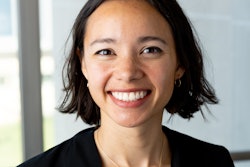
 Dr. Stephanie Hernandez Rivera
She is the inaugural Dr. Jo Watts Williams (1929-2021) School of Education Emerging Professor at Elon University. When she met Watts Williams’ granddaughter, she felt the pride the granddaughter took in her grandmother’s legacy.
“I am hoping to be part of a larger legacy of women who have charted a path,” says Hernandez Rivera, whose current research focuses on the experiences of campus identity center practitioners of color. “What we’re doing has significance within academia but also outside of it. I want to use whatever knowledge I have to inform practice and to inform the material realities of people’s lives within this work.”
An assistant professor of education, Hernandez Rivera teaches both graduate and undergraduate students. Among the graduate courses she teaches are Diversity and Social Justice and Comprehensive Internationalization in Diverse Contexts. The undergraduate course is Sex and Gender. It is her mission to challenge oppression in educational systems and the world.
“The thing that has always brought me back to what I’m researching, what I’m teaching, the way that I teach and what I teach is critical hope,” says Hernandez Rivera. Each semester, she shares a quote from bell hooks with her students: “Without love, our efforts to liberate ourselves and our world community from oppression and exploitation are doomed.”
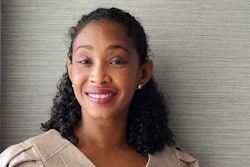
Dr. Jeni Hart, professor of higher education and dean of the Graduate School at the University of Missouri, says Hernandez Rivera cares deeply not only about the content she is delivering but about the students. “She wants to make sure that every student feels included and has an opportunity to learn in the ways that they learn best,” says Hart.
Her research focuses on women of color, particularly their impact on campus social movements, and she has consistently provided support for women of color students. Part of how she engages in the work is collaborating with other scholars who have similar aims and goals in supporting women of color at different levels in higher education. A book she co-edited, Shaking the Table: Survival and Healing Amongst Identity Center Practitioners, was recently released.
Hart says Hernandez Rivera has thought deeply about the research methods she is using and is trying to articulate a new methodological approach to studying minoritized students. “She’s thought a lot about intersectionality and been committed to understanding the experiences of minoritized students in ways that they are really contributing to the process as much as she is as a researcher,” says Hart.
“[The work] nourishes me and allows me to continue to push and challenge in moving that needle forward,” Hernandez Rivera says. “I want Puerto Rican women, Latinas, women of color to see themselves, their philosophies, their ideas and perspectives reflected in scholarship in ways that I didn’t always have.
“It’s also been part of my intentional and authentic practice towards teaching,” she continues. “Engaging in a curriculum where women of color see themselves reflected as knowledge holders, as change agents. Taking up pedagogical practices that allow me to do that. … I want to extend opportunities and create those access points in ways that others have done for me, but also in ways I haven’t always had access to.”