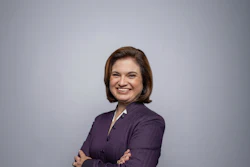
The year 2025 brought profound losses to the higher education community, as several pioneering scholars whose work advanced diversity, equity, and academic excellence passed away. From the founding director of Harvard’s groundbreaking Hip Hop Archive to a Pulitzer Prize-winning Native American author-professor, from a distinguished political scientist advancing women’s rights to scholars breaking barriers in their fields, these educators created pathways for future generations while producing scholarship that transformed their disciplines. Their legacies endure through the countless lives they touched, the institutions they transformed, and the knowledge they produced.
Log in to view the full article
The year 2025 brought profound losses to the higher education community, as several pioneering scholars whose work advanced diversity, equity, and academic excellence passed away. From the founding director of Harvard’s groundbreaking Hip Hop Archive to a Pulitzer Prize-winning Native American author-professor, from a distinguished political scientist advancing women’s rights to scholars breaking barriers in their fields, these educators created pathways for future generations while producing scholarship that transformed their disciplines. Their legacies endure through the countless lives they touched, the institutions they transformed, and the knowledge they produced.
Dr. Frank Brown (1935-2025):
UNC’s First Black Dean
 PHOTOS COURTESY OF NEWS SERVICES OF THE UNIVERSITY OF NORTH CAROLINA AT CHAPEL HILL COLLECTION
Dr. Marcyliena H. Morgan (1950-2025):
Harvard’s Scholar Queen of Hip-Hop HARVARD UNIVERSITY
Harvard lost a visionary when Dr. Marcyliena H. Morgan died on September 28, 2025, at age 75. As a linguistic anthropologist and founding director of Harvard’s Hip Hop Archive & Research Institute, Morgan legitimized hip-hop as a field of serious academic study. In 1996, she pitched the radical idea of creating the world’s first hip-hop archive to Dr. Henry Louis Gates Jr., who came to see her vision as “genius.” Morgan’s Classic Crates project placed curated hip-hop albums in Harvard’s music library alongside Mozart and Beethoven, complete with scholarly liner notes. Her book “The Real Hiphop” reflected her deep engagement with hip-hop communities. She invited women, queer, and nontraditional scholars to academic panels long before it became standard practice. “Marcy, in the pit of her soul, was a community-builder,” said her husband, Dr. Lawrence D. Bobo. Shortly before her death, Harvard renamed the archive the Marcyliena H. Morgan Hip Hop Archive & Research Institute.
 JACQUES BRINON/AP IMAGES
N. Scott Momaday (1934-2025): Voice of Native American Renaissance
N. Scott Momaday, who died on August 16, 2025, at age 89, became the first Native American to win the Pulitzer Prize for Fiction in 1969 for “House Made of Dawn,” sparking what scholars call the “Native American Renaissance” in literature. A Kiowa author and poet who earned his Ph.D. from Stanford, Momaday taught for 35 years at institutions including UC Berkeley and the University of Arizona, where he became regents professor. His published works — including “The Way to Rainy Mountain” and “The Names: A Memoir” — celebrated Indigenous oral tradition and explored themes of landscape, memory, and the enduring human spirit. President George W. Bush presented him with the National Medal of Arts in 2007 for his work preserving Native American art and oral tradition.
Dr. Ricardo Ortiz (1962-2025): Georgetown’s Community Builder LATINX STUDIES ASSOCIATION
Georgetown University mourned Dr. Ricardo Ortiz, who died on August 18, 2025, at age 63. A celebrated scholar of Latinx literature, queer theory, and gender studies, the Cuban-born Ortiz spent more than 25 years at Georgetown, serving as English department chair and director of the Master of Arts in Engaged & Public Humanities program. As a first-generation college student, he understood the challenges faced by underrepresented students and dedicated himself to mentoring them. He authored two books on Latinx studies and was known for his infectious laugh and generous spirit. “For Ricardo, every student in every class was a unique encounter and a unique opportunity to teach,” said colleague Elizabeth Velez. Dr. Joshua Javier Guzmán, now a UCLA professor, said simply: “I am an academic because of Ortiz.” UNIVERSITY OF NEW MEXICO
The University of New Mexico lost Dr. Mala Htun on January 24, 2025, at age 55, after living with cancer. Born in Hawaii and educated at Stanford and Harvard, Htun was a distinguished professor of political science and one of the world’s top scholars of gender and representation. She authored three award-winning books, including “The Logics of Gender Justice: State Action on Women’s Rights Around the World,” which won the 2019 International Studies Association’s Best Book Award. Elected to the American Academy of Arts andSciences in 2024, she served as vice president of the American Political Science Association and chaired the Committee on the Status of Women in the Profession. At UNM’s School of Engineering, she spearheaded the first-ever Climate and Inclusion Survey and coached departments on inclusive hiring practices. “Even with all her success, she remained 100% committed to her students,” said her husband, Doug Turner. CORNELL UNIVERSITY
Dr. Margaret Rossiter, the Marie Underhill Noll Emerita Professor at Cornell University, died on August 3, 2025, at age 81. As a graduate student at Yale in 1969, Rossiter was told there had been no women involved in scientific research — a claim she set out to disprove. Her groundbreaking books chronicled the achievements of women in science while highlighting how they were discouraged from the field and left out of history books. A MacArthur Fellow who received the so-called “genius grant” in 1989, Rossiter was “a warrior for womankind and a more complete history of science,” said colleague Ronald Kline. Her encyclopedic knowledge and dedication to uncovering forgotten women scientists transformed the field of science history.
 INDIANA DAILY STUDENT; INDIANA UNIVERSITY
Indiana University lost Dr. Mary Waldron on July 22, 2025, at age 52, following a three-and-a-half-year battle with metastatic lung cancer. A faculty member in the Department of Counseling and Educational Psychology, Waldron earned her Ph.D. in clinical psychology from the University of Virginia and conducted research on genetics, development, and mental health at Washington University in St. Louis before joining IU as a tenured associate professor. Colleagues and students remember her for dedication to both rigorous scholarship and family devotion. Dr. Michael Burawoy (1947-2025): Sociologist for the Powerless
Dr. Michael Burawoy (1947-2025): Sociologist for the Powerless
UC Berkeley professor emeritus Dr. Michael Burawoy, who shaped global sociology over nearly five decades, was killed in a hit-and-run incident in Oakland on February 6, 2025, at age 77. Dr. Raka Ray, Berkeley’s Dean of Social Sciences who was personally mentored by Burawoy, said: “I learned what it meant to teach, to mentor, to do research seriously, and above all, what devotion to one’s calling looks like.” Burawoy’s commitment to advocating for disadvantaged and powerless communities was legendary. “I am grateful that in my present position as dean, I will always have his voice in my ear, reminding me that it is my duty to think above all about the needs of those most disadvantaged,” Ray added.
Lasting Impact and Continuing Legacy
The eight scholars noted above represent the full diversity of American higher education — Black, Latinx, Asian American, Native American, and women pioneers who refused to accept the limitations placed upon them. Together, they published hundreds of books and articles, mentored thousands of students, transformed institutional cultures, and fundamentally changed how we understand knowledge production in the academy.
Their work addressed fundamental challenges: how to support first-generation students, how to build curriculum that reflects diverse experiences, how to mentor junior faculty from underrepresented groups, how to conduct research that centers marginalized communities, and how to legitimize forms of cultural expression and knowledge that the academy had long dismissed or ignored.
Dr. Brown’s 300-plus publications continue to inform educational leadership training. Dr. Morgan’s vision made hip-hop a legitimate field of academic study. Dr. Momaday’s Pulitzer Prize opened doors for Native American writers and scholars. Dr. Ortiz’s scholarship on Latinx literature and queer studies remains essential reading. Dr. Htun’s research on gender justice provides frameworks for understanding women’s rights globally. Dr. Rossiter’s revelations about women in science rewrote history books. Dr. Waldron’s genetics research advances our understanding of mental health. Dr. Burawoy’s sociological frameworks shape how researchers worldwide approach their work.
But their most important legacy is found in the people they mentored and the communities they built. These scholars understood that true academic excellence requires not just producing groundbreaking research but also creating pathways for others to follow. They opened doors that had been closed, challenged systems that excluded, and demonstrated through their own lives what it means to be scholar-activists committed to justice and equity.
Morgan created holidays and lavish dinners to build community. Brown sent out opportunities to junior scholars and pushed them to think beyond barriers. Momaday taught for 35 years, ensuring that Indigenous oral tradition would survive and thrive. Ortiz listened to every student as “a unique encounter and a unique opportunity to teach.” Htun spearheaded climate surveys and coached departments on inclusive hiring. Rossiter spent decades uncovering the forgotten women who shaped science. These weren’t incidental to their scholarly work — they were central to their understanding of what it means to be an educator.
As higher education faces increasing political attacks on diversity initiatives, the examples set by these pioneering educators become even more crucial. They showed that excellence and equity are not competing values but complementary ones — that diverse faculty enrich scholarship, that inclusive mentorship benefits all students, and that academic communities are strongest when they reflect the full breadth of human experience. The deaths of these scholars remind us of the ongoing need to support and nurture diverse faculty, to create systems that allow all scholars to thrive, and to recognize that representation in academia is not just about numbers but about ensuring that multiple perspectives shape the future of knowledge production. It reminds us, too, of how much we lose when these voices are silenced, and how much work remains to ensure their successors have the support and recognition they deserve.
The best tribute to their memory is to continue building the inclusive, equitable academic communities they fought to create — communities where every student can find mentors who understand their experiences, where every scholar can contribute their unique perspectives, where hip-hop sits beside Mozart in the library, where Native American literature is taught alongside Hemingway, where Latinx and queer scholars are celebrated rather than marginalized, where women’s contributions to science are documented and honored, where gender justice is pursued with rigor and passion, and where excellence is defined not by conformity but by the rich diversity of voices contributing to our understanding of the world.
From Dr. Morgan’s laughter filling Harvard’s halls to Dr. Momaday’s careful preservation of oral tradition, from Dr. Brown’s relentless advocacy to Dr. Ortiz’s fierce love for his students, from Dr. Htun’s commitment to gender equality to Dr. Rossiter’s recovery of lost histories, these scholars embodied what higher education can be at its best: a place where knowledge serves justice, where teaching transforms lives, and where diverse voices come together to create something greater than any individual could achieve alone.