Four and a half years after its inception, the stakes for collegiate name, image and likeness (NIL) are higher than ever.
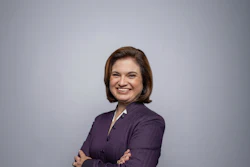
 Dr. Tim Derdenger
“Within four years we’ve gone from the Wild West to a very organized market,” says Dr. Thilo Kunkel, professor in the School of Sport, Tourism and Hospitality at Temple University, who began researching issues around NIL before its implementation. “We’ve gone from what I call commercial NIL to collective NIL to now institutional NIL. We’re now in that third phase where we see those direct compensations from the institutions. Most of that institutional NIL goes to athletes in revenue generating sports. That’s means football and men’s basketball.”
Impact on recruitment
 Columbia University women’s player Blau Tor from last year’s Hoop Culture.
Football athletes are rated on a five-star scale, with a five-star recruit being the most highly sought-after. Researchers from Carnegie Mellon University’s Tepper School of Business and the Jindal School of Management at the University of Texas at Dallas found that NIL is making college football fairer and more exciting, which disputes the “rich get richer narrative” that has prevailed since the inception of NIL. Dr. Tim Derdenger and Dr. Ivan Li assert that talent is now spread out more evenly because with NIL, lower profile schools have a better chance of attracting talent if the institution offers greater financial opportunities.
Derdenger, associate professor of marketing and strategy at the Tepper School of Business, says they examined high school recruits, not transfers. Data sources included the NCAA Sports Sponsorship and Participation Rates database, 247 Sports and other recruiting services and the College Football Data API. The data runs from 2018 to 2024.
"Our research has shown that name, image and likeness has led to an increase in competition between teams within games evident by a decrease in betting spreads, a decrease in actual realized point spreads between competing teams as well as an increase in likelihood of the underdog team upsetting the higher ranked team,” says Derdenger.
 Kassandra RamseyCOURTESY OF TEMPLE ATHLETICS
Dr. Lisa Delpy Neirotti, associate professor of sport management and director of the MS in Sport Management Program at the George Washington University School of Business, says this does not reflect what she is seeing. A smaller school may have enough resources to get one or two outstanding players, but not enough to significantly impact a team’s success, especially since football rosters are quite large.
“Smaller schools don’t have the TV revenue,” says Delpy Neirotti. “On top of the TV revenue, smaller schools don’t have 100,000-seat stadiums with all the ticket revenue and the sponsors. Other than wealthy alums, which are one-offs in these smaller schools, where are they getting the money?
“[Student-athletes] are jumping ship,” she adds. “They may sign for a year, but if somebody offers them a higher amount, then they’re moving. … With transfers not being restricted now, anybody can move any time they want.”
The second highest revenue generating sport, men’s basketball with 365 Division I schools, also reflects Delpy Neirotti’s perspective. Gloria Nevarez, commissioner of the Mountain West Conference (MW, non-autonomous conference that plays FBS), notes that there was a considerable exodus from conference schools following the 2024-25 men’s basketball season. MW names three all-conference teams with five players each and one all-defensive team with five players. Of the 20 spots, there are only three returners for the 2025-26 season.
"We find talent and develop it, but certainly the rate at which it is being recruited away has kicked up of late,” says Nevarez.
In football, Nevarez anticipates movement will stay high and talent will be recruited away, but MW institutions will continue to adapt and create culture that leads to greater consistency. Kunkel says for student-athletes aiming to play professionally, playing time is a factor in decision making, but for other recruits they are looking at not only what institutions can pay, but also what they can provide in terms of a support system that leads to more NIL opportunities.
NIL in 2025-26
As institutions, conferences, companies, alumni and student-athletes navigate NIL this academic year, there is uncertainty. Nevarez says, “I still feel there’s a year where we’re waiting for things to settle out and find a rhythm because whenever you roll out something this new, there are always a ton of questions.”
Institutions are paying careful attention to certifying that deals are legitimate. NIL GO, a platform created by the recently developed College Sports Commission (CSC, collegesportscommission.org), offers student-athletes a way to report third-party NIL deals to be evaluated for rules compliance. The platform also provides the option for student-athletes to clear third-party NIL deals prior to accepting them to ensure acceptance won’t affect eligibility. Deals must have a valid business purpose and meet other criteria.
One big difference this academic year is the shift that NCAA scholarship limits have been removed for schools participating in the House settlement. This settlement, which allows direct compensation of collegiate athletes for their NIL, is a result of an antitrust lawsuit, House v NCAA. Schools can now offer full or partial scholarships to every student-athlete on a team roster, but there are now roster limits. The changes are detailed on the CSC website.
“I’m wondering how roster caps begin to help perhaps settle the market,” says Nevarez, referring to schools that warehouse talent, which means packing a roster with talented players, some of who don’t play. “I don’t think it will reduce transfers, but there is a school of thought that says with roster caps … student-athletes are more likely to move someplace that they can play and actually be on active rosters. That would be good for the rest of the ecosystem, like all those schools that don’t have football.”
Kassandra Ramsey is a sports and entertainment attorney that deals with NIL issues in her practice, and she is also president of The Drake Group, an independent organization that educates higher education decision makers about critical issues in intercollegiate athletics with the goal that college athletes receive their educations in safe and productive environments.
"When I talk to athletes who are in that school choosing phase or considering transfer, I tell them, ‘Pick the school because of the program or major, a reason you want to be at the school, not because of NIL,’” says Ramsey. “At the same time, most athletes are not going to play professional sports, so if you do have an opportunity to go to a school and they’re going to pay you $100,000 for NIL vs a school that has $20,000, that has to be considered. Also, there could be educational opportunities within NIL.”
Derdenger and Li also collected information from NFL Draft data, with data from 2014 to 2024. Derdenger says five-star athletes have a 68% chance of getting drafted. “Empirically we see there’s no benefit going to a high ranked program and being developed on a player’s NFL Draft likelihood for these five-star athletes,” he says. Four-star recruits get drafted at about 27%, so they are willing to take less money and go to a program that will develop them and increase their odds of being drafted. Three-star recruits get drafted by the NFL at only 8%, so they are drawn to the largest NIL compensation.
There are some student-athletes who prioritize their academic and athletic experiences over NIL money, notes Kunkel, citing the Ivy League, which does not even have athletic scholarships. Members of the Columbia University women’s basketball team have a high retention rate with virtually no one transferring out before graduation. Coach Megan Griffith makes it clear when recruiting that she wants relationships that are transformational, not transactional, but she and her staff embrace the players having NIL opportunities. Last year, there was a collaboration with the clothing line Hoop Culture. This year, some team members have individual deals.
“You would hope that college basketball continues to evolve as long as it’s something that is not compromising our integrity,” says Griffith. “I’m a big believer in knowing what you care about and what you want to endorse or what you want to give your name, image and likeness to. Let’s educate as much as possible and help figure out what makes sense.”
Revenue sharing
Another huge change this year is revenue sharing, which is tied to NIL. Beginning July 1, 2025, participating schools can distribute up to 22% of average revenue from media rights, ticket sales and sponsorship, with a 2025-26 cap of $20.5 million per school. This compensation is separate from existing NIL deals and can be used for various athlete benefits. All member institutions in the ACC, Big Ten, Big 12, Pac-12 and SEC are participating in the new revenue sharing model overseen by the CSC. Division I schools from other conferences can opt in. A list of participating schools for this academic year is available on the CSC website (https://www.collegesportscommission.org/participating-schools).
“[Schools] have been giving athletes revenue sharing/NIL licensing agreements for athletes to review, and it’s a direct contract with the school where the school agrees to pay the athlete certain sums of money based on a payment schedule,” says Ramsey. “Really, it’s an NIL deal or revenue deal directly with the school.”
With the majority of revenue sharing money going to football and men’s basketball, it is going to be more difficult than ever to retain gender equity, says Nevarez. Since the inception of NIL there has been gender inequity for women’s sports in terms of opportunities, promotion and marketing. Revenue sharing will allocate only a small amount of money to women’s sports and to non-revenue generating men’s sports such as swimming, diving, fencing and wrestling.
“It’s supposed to be for all the sports at all the schools that opt in,” Ramsey says.
“There will be money because there has to be some money, but that money is very much a fraction of what the revenue generating sports are receiving,” Kunkel says. “People are going to pay for people that help make them money. That will come at the expense of non-revenue-generating sports. That $20.5 million has to be coming from somewhere.”
Legislation is pending before Congress related to NIL, notably the Student Compensation and Opportunity Through Rights and Endorsements (SCORE) Act, which is designed to establish a national framework for collegiate athlete compensation. The SCORE Act does not take Title IX or gender equity into consideration and has met with considerable pushback. Twenty-one members of the Democratic Women’s Caucus sent a letter to members of Congress connected to the SCORE Act detailing why legislation related to NIL must include adequate protections for female student-athletes. They noted that any NIL revenue sharing framework established under the SCORE Act should ensure that women athletes receive an equitable share of any compensation.
With the government shutdown, the SCORE Act is currently on hold, says Ramsey. She also mentions “Saving College Sports,” an executive order signed by President Donald Trump in July, which does reference preserving women’s and non-revenue-generating sports. How this will be done remains up for discussion. “Until athletes have a bigger or a stronger seat at the table, voice in the room, then we’re going to continue to see challenges,” Ramsey says.