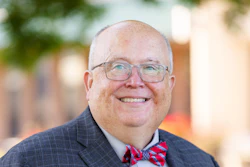
Chancellor of the Los Angeles Community College District (LACCD) Dr. Alberto J. Román sees himself in the students he serves — immigrants, first-generation college students and student parents — and works to bring them success.
LACCD is one of the nation’s most diverse and expansive community college systems. Comprised of nine colleges across Los Angeles County, the LACCD serves more than 194,000 students each year. Román, who was previously president of East Los Angeles College (ELAC), became the district’s interim chancellor in November 2024 and was formally approved as chancellor in May 2025.
Log in to view the full article
Chancellor of the Los Angeles Community College District (LACCD) Dr. Alberto J. Román sees himself in the students he serves — immigrants, first-generation college students and student parents — and works to bring them success.
LACCD is one of the nation’s most diverse and expansive community college systems. Comprised of nine colleges across Los Angeles County, the LACCD serves more than 194,000 students each year. Román, who was previously president of East Los Angeles College (ELAC), became the district’s interim chancellor in November 2024 and was formally approved as chancellor in May 2025.
“At the end of the day, for a district that serves approximately 10% of California’s community college students (there are 116 community college in the state), we know that our responsibility is significant, but I see it as an opportunity,” says Román. “If we can move student success forward at LACCD, we know the impact will be felt not only across the nine colleges but throughout Los Angeles.”
There is a district office in downtown Los Angeles, but Román also has small offices on each of the nine campuses that he regularly visits. He hopes to inspire by sharing his story as an immigrant from Mexico who not only accessed higher education but built a career that enables him to impact others.
“I was a student-parent, trying to build a better future for the family,” he says. “Their circumstances may be a little different than mine, but I understand the determination behind their stories. In some ways, I see myself in a lot of them.”
Despite challenges currently pervading higher education, Román maintains a sense of optimism. As the fall semester began, he was focused on the One District. One Vision. Student Success. plan. For the first time, LACCD is bringing all nine colleges together around a shared district focus on critical outcomes — transfers, completions, persistence, retention and eliminating equity gaps.
It began last spring with townhalls across the district and input from faculty, staff, administrators and students about what’s working and where students are encountering barriers. “Those conversations were the beginning,” says Román. “This year is about us moving from listening to implementation. We’re going to work across every area of the district to turn what we heard into meaningful action — aligning our resources around student success, establish measurable goals and create accountability outcomes.”
Each LACCD campus has a Dream Resource Center (DRC), which provides academic and well-being support and resources to all students, including undocumented students. These centers are very important to Latino/a students.
Graduations are incredibly meaningful to Román. Given the size and scope of the LACCD, he says positive movement of even a few percentage points on completion, transfer to four-year institutions or the closing of equity gaps is significant. A huge recent development was seeing students from ELAC move into a California State University Los Angeles dormitory.
“This is an initiative we launched where housing insecure students from ELAC will be housed in dorms at Cal State LA,” Román says. “This is paid for by the district and through financial aid of the students. Student housing has been a vision for our board of trustees and we were able to watch that vision become a reality. … We’re not just creating programs, but we’re creating opportunities that can change the trajectories of the students’ lives.”
Managing the loss of funding is challenging. Federal actions concern Román, such as threats to reduce resources and protections for vulnerable students.
“If we are not getting the support at the federal level, we certainly rely on our community partners, our grants and the state level to support us,” Román says, noting a collaboration with the Los Angeles Chamber of Commerce and five major healthcare employers seeking in-demand workers, such as radiology technicians and EMTs. In addition to healthcare workforce development, there are career pathways in automotive mechanics and information technology.
He is lobbying to get Hispanic Serving Institution and Asian American, Native American and Pacific Islander Serving Institution status officially recognized by the California system. In 2025, the Black-Serving Institution designation was instituted.
“With getting this designation, the state will be able to provide additional resources to our students,” says Román. “Our responsibility is to remove the barriers whenever we can, to bring resources and partners to the table, to scale what works across our nine colleges and make sure students have the support they need.”
This story originally ran in The EDU Ledger's October 1, 2026 edition. Subscribe here for full access.