The Supreme Court's 2023 decision ending race-conscious college admissions produced starkly different outcomes across American higher education, with Black and Hispanic enrollment plunging at the nation's most selective universities while increasing at the vast majority of other institutions, according to federal data released this week.
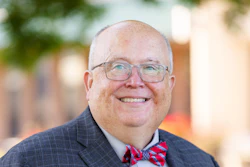
 File photo
Black student enrollment at Ivy Plus institutions—the eight Ivy League schools plus Stanford, MIT, Duke and the University of Chicago—dropped 25% in fall 2024 compared to the previous two years, while Hispanic enrollment fell 15%, according to a new report from Class Action analyzing enrollment data from more than 3,000 colleges and universities.
Yet at the same time, Black freshman enrollment surged 30% at Louisiana State University, 50% at the University of Mississippi, and nearly 20% at the University of Michigan-Ann Arbor. Hispanic enrollment jumped more than a third at the University of Tennessee and the University of South Carolina.
"When Edward Blum brought his case against Harvard and UNC, did he ever think that Black enrollment would grow by almost 50% at the University of Mississippi?" wrote James S. Murphy, the report's author and a senior fellow at Class Action. "College admissions is a complicated game, and it is certainly not a single-player one."
The findings reveal what researchers call a "cascade effect," in which highly qualified students of color who previously would have received an admissions advantage at elite schools instead enrolled at less selective institutions, increasing diversity at 83% of state flagship universities.
"Without race-conscious affirmative action, URM students' placements across the college selectivity hierarchy became more similar to those of non-URM students with comparable academic preparation," according to College Board researchers cited in the report.
The impact was most severe at the nation's 50 most selective institutions, where 34 saw Black enrollment decline and 34 saw Hispanic enrollment drop. MIT and Amherst College experienced some of the steepest declines, though outcomes varied significantly even among elite peers.
At Harvard, Black enrollment fell to 7% of the freshman class from an average of 10% in 2022-2023, while Hispanic enrollment held steady at 11%—far less dramatic than the university's own 2017 prediction that eliminating race-conscious admissions would drop Black enrollment to 6% and Hispanic enrollment to 9%.
White and Asian American enrollment remained largely flat across most institutional categories, contradicting arguments made during the Students for Fair Admissions trial that minority enrollment came at the expense of these groups. Asian American enrollment at Ivy Plus schools increased 7%.
The report found that legacy preferences at selective institutions may have magnified the Supreme Court decision's impact. At colleges admitting fewer than half of applicants, Hispanic enrollment shares declined at schools offering legacy advantages but increased at those without such preferences.
Murphy cautioned against drawing conclusions about individual institutions' compliance with the ruling based solely on enrollment numbers.
"College admissions were no more 'race-based' at Harvard than they are 'legacy-based' or 'athletics-based,'" Murphy wrote, criticizing Chief Justice John Roberts' characterization in the majority opinion. "Race-conscious admissions were not race-based admissions."
The cascade effect carries potential consequences for students of color who enrolled at institutions with lower graduation rates and median earnings. The proportion of Black and Hispanic freshmen at colleges with graduation rates above 80% dropped by 1.6 and 1 percentage points respectively.
However, the report emphasized that without data on applicants and admitted students—which IPEDS will collect for the first time in late 2026—it remains impossible to fully explain why enrollment shifted at any particular institution.
Notably, enrollment of underrepresented students of color declined at historically Black colleges and universities, contradicting predictions that HBCUs would benefit from the decision. Class Action plans a future report examining this unexpected outcome.
The report also documented a "significant increase" in students declining to report their race or ethnicity on applications, potentially obscuring the full impact on campus diversity.
Students for Fair Admissions, the organization that brought the lawsuit, has sent letters to Yale, Princeton and Duke questioning their compliance with the ruling, while the Trump administration has accused Ivy League schools of violating civil rights law.
Murphy warned that such accusations based on preliminary enrollment data alone are "irresponsible," given the complex admissions ecosystem where decisions at one institution ripple across many others.
"College admissions is a complicated ecosystem that does incredibly important work that affects the future of our nation and its citizens," Murphy concluded. "It is no place for simple interpretations from simple thinkers."