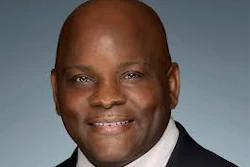
The numbers are jarring, but Dr. James R. Martin II, chancellor of North Carolina Agricultural and Technical State University, wants Americans to sit with them: If the United States had closed its racial and gender equity gaps in education and workforce participation back in 2000, the country would have added an estimated $15 to $20 trillion to its economy.
Today, drawing fully on the talents of underrepresented populations — Black and Hispanic Americans, women, and others locked out of high-skill industries — could generate up to $2 trillion per year. Those numbers, Martin argues, are the main thesis of a national security briefing that no one in power seems to be reading.
“For us to be the best country we can be — and we’re getting our butts kicked right now by China,” Martin said in a recent interview with The EDU Ledger, “[the U.S. needs to] draw on the full capacity of our country.”
The math, as Martin lays it out, is as straightforward as it is alarming. China produces four times the STEM graduates the United States does. Mexico, because so much American manufacturing was offshored there over the decades, now graduates engineers at a rate of 24 to 25 percent of its total degree-holders annually. The United States, which invented the modern research university and the innovation ecosystem that powered the 20th century, sits below 10 percent. And in the middle of this quietly accelerating race, the U.S. is cutting the budget of the National Science Foundation.
“If somebody’s got a bigger national economy than you, forget about winning a national security battle,” Martin said.
“We have become so centric about the United States that we’re not looking around,” he continued. “The rest of the world is moving on, and we are just divesting. We should be doing the opposite, because we invented innovation, we invented STEM. We invented this type of ecosystem.”
What makes this moment particularly acute is not merely that the country is falling behind — it is that it is falling behind while voluntarily leaving half its workforce on the bench. Roughly 50 percent of the U.S. population, Martin notes, remains underrepresented in high-skill, high-wage industries. Those workers, when they are shut out of the economic engine, do not simply disappear from the ledger.
“When people are not participating in the economic engine of the United States, they’re also taking up more services,” Martin said. “People with less educational attainment live shorter lives and have worse health outcomes. That’s what we’re missing out on.”
A Pattern the History Books Have Already Written
Martin is not describing a new problem. After the Civil War, he pointed out, the brief flowering of Reconstruction produced one of the highest per capita patent rates in the nation’s history. When a workforce that had been legally barred from economic participation was suddenly, if imperfectly, unleashed, productivity surged. Then Jim Crow took over and the country spent the better part of a century clawing back those gains.
The 1890 land-grant institutions — among them North Carolina A&T — were established precisely because the talent was there and the connection was not. Every one of those institutions was required by law to maintain an ROTC program. Black Americans have been stitched into the fabric of American national defense since the beginning, whether the country acknowledged it or not, Martin said.
The pattern repeated after World War II. Ten million people accessed higher education through the GI Bill — and the Pell Grant program that followed was, in Martin’s framing, an extension of the same defense-linked logic.
Then came the space race. NASA needed to hire a roughly a quarter million people across the southern states — primarily in Florida, Alabama, Georgia, Texas — to build the facilities of the 1960s. Thousands of those workers were Black Americans entering STEM fields for the first time, pulled in because the need was too large to exclude them.
“Every single time we have called on this population of people in this country, it has resulted in the moving forward of this country,” Martin said. “We have made this country better.”
“And every time we have taken our foot off the gas and started to look around and started to pull back on some of those rights,” progress retracted, he said.
“It's ironic that the biggest source of strength of our country, which has been … diversity, at some point became [seen as] our biggest liabilities.”
Strength Mistaken for Liability
This is the irony that Martin finds almost unbearable to sit with in the current moment.
“One of the things I want to see is that those ironies of the past become the opportunities of the future.”
The current political environment has made that inversion more visible than ever.
Institutions that spent years building infrastructure to connect underrepresented talent to opportunity are now dismantling it — not because the talent dried up, but because the political will did. Meanwhile, the economic argument for inclusion has never been stronger, and the competitive threat posed by its absence has never been more concrete.
Martin is careful to note that the case he is making is not a social justice argument, but a return-on-investment argument, one that ought to land with the same weight in a defense appropriations hearing as it does in a diversity task force meeting.
“We don’t need a narrow sector of just engineering and STEM, we need everybody — the arts and sciences, we need everybody,” he said. “I am only using STEM as a proxy to say what the rest of the world is doing.”
The Urgency of Not Repeating Ourselves
What animates Martin’s argument is not pessimism. It is a specific fear that the United States is entering another period of deliberate retreat dressed up as fiscal discipline or political pragmatism, and that by the time the country reverses course, the gap will be harder to close.
“I don’t want this to be another period of irony where we start to see that people participating in this country make it better and safer,” he said, “and then we start to see us retrenching and retreating.”