BALTIMORE — Though institutional leaders are under increased political pressure and scrutiny from the Trump administration as it seeks to root out educational practices that it deems as “woke” or too deferential to race and ethnicity, they still ave a responsibility to center belonging on campus. That was the central theme Monday at the annual conference of the American Association of Blacks in Higher Education, or AABHE.
“The question is no longer just about access but also about success, belonging, and equity,” said Dr. Tajma Cameron, assistant professor in science education at Morgan State University, an historically Black institution located here in Charm City.
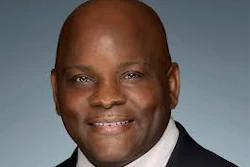
Dr. Tajma Cameron is an assistant professor in science education at Morgan State University.
She urged conferees to “rethink not just what to do but how we do it and for whom.”
“We know that higher education is at a critical inflection point,” Cameron said, noting that America’s schools have become more racially, culturally, and linguistically diverse than ever.
Some administrators said the current political environment makes it institutionally perilous to implement the ideas that Cameron touted in her talk.
One higher education administrator, speaking on condition of anonymity to avoid drawing attention to her university, said while Dr. Cameron has “amazing ideas,” they come at a time when many educational leaders are “basically afraid to contravene the administration.”
“I think this idea is fabulous. It is necessary for the success of students as well as to make the educational environment a safe and healthy place,” the administrator said. “But I think some institutions won’t do it because of their anxiety about the administration.”

For her talk, Cameron cited education luminaries such as Paulo Freire and focused largely on “culturally sustaining practices.”
And chief among those, she said, is the need for educators to make sure their curricula and lessons reflect the cultural identities of the students they serve to ensure student success. Asked for concrete examples of such practices, Cameron – a former biology teacher — said when educators teach a geography lesson, they can do it in a way that enables students to more easily relate to the topics, such as by asking them to consider the landscape in their neighborhoods. She also recommended revising syllabi to reflect new perspectives.
When asked how to implement culturally sustaining practices without running afoul of what the Trump administration argues is the law, Cameron was circumspect but said the practices – which could include hiring, admissions, and advising – should be “embedded within the institutional structure.”
She recommended going beyond GPA and test scores and giving students multiple ways to demonstrate what they know. Schools and institutions of higher learning should also assess the effects of whatever practices they implement to determine if they are actually making a difference.
“Meaningful change requires intentionality and sustained action,” Cameron said.
For Chatrice Barnes, a full-time doctoral student in higher education at Virginia Tech, the conference was an opportunity to share findings from her forthcoming dissertation, which deals with how Black administrators can not only survive but thrive as they navigate their roles on campus.
Among other things, Barnes found that “Black on Black vitality” – that is, Black administrators relying on Black peers for support as they navigate “white spaces” on campus – was key.
“That was a key group and key community that really helped them thrive throughout their careers,” Barnes said. “None of these jobs are perfect, and every now and then you need to vent and get it out.”
Barnes also found that Black administrators “thriving in partnership” with supportive supervisors — irrespective of race – was essential. She said Black administrators benefit when their supervisors don’t micromanage what they do and offer opportunities for professional development.
“Race matching alone is not enough to guarantee a positive supervisory relationship,” Barnes said. “Really what it came down to was the individual commitment of the supervisor.”
Barnes’ research resonated with attendees such as Omari Jackson, Assistant Dean of the College of Education, who said it can be challenging for Black administrators – especially those who work at predominantly white institutions, or PWIs – to find Black colleagues on campus.
In that regard, Jackson said, the annual AABHE conference was a welcome change of pace.