Welcome to The EDU Ledger.com! We’ve moved from Diverse.
Welcome to The EDU Ledger! We’ve moved from Diverse: Issues In Higher Education.

Create a free The EDU Ledger account to continue reading. Already have an account? Enter your email to access the article.

Research as Resistance: Black Scholars Urged to Defy Political Pressure and Reclaim the Narrative at AABHE

Baltimore — Black scholars must continue to conduct research as an act of resistance against efforts by the Trump administration to stifle diversity and hide the nation’s history of oppression from public view. 

That was the heart of the message delivered Sunday to a bevy of scholars at a higher education conference here, as well as by the son of historian John Hope Franklin during a signature event to bestow an award named after Franklin.  

“We must resist and continue to conduct our research, publish and teach,” John W. Franklin, principal at Franklin Global LLC, told attendees at the annual conference of the American Association of Blacks in Higher Education, or AABHE.  

“Every day I read and learn more about our history,” Franklin said. “Our knowledge helps us grow and remain strong. Our ancestors have endured worse than this.” 

Franklin – saying he was speaking from his vantage point as a trustee at the University of Tulsa – lamented that the past year has been a “difficult year for higher education in the United States.” 

“Visas have been denied to our foreign, full-paying students. Student loans have been shifted to the Department of Labor,” Franklin said, ticking off a laundry list of moves by the Trump administration to reshape higher education in the U.S. 

“Scientific and medical research has been vastly curtailed. Universities have lost hundreds of millions of dollars in federal money,” Franklin said. “Our scientists are leaving the country to conduct their research elsewhere. 

“The freedom and very existence of our universities has been threatened.” 

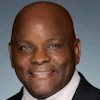
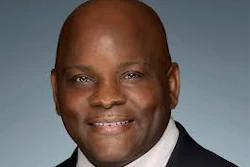
The EDU Ledger bestowed its longstanding John Hope Franklin award on Arnold Mitchem, the founding president of the Council for Opportunity in Education, an organization in Washington, D.C. that advocates for federal TRIO programs, which Mitchem says “hangs in the balance.” The award is given annually to an individual or organization whose contributions to higher education are consistent with the highest standards of excellence. 

Dr. Arnold L. Mitchem was the 2026 recipient of the John Hope Franklin Award.Dr. Arnold L. Mitchem was the 2026 recipient of the John Hope Franklin Award.AABHE, Monica Brazier Photography

He recalled a time when he invited the award’s namesake to speak at a community meeting meant to empower “ordinary Black people” in Madison, Wisconsin, where he was a college student at the time.  

“He inspired me and others who were in the room that night,” Mitchem recalled.  

Mitchem expressed his gratitude for the award but added that those who work “in the trenches” to advocate for TRIO programs. 

The AABHE conference, which continues through Tuesday and is expected to host Maryland Gov. Wes Moore and Baltimore Mayor Brandon Scott, drew scholars from a variety of institutions and backgrounds. They spoke about the need for institutions to be intentional about building pipelines for future Black physicians and STEM professionals. 

Tiffany Lathan Smith, program manager for the Center of Excellence in the College of Pharmacy at Howard University, stressed the benefits of undergraduates gaining meaningful research experience while studying abroad. 

A summer program that provided such opportunities to dozens of students at Howard University has been defunct since 2019 due to funding issues with the National Science Foundation and the pandemic, but it still offers important lessons, Smith said. 

Among other things, she said the program enabled students to network and helped them chart paths to careers in STEM.  

Tracey Jones, police services manager at the Oakland Police Department and a former administrator at UC Berkeley, discussed her research that found Black medical students are often ostracized on their career paths. 

She spoke of Black physicians in her research being mistaken for hospital janitors and asked by nurses to remove trash. She called on colleges and universities to be more intentional about tackling anti-Black racism and doing more to enable Black physicians to inform and inspire Black physicians of the future. 

“If you don’t know anything about it or haven’t seen it, it’s hard to do so,” Jones said of students pursuing a career as a physician. She cited statistics that show Black people represent about that says Black people represent 5 percent of all medical doctors despite being 13.7 percent of the U.S. population. 

Topeka Singleton, assistant professor of educational leadership at the University of Arkansas, used the occasion to tout a book she edited on accreditation in higher education – a subject with which she urged attendees to become more familiar in order to ensure their institutions are serving students well. Her book is titled “Accountability in Higher Education: Navigating Current Issues and Trends.” 

Singleton urged attendees to rethink the notion that higher education is “broken.” 

“We’re always talking about the brokenness of higher education,” Singleton said. “But in my program, I challenge my students to not look at higher education as broken, but as an evolving science. We are researchers. It is our job to continue to look at higher ed, and reexamine it and redefine it. That’s what we do in higher education. 

"So the truth is, is it broken? Or is it just an evolving science?” Singleton asked. “Higher education is all about how people learn.” 

The trusted source for all job seekers
We have an extensive variety of listings for both academic and non-academic positions at postsecondary institutions.
Read More
The trusted source for all job seekers