Black unemployment surged to 7.5 percent by December 2025—a level that would signal a national recession—while federal job cuts and policy reversals systematically dismantled programs designed to address racial economic inequality, according to a new report released by the Joint Center for Political and Economic Studies.
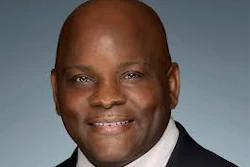
File photo
"The systematic withdrawal of protections, investments, and accountability mechanisms that have historically assisted Black communities from economic shocks combined with a substantive increase in Black unemployment all point to 2025 as a regression and recession for African Americans," the report states.
Black unemployment climbed from 6.2 percent in January 2025 to 7.5 percent by year's end, nearly double the white unemployment rate of 3.8 percent. The data for Black youth showed dramatic fluctuations, spiking from 18.6 percent in September to 29.8 percent in November before dropping to 18.3 percent in December.
Federal employment cuts hit Black workers particularly hard. The federal workforce declined by 271,000 positions in less than a year, with researchers estimating that approximately 200,000 of those lost jobs were held by Black women. Black workers comprised 18.7 percent of the federal workforce prior to these reductions—significantly higher than their 13 percent share of the overall U.S. labor force.
"If Black people had the same prime-age employment rate in 2025 that they had in 2024, then there would have been about 260,000 more prime-age Black people working," according to the report's employment analysis. "Of this number, about 200,000 would have been prime-age Black women."
The Trump administration implemented sweeping executive orders that eliminated diversity, equity, and inclusion initiatives across federal agencies, including rescinding President Lyndon B. Johnson's 1965 Equal Employment Opportunity executive order. These policy changes extended beyond federal employment to impact Black-owned businesses and economic opportunities.

Federal contracting goals for small disadvantaged businesses were reduced from 15 percent to 5 percent, creating what researchers estimate as a $60 billion gap in contracting opportunities. Based on current participation rates, this represents a potential $10 billion to $15 billion annual loss in federal funds for Black-owned firms.
Tax policy changes also favored high-income households over working families, according to the report. The One Big Beautiful Bill Act "entrenched permanent tax cuts for high-income and high-wealth households and corporations, reduced investment in poverty-alleviating programs, and left support for working families stagnant or diminished," researchers wrote.
The report documents additional policy reversals affecting Black communities, including the Consumer Financial Protection Bureau rescinding 67 guidance documents that had shaped oversight of consumer finance markets, the cancellation of $2.75 billion in Digital Equity Act grants, and changes to broadband pricing transparency requirements.
Black homeownership remained stagnant at 45 percent compared to 74 percent for white households, maintaining a nearly 30-percentage-point gap that has persisted for generations.
Perhaps most concerning to researchers was the systematic removal of accountability mechanisms designed to measure and address racial disparities. Federal workforce demographic data disappeared from public databases, making it impossible to track whether policy changes produced discriminatory outcomes.
"The absence of data is strategic, preventing documentation that would enable accountability," the report states.
Dedrick Asante-Muhammad, president of the Joint Center for Political and Economic Studies, noted the urgency of reversing current trends.
"The question before us is not whether these outcomes are inevitable, but whether we will act—urgently and deliberately—to reverse course before regression hardens into generational loss," he said.
The report represents a collaborative effort drawing on expertise from the Joint Center staff, fellows, and external partners including United for a Fair Economy, the Center for Economic Policy Research, the National Community Reinvestment Coalition, and the Onyx Impact Group.
Researchers examined 11 key policy areas affecting Black economic security, from employment and entrepreneurship to housing, broadband access, and artificial intelligence regulation. The report also documents widespread deletions of Black history and contributions from government websites, museums, and educational materials.
State of the Dream 2026 builds on work initiated more than two decades ago by United for a Fair Economy, which first issued a "State of the Dream" report in 2004 to explore racial disparities in wealth and income.