Title: Associate Professor, Fresno State University
Log in to view the full article
Title: Associate Professor, Fresno State University
Age: 40
Education: Ph.D., Higher Education, University of Denver; M.L.I.S., Library & Information Science, San Jose State University; B.A. English, University of the Pacific; B.S. Business Administration, University of the Pacific
Career mentors: Dr. Samuel Museus, University of California, San Diego; Dr. Frank Tuitt, University of Connecticut; Dr. Phitsamay Uy, University of Massachusetts, Lowell; Dr. Susana Hernández, California State University, Fresno; Dr. Ignacio Hernández, California State University, Fresno
Words of wisdom/advice for new faculty: Your academic and professional journey doesn’t have to feel lonely and disconnected from your sources of comfort, love, and joy. Academia may not provide what you need to feel loved, safe, and protected, but you can create spaces of collective community care and love. These spaces have sustained our families and communities for far longer than academia has been in existence. Start there.
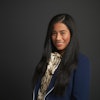
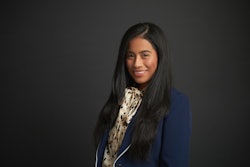
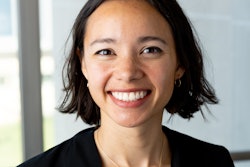
 Dr. Varaxy Yi
All she knew is that the scholarship would cover ten years of college. So she made the best of it, earning bachelor’s degrees in English and business administration, respectively, and a master’s in library and information science in order to capitalize on her longstanding love of books. She also worked various campus jobs as a tutor and the like along the way.
“I didn’t have a lot of guidance,” Yi recounted during a recent interview with The EDU Ledger. “And so I just picked the degrees that I thought would get me a good job.”
It wasn’t until Yi attended a conference on Asian and Pacific Islander college students that she decided to pursue a career in higher education — helping Southeast Asian students like herself as they navigate their way to and through college in the U.S.
The critical point came when she heard Dr. Robert Teranishi, a well-known professor of social science and Asian American studies, discussing educational statistics for Southeast Asian American students.
“That was the first time I’d ever seen people talk about my community,” Yi says. “I remember just sitting up and going, ‘You’re talking about me. You’re talking about my siblings, my brothers, my community.’
“And that’s when I decided that I would pursue my doctorate in higher education.”
She eventually began working with Dr. Sam Museus, following him from the University of Hawaii at Manoa to the University of Denver, where she earned a Ph.D. in higher education, becoming one of a small number of Khmer/Cambodian Americans to do so.
Museus lauds Yi for overcoming obstacles as the first in her family to attend college and her commitment to shining light on the unique challenges that confront Southeast Asian American students.
“Dr. Yi applies critical equity-oriented lenses to understand refugee communities in education,” Museus says. “In her research with Southeast Asian American students, she moves beyond deficit frameworks to document how legacies of war, genocide, and resettlement shape familial and community contexts, which in turn influence college access, persistence, and sense of belonging.”
Museus also commends Yi for advocating collective and collaborative approaches to scholarship — something Yi says is part of her culture.
As an example, Museus notes how Yi is an active member of the Southeast Asian American — or SEAAster – Scholars Collective, a network of Southeast Asian American women scholars dedicated to producing community-centered research for their communities.
Yi currently serves as an associate professor of educational leadership at Fresno State University — an institution about two hours from “home” — or where Yi grew up in Section 8 housing in Modesto, California.
Being the first daughter of refugees from Cambodia, Yi had to navigate the public school system largely on her own. She says her family was “always very supportive of education.”
“But they didn’t necessarily have the means to walk me through what I was supposed to do,” Yi says. One of the most impactful messages came from her grandmother — a genocide survivor.
“Her comment to me was always, ‘They can take everything from you, but they can’t take away your education,” Yi recalls. “And so she really pushed me to go, but she didn’t necessarily know how to help me navigate.”
Whereas Yi has spent much of her career working in the academy and helping others find their way, the newly-minted mother and spouse is now looking forward to taking a sabbatical in the spring.
“That’s an opportunity to kind of explore more of my identity outside of the academy,” Yi says, “because it has become a central part of who I am.”