Title: Assistant Professor, Department of Communication Sciences and Disorders, Howard University; Postdoctoral Fellow, DREAM Technical Assistance Center, Florida International University
Log in to view the full article
Title: Assistant Professor, Department of Communication Sciences and Disorders, Howard University; Postdoctoral Fellow, DREAM Technical Assistance Center, Florida International University
Education: Ph.D. in Education (Special Education Track), Cognate: Cognitive Neuroscience, University of Central Florida; M.S. in Speech and Language Pathology, Nova Southeastern University; B.A. in Communication Sciences and Disorders, University of Central Florida
Age: 39
Career mentors: Dr. Eleazar T. Vasquez, University of Kansas (previously University of Central Florida); Dr. Matthew T. Marino, University of Central Florida; Dr. Cathy Kea, professor emeritus, North Carolina A&T State University; Dr. Alana S. Davis, Howard University
Words of wisdom/advice for new faculty members: Academia can feel isolating, especially when you’re navigating it as a woman of color, so build relationships with your colleagues who get what you’re trying to do.
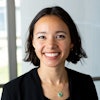
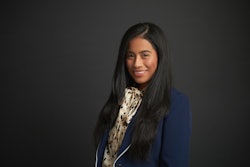
 Dr. Tahnee Wilder
After earning a bachelor’s degree in communication sciences and disorders, she worked in the Osceola County Public School system (Fla.) for five years. “It was there where I started to understand the link between research, practicum and what was actually happening in the classroom,” Wilder says.
Wilder started with a caseload of 136 students. Understanding that she couldn’t fully serve that number of students, she researched whether such a large caseload for one speech-language therapist was legal. Unfortunately, it was, which sparked her interest in researching how it became accepted.
After earning a master’s degree in speech and language pathology, she became a speech and language pathologist at a skilled nursing facility, working with elderly patients and patients with traumatic brain injuries, some of whom needed rehabilitation for language and speech. While doing a screening, ensuring a patient was swallowing using the strategies that she provided, that patient had the same look trying to understand the process as the autistic students she’d previously worked with.
“I was curious about what was happening cognitively in the learning process,” says Wilder. She eventually switched to private practice and saw a lot of patients who kept her questioning what is happening underneath the cognitive processes.
“I was doing a little bit of research, trying to figure out and understand executive functioning,” says Wilder, who reached out to a professor at the University of Central Florida, Dr. Eleazar T. Vasquez, whose specialty was executive function in special education. He told her about his research and mentioned the university’s Ph.D. program in special education.
The things she had seen as a clinician became research questions. Her doctoral concentration was in cognitive neuroscience, which enabled her to learn methods, how to understand cognition and how to measure learning.
Wilder currently has two positions. She is an assistant professor in the Department of Communication Sciences and Disorders at Howard University teaching neurogenetic language disorders and research methods to graduate students. There is also a joint appointment with Florida International University, which houses the DREAM Technical Assistance Center that helps special education programs receive grant funding and manage their grants in order to increase the pipeline for special educators and related services.
“Dr. Tahnee Wilder’s research is transforming how we understand and support executive functioning and self-regulation through the innovative use of artificial intelligence in speech-language pathology and education,” says Dr. Alaina S. Davis, associate professor and chair of the Department of Communication Sciences and Disorders at Howard.
Wilder’s current research includes a $1.25 million U.S. Department of Education grant (Project SPEECH), supporting preparation of communication specialists (graduate students) at Minority Serving Institutions, who will work with children with high-intensity needs.
“Part of my research is to figure out the barriers and factors that help graduate students through communication sciences disorders,” Wilder explains. In addition to assisting them with funding their educations, she explores the aspects of mentorship that are beneficial.
Another research project is integrating self-regulation and artificial intelligence into learning. She uses eye-tracking, GSR (galvanic skin response) and electrocardiograms (EKGs) to understand what’s happening in the brain during communication and the learning processes.
“Dr. Wilder has an exceptional impact on her students as both a mentor and an instructor,” says Davis. “Her expertise in research and grant writing plays a critical role in shaping students into confident, capable researchers. … Her national, federal and international presence reflects the growing influence of and importance of her work.”