Title: Associate Professor of Pharmacology & Physiology, Drexel University
Log in to view the full article
Title: Associate Professor of Pharmacology & Physiology, Drexel University
Education: Ph.D., Neuroscience, Yale University; B.A., Psychology, Ohio Wesleyan University
Age: 39
Career mentors: Kim Dolgin, Ohio Wesleyan University; Jane Taylor, Yale University; Judson Chandler, University of Illinois College of Medicine; Olimpia Meucci, Drexel University
Words of wisdom/advice for new faculty members: “Find your people. Find the people who cheer for you. Find the people who help you get back up when the hits come — because they will. Find the people who want to do it with you.”
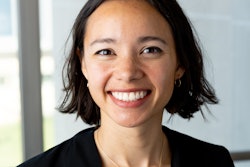
Dr. Jacqueline Barker never imagined herself in academia. Growing up in Dr. Jacqueline Barker
Now an associate professor in Drexel University’s College of Medicine, Barker has established herself as a leading voice in understanding how individual experiences and biology intersect to drive substance use disorders. Her work focuses on a critical question: how can we develop more effective, personalized therapeutics for people living with addiction?
Barker’s journey to Drexel began at a small liberal arts college in Ohio that didn’t even have a neuroscience program at the time. A mentor there recognized her potential and connected her with researchers at Ohio State University, helping her discover that her interests in psychology and memory could become a viable career path. That early mentorship proved transformative — and would shape Barker’s own approach to guiding the next generation of scientists.
At Yale University, where she completed her doctoral work, Barker initially worried she would feel out of place.
“I thought I was going to be more a person who served dinners at banquets than sat at them,” she recalls. Instead, she found a welcoming, diverse community and a mentor in Dr. Jane Taylor who gave her independence and space to pursue creative approaches to studying learning, memory, and substance use disorders. She also benefited from day-to-day guidance from senior lab members, a mentoring model she would later emulate in her own career.
Following a postdoctoral fellowship at the Medical University of South Carolina, where she focused on the neurophysiology of alcohol use disorder, Barker joined Drexel in fall 2017. She earned tenure last year, a milestone that reflects both her scientific contributions and her commitment to fostering the next generation of researchers.
One of Barker’s most significant contributions beyond her research is the MOTOR Center, which she developed with her department chair, Dr. Olimpia Meucci. The center, now in its third year, supports graduate students and postdoctoral fellows in securing extramural funding, publishing their work, and developing as independent scientists. The center hosts full day writing retreats, accountability sessions, and peer review workshops built on a mutual aid framework.
“Mentorship, to me, is the thing that can make or break a career in science,” Barker says. “The ability to mentor the next generation is what my legacy is more than anything I discover.”
Barker’s research has evolved to address critical gaps in addiction science. Her lab now examines how substance use disorders manifest differently based on factors like gender, HIV infection status, and hormonal changes across the lifespan. A junior scientist in her lab is pioneering work on how menopause impacts substance use and recovery — an area affecting half the population that has been historically understudied.
Dr. Charles B. Cairns, the Walter H. and Leonore Annenberg Dean of the College of Medicine, senior vice president of medical affairs at Drexel University, and senior vice president, Drexel Health Operations hails Barker as an “exceptional neuroscientist, whose pioneering research, educational leadership and commitment to community engagement exemplify the promise and impact of an emerging academic leader.”
Barker is encouraged by recent advances in the field, but she’s also acutely aware of threats to scientific progress. To build public support, she participates in “Pint of Science” events at local breweries, making her work accessible to broader audiences.
For Barker, Philadelphia has become more than just a research hub — it’s home, her favorite place she’s ever lived. And in her lab and through the MOTOR Center, she’s creating a home for the next generation of addiction researchers.