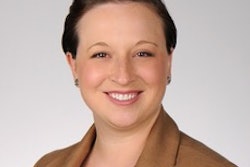
Title: Assistant Professor of Political Science, Cal Poly Pomona
Log in to view the full article
Title: Assistant Professor of Political Science, Cal Poly Pomona
Education: Ph.D., Political Science and International Relations, University of Southern California; M.A., Political Science, University of Arkansas; B.A., Political Science, University of California, Irvine; AA, Cerritos College.
Career mentors: Christian Grose, USC; Pearl Dowe, Emory University; Andrew Dowdle, University of Arkansas
Words of wisdom/advice for new faculty members: “Don’t take it too seriously. We have the best job you can have. There’s no other job where you’re paid to talk about what you love.”
 Dr. Jarred R. Cuellar
“It was the first time I noticed in my academic life that I felt comfortable in a room of people,” Cuellar recalls. “I was able to just be myself.”
Surrounded by Latino political scientists from across the country — many with similar upbringings in Southern California — Cuellar found his scholarly home. The keynote speaker that day reminded him of his father, a furniture mover. Despite their vastly different educational backgrounds, their experiences resonated deeply.
“It really made me want to kind of get back to the community I came from,” says Cuellar, who is now in his fourth year at Cal Poly Pomona and currently pursuing early tenure.
Growing up in Bellflower, a suburb of Long Beach in Southeast Los Angeles County, Cuellar became the first in his family to attend college. His path wasn’t preordained. Many family members, including older siblings, hadn’t pursued higher education, and some had been incarcerated. His father and uncles worked as furniture movers — grueling physical labor that took a severe toll on their bodies.
“Those two factors combined really made it where I always knew I wanted to go to college,” Cuellar explains. He started at Cerritos Community College, attending for free through the Cal Grant while using Pell Grants for books. He later transferred to UC Irvine, where his career trajectory took an unexpected turn.
Initially headed to law school like many political science undergraduates, Cuellar discovered he preferred his voting and elections courses to the law classes he sampled. A professor offered him perspective that would prove pivotal and encouraged him to pursue a Ph.D.
He followed his professor’s advice, earning a master’s degree at the University of Arkansas before completing his Ph.D. in 2022.
Now Cuellar’s research focuses on Latino political behavior, examining how the average Latino American engages with politics. He has published on differences in evangelical and non-evangelical Latino voting behavior and is working on a study exploring how Latinos became susceptible to COVID-19 conspiracy theories during the 2020 election. Other ongoing projects examine the role of the economy in California Latino voting patterns in 2024 and how to mobilize Latinos and Asian Americans to support environmental policy.
His work extends beyond academic journals. Last year, Cuellar and colleagues conducted the California Elections and Policy Poll, which became the most accurate poll in the state for the general election. He also co-authored a report on how California’s Proposition 36 would affect Latinos — research that was cited in the lawsuit challenging the proposition.
In the classroom, Cuellar teaches race and ethnic politics, voting and elections, and public opinion. At Cal Poly Pomona, a Hispanic-Serving Institution with a predominantly Latino and Asian American student body, he sees high political engagement even among non-majors taking his courses to fulfill ethnic studies requirements.
“These students see what’s happening, especially in their communities, and the rhetoric about them and who they are, and it’s not lost on them, regardless of the major,” he notes.
Cuellar has achieved something rare in academia — building a career in his home state. His focus now includes mentoring students, with two former advisees already in Ph.D. programs.
“My goal would be to eventually work with them when they’re tenure-track faculty,” he says, committed to helping the next generation find their own voices in political science.