Every fall, a new class of professors walks into seminary and university classrooms with a freshly minted doctorate and almost no training in how to teach. They spent years writing dissertations on the Hebrew prophets, the early church, or the Black freedom struggle, yet few of them devoted even a week to learning how to bring that material alive for the students in front of them.
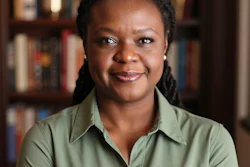
Their institutions then promote them for what they publish and judge their teaching — if they judge it at all — through end-of-semester evaluations. The students in those rooms will become pastors, chaplains, schoolteachers and civic leaders, and they will carry what they learned there into a nation bitterly divided over faith. Dr. Nancy Lynne Westfield has spent more than two decades arguing that the craft of teaching deserves the same seriousness as the scholarship behind it.
Her new book, "Thinking Teaching: Stories, Insights, and Strategies to Ignite Reflection, Discussion, and Imagination," makes that argument more persuasively than anything I have read in years. It belongs on the desk of every seminary president, provost, and religion department chair in the country.
The Wabash Center for Teaching and Learning in Theology and Religion, which she has led since 2019, has quietly built the model the rest of the academy should copy. The book gathers 66 short pieces that Westfield wrote for the Wabash Center, culled from hundreds of blog posts. Each essay closes with questions meant to spark conversation among colleagues, and readers can open the volume anywhere. Its path to print shows how fiercely she believes in that form. Around 2014, she shaped the posts into a proposal and took it to a gathering of scholarly and trade publishers, most of whom passed. A fifth editor seemed eager until the very end of their conversation, when she asked, “Of course, you will expand each blog into a full chapter — right?”
“My heart sank,” Westfield wrote in an essay marking the book’s release. She was convinced that “the short form carried its own integrity, accessibility, and power,” so she set the manuscript aside rather than inflate it. Years later, the editor, Dr. Donald Quist, helped her trust that instinct again. Her patience was justified. A professor with fifteen minutes between a committee meeting and an afternoon seminar will finish one of these 750- to 900-word reflections and take it with her into the room.
The book matters, first, because it names what the academy rarely admits: most professors were never prepared to teach, and many teach in isolation. Westfield hopes the volume will serve as “a companion for individual readers, small groups, and faculty communities,” and that aspiration is what sets it apart. Institutional incentives reward the solitary scholar. Her reflection questions turn private reading into shared practice, and a department that works through them together will recover a habit of honest talk about the classroom that tenure and promotion systems seldom encourage. It matters, too, because of who wrote it and the commitments she brings. Westfield is a prominent womanist theologian and an ordained deacon in the United Methodist Church.
“I understand education as a practice of emancipation, healing, and human flourishing,” she writes. For generations, the people who defined good teaching in theological education were overwhelmingly white and male. A Black woman now leads one of the field’s most influential centers for faculty development, and her book insists that the humanity and vulnerability of both teacher and student belong at the heart of the work. Most of all, it matters because it challenges an academic culture that confuses length with depth. In one of the questions that close an essay, Westfield asks what wisdom teachers of theology and religion might overlook “because academia privileges length, complexity, or abstraction.”
Her pedagogy draws as much on family as on the academy. Her father, Lloyd Raymond Westfield, was a school psychologist and reading specialist in the Philadelphia public schools, and her mother, Nancy Bullock Westfield, was a volunteer activist who fought for equal education for minoritized children. Westfield leans on their teachings throughout the book, alongside lessons gathered in classrooms and on various faculties. She trained as a landscape architect before answering a call to ministry, and she has said that she does not plan a class so much as design one, the way she once designed gardens.
The Wabash Center deserves far more attention than it receives outside the guild. Founded in 1996 on the campus of Wabash College in Crawfordsville, Indiana, and funded by Lilly Endowment Inc., it exists to strengthen how theology and religion are taught in colleges, universities, and seminaries across the United States and Canada. By 2019, it had brought more than 1,300 faculty members to Indiana for yearlong workshops, awarded more than 1,500 grants worth $14.3 million to 381 institutions, and assembled an online archive of more than 1,000 syllabi. It also publishes a peer-reviewed journal devoted to teaching. Westfield first encountered the center as a young professor of religious education at Drew University Theological School, after a mentor urged her to apply for its workshop for early-career faculty. Its gatherings rest on a deliberate hospitality that treats faculty members with dignity and reminds them that they do not teach alone.
Religion remains one of the most powerful forces in American public life. It shapes how people vote, how they organize, how they grieve and how they regard neighbors who worship differently or not at all. When instruction in religion is careless, the damage travels from the seminary into pulpits, classrooms, and statehouses. When it is rigorous and humane, students learn to argue about sacred texts without demonizing one another. My current research on Black preacher-politicians — from Reconstruction to the present — keeps returning me to this truth. The ministers who brought the freedom struggle into pulpits and legislatures were shaped by teachers in seminaries, Bible colleges, and church basements who taught them to read scripture alongside the newspaper and against the grain of power. Religious instruction has never been a sheltered academic exercise in Black America. It has been preparation for public life. Westfield has broadened the Wabash mission in imaginative ways.
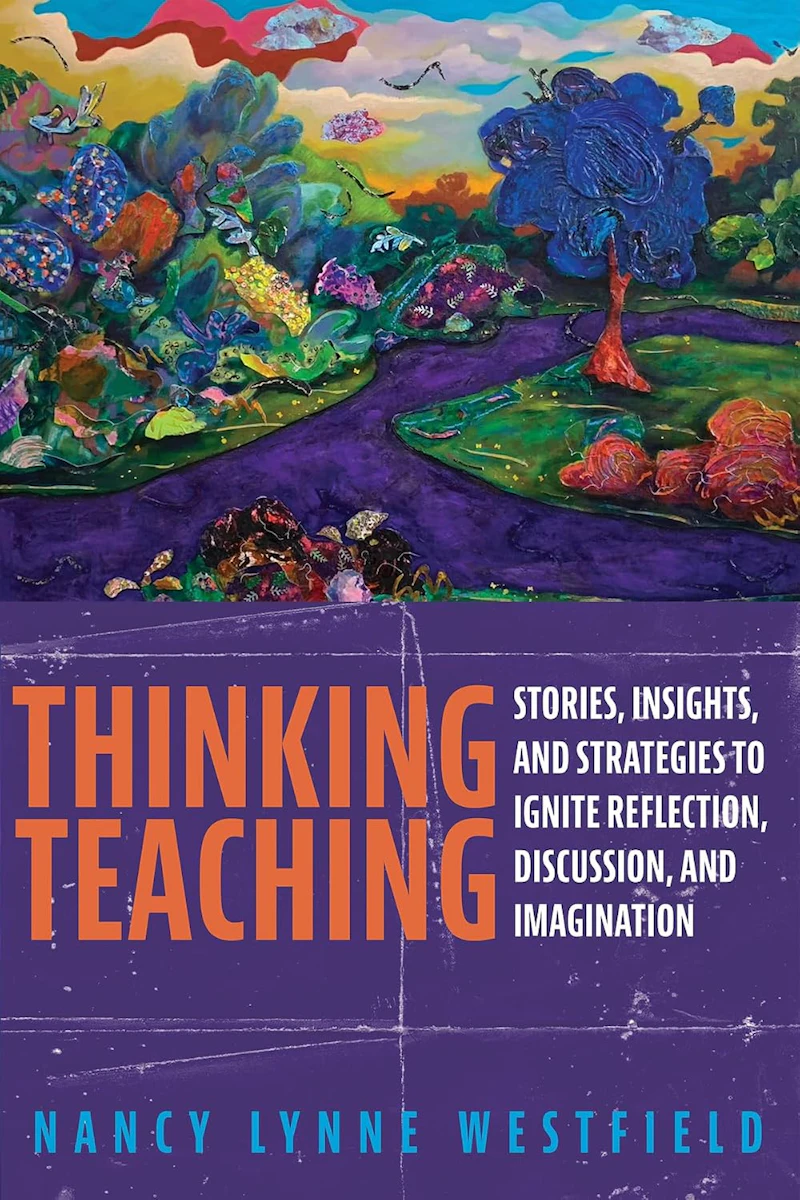
The cover of Thinking Teaching features Eden #13, a painting by Najee Dorsey, the Atlanta artist who founded Black Art in America. The image grew out of a two-year partnership between the Wabash Center and Dorsey’s organization, which has brought the work of Black artists onto the covers of scholarly books. The choice reflects a conviction that runs through her leadership: the academy grows richer when it opens its doors to beauty and to the artists it has long overlooked.
Deans and provosts should buy this book in bulk and place it in the hands of their faculties, especially newer colleagues who are struggling in the classroom and are reluctant to admit it. Department chairs should build a semester of faculty meetings around its reflection questions. Philanthropists who care about the moral health of the nation should study the Wabash model and ask why every discipline does not have one.
Westfield writes that some books “require more time to ripen before they are ready to meet the world.” Hers needed roughly twelve years, a trusted editor and a publisher willing to honor her chosen form. Readers will feel the difference that patience made. They will also find in these pages a colleague who understands both the dread and the delight of standing before a room of students, and who still believes a classroom can be a place where people are made whole.
Dr. Jamal Watson is a higher education consultant, professor and associate dean of Graduate Studies at Trinity Washington University and the author of this bi-weekly column. Watson is the former executive editor of Diverse: Issues In Higher Education (now The EDU Ledger) and is the author of The Student Debt Crisis: America’s Moral Urgency (Broadleaf Books, 2025) and a forthcoming book, From the Pulpit to Power: Black Preachers and the Making of American Democracy.