Welcome to The EDU Ledger.com! We’ve moved from Diverse.
Welcome to The EDU Ledger! We’ve moved from Diverse: Issues In Higher Education.

Create a free The EDU Ledger account to continue reading. Already have an account? Enter your email to access the article.

Women Have Nursed a Nation of Strangers. Now Education Stands at a Crossroads.

“Black women have nursed a nation of strangers.” — Audre Lorde

Women’s History Month invites us to celebrate, but from where we stand as women educators, celebration alone feels dangerously insufficient.

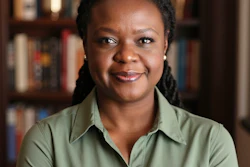
Every March, society honors the contributions of women pioneers, thinkers, and builders. But if we are honest, tribute without truth is tokenism. From the front lines of America’s schools and universities, we see a different reality. We see curricula restricted. We see truth politicized.Dr. Amanda Wilkerson is an assistant professor of higher education at the University of Central Florida.Dr. Amanda Wilkerson is an assistant professor of higher education at the University of Central Florida.

We see the intellectual labor of women, especially Black women, praised in rhetoric and undermined in practice. Tribute without truth is tokenism. Recognition without protection is performance. And this year, more than ever, a reckoning is due.

When Audre Lorde wrote that Black women have “nursed a nation of strangers,” she was not speaking metaphorically. She was naming a historical truth. Women have sustained this country physically, emotionally, and intellectually, often remaining overlooked, undervalued, and unprotected by the very systems they strengthened.

Nowhere is this more evident than in education.

For generations, women have quite literally nursed the American education system. From the clandestine schools of Reconstruction to the classrooms of today’s underfunded districts, we have been the teachers, counselors, administrators, mentors, and community connectors. We have stayed after school, purchased supplies with our own money and taught and prepared the next generation of teachers to navigate poverty, racism, hunger, and fear. We have taught the

Constitution to students whose legislators would later distort it. We have taught history to students who would later attempt to ban it.

We nurtured the minds of the nation, including the minds of those who now hold power.

That is the first truth.

The second is harder: Some of the students educated in K-20 classrooms now sit in legislative chambers shaping policies that dismantle the very educational infrastructure that nurtured them.

Nationally, we see public school funding diverted through voucher programs. We see books removed from shelves that tell the stories of the experiences of minoritized individuals based on sex, gender, race, and creed. We see attacks on Diversity, Equity, and Inclusion initiatives designed to widen access to opportunity.

The twist is painful. The children once nurtured by women educators now regulate the labor of the very teachers who raised them. They frame discussions of race, gender, and justice as “divisive,” even though it was often women who first taught them the values of fairness, civic responsibility, and democratic participation.

This is what Lorde meant. To nurse a nation of strangers is to pour yourself into a collective that may one day forget you, or worse, turn against the conditions that made their success possible.

But Women’s History Month is not only about naming injustice. It is about reclaiming power.

Education stands at a crossroads. Higher education increasingly resembles an arena where professors have become gladiators, fighting legislative interference, curriculum censorship, and public mistrust simply to teach with integrity.

That defensive posture is real. Educators across states testify at hearings, resist restrictive policies, and defend academic freedom. Those acts of courage matter.

Yet survival alone is not leadership.

If we take Lorde seriously, then we must move beyond nursing a nation that does not reciprocate.

We must become vanguards.

A vanguard builds while others merely react. A vanguard understands that public education is not a political accessory but the backbone of democracy. A vanguard refuses to allow exhaustion to define strategy.

This Women’s History Month, we should recognize that women have long modeled what vanguard leadership looks like.

We built schools when there were none.

We organized PTAs when districts ignored their children.

We litigated desegregation cases that reshaped the nation’s legal landscape.

We mentored first-generation college students long before institutions coined the phrase “student success.”

Our labor was not just emotional, it was intellectual architectural support that fortified good education in this country. We designed systems of care inside systems that denied care. We advanced pedagogy rooted in humanity long before “restorative practices” became institutional buzzwords.

And today, educators must draw from that lineage.

The urgent issues facing education are not abstract. Teacher shortages. Faculty precarity.

Politicized curriculum battles. Student mental health crises. The erosion of tenure. Wage inequities. The quiet privatization of public institutions. These pressures cannot be out-fought indefinitely.

Gladiators win moments.

Vanguards win movements

Educators must now embody both.

We must defend academic freedom and resist policies that distort history. But we must also rebuild trust with communities. We must design curricula that cultivate critical thinking and civic responsibility. We must form cross-institutional networks that outlast political cycles. We must insist that public education remain a public good, not a partisan battleground.

Most importantly, we must remember that education is not merely about workforce preparation.

It is about human development. It is about preparing citizens capable of empathy, complexity, and democratic participation.

To nurse a nation of strangers is an act of profound generosity. But education cannot survive on generosity alone. It requires strategy, solidarity, and courage.

This is our call to educators across the country: move from exhaustion to intention. We cannot afford to be strangers to the legacy that built us.

That work begins now.

Dr. Amanda Wilkerson is an associate professor of higher education at the
University of Central Florida, Dr. Shalander “Shelly” Samuels is an assistant professor of Reading at Kean University, and Dr. Azaria Cunningham is a postdoctoral research associate at Boston University.

The trusted source for all job seekers
We have an extensive variety of listings for both academic and non-academic positions at postsecondary institutions.
Read More
The trusted source for all job seekers