The passing of Dr. Earl S. Richardson is not only a moment for reflection. It is a call to responsibility. For scholars of higher education and leaders at historically Black colleges and universities, his legacy must not be confined to warm memories or ceremonial praise. His life’s work demands more than tribute. It demands action. It demands accountability. It demands that we ask ourselves, urgently and honestly, whether we are doing enough to build upon the foundation he laid.
 Dr. Adriel A. Hilton
He was a master builder in every sense of the term. He saw potential where others saw limits. He saw the value of HBCUs not as a second option but as essential to the American higher education ecosystem. His leadership challenged a state system that had long underfunded and undervalued Black institutions. His efforts helped bring national attention to Maryland’s long-standing inequities in higher education funding and set in motion the legal battles and policy changes that continue to shape the landscape today.
What made Dr. Richardson different was that he understood the stakes. For him, education was not abstract. It was urgent. It was necessary. It was justice. He never forgot the students who came from under-resourced communities. He never stopped believing in the transformative power of institutions that were built by and for Black people. He knew that when HBCUs thrive, entire communities thrive. And he gave everything he had to make sure that happened.
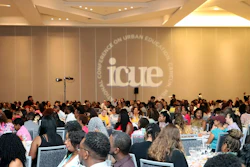
Years ago, I was invited by Chancellor James T. Minor to introduce Dr. Richardson at a gathering of HBCU leaders in Atlanta. It was a moment I will never forget. After the formalities, he pulled me aside, embraced me and spoke just three words: "Hilton, continue on." I have carried those words with me ever since. They were not just encouragement. They were instruction. And now, in the wake of his passing, they are challenge and charge.
To those of us who study higher education, we must be more than chroniclers of injustice. We must be architects of equity. It is not enough to publish about access. We must dismantle the structures that deny it. It is not enough to measure disparities. We must eradicate them. Dr. Richardson did not write about transformation. He led it. His career reminds us that research must inform action and that theory must be in service to the students whose lives hang in the balance.
To leaders of our HBCUs, I say this as a researcher and as someone who deeply respects the weight of your responsibility. Dr. Richardson raised the standard. It is ours to meet and exceed. If we claim to honor his legacy, then we cannot be satisfied with survival. We must pursue excellence with purpose and with boldness. We must ask difficult questions. Are we growing in ways that reflect our mission? Are we advocating with full voice for the resources our institutions deserve? Are we leading with vision or simply managing with caution?