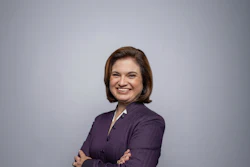
Dartmouth College President Dr. Sian Leah Beilock issued a brief but pointed statement affirming the institution's commitment to academic independence, declaring she would "always defend our fierce independence" and making clear the institution would never compromise its academic freedom and ability to govern itself.
According to sources, the president of the Massachusetts Institute of Technology is expected to say that she will not support The White House proposal.
At the University of Pennsylvania, faculty and community members launched a petition urging the administration to reject the compact, characterizing the White House overture as "a threat, not an invitation." The Penn petition warns that compliance would subject the university to ongoing review by the Department of Justice, with insufficient obedience resulting in loss of access to student loans, grant programs, federal contracts, research funding, visa approvals, and tax exemption.
The Association of American Colleges & Universities (AAC&U) issued a lengthy statement condemning the compact as fundamentally incompatible with constructive engagement. AAC&U characterized the compact as "an ultimatum: sign and receive 'multiple positive benefits,' including 'substantial and meaningful federal grants,' or retain the freedom to 'develop models and values other than those' of the administration, and 'forgo federal funding.'"
The organization emphasized that college and university presidents "cannot bargain with the essential freedom of colleges and universities to determine, on academic grounds, whom to admit and what is taught, how, and by whom," adding they "cannot trade academic freedom for federal funding—and should not be asked to do so."
Critics have identified several particularly problematic provisions in the compact: