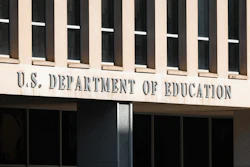
The Department of Education announced April 6 that it has formally terminated several Obama and Biden-era resolution agreements designed to ensure transgender students had equal access to facilities and protections against discrimination, including one with Taft College in California.
The administration has explicitly moved to rescind the interpretation that Title IX’s prohibition of "discrimination on the basis of sex" includes gender identity. In a significant shift, the Education Department stated that the federal government will now recognize only two biological sexes — male and female — and characterized previous protections as a "radical transgender agenda."
The department also announced that the Office for Civil Rights (OCR) will no longer monitor or enforce existing transgender-inclusive settlements. Furthermore, the administration has signaled a willingness to use executive orders and threats of freezing federal funds to pressure colleges to align with these new directives, alongside a broader crackdown on diversity initiatives and campus protests.
The bigger picture:
In a statement, Assistant Secretary for Civil Rights Kimberly Richey said, “The Trump Administration is removing the unnecessary and unlawful burdens that prior Administrations imposed on schools in its relentless pursuit of a radical transgender agenda. While previous Administrations launched Title IX investigations based on ‘misgendering,’ the Trump Administration is investigating allegations of girls and women being injured by men on their sports team or feeling violated by men in their intimate spaces." But critics worry that the administration’s actions not only go against current medical and psychological guidance and will cause harm to transgender students and faculty members on campus. As is often the case with sweeping policy changes, LGBTQ+ people of color face disproportionate harm by the shift.
While the Department of Education frames these rescissions as a restoration of biological truth, advocacy groups counter that such actions infringe upon institutional autonomy and academic freedom. For leaders, the challenge extends beyond a single policy change; it requires navigating a volatile environment where decades of best practices and negotiations between campus and federal officials are being redefined by swift and chaotic executive orders.
In a recent podcast interview with The EDU Ledger’s Ralph Newell, National Association of Diversity Officers in Higher Education (NADOHE) President and CEO Dr. Emelyn dela Peña reminded leaders that none of the anti-DEI orders the Trump administration is issuing are actual laws at this time, and many are still being challenged in court. Still, the threat of lost funding puts institution leaders who are reliant on already-scant federal funding in a precarious conflict between student safety and the social agendas of the current administration.