Dr. Adriana Cervantes-González – a lecturer in teacher education at California State University (CSU) Bakersfield – grew up in Tulare County, California and continues to live there with her family. As a student, she only had two educators who looked like her.
The county isn’t just lacking educators of color. There’s a scarcity of K-12 teachers there, as well as in rural areas across California. Nearly 82% of California’s rural communities reported teacher shortages, representing a third of the state’s school districts, according to a 2016 Learning Policy Institute study.
Now, Cervantes-González is part of launching a program – a partnership between CSU Bakersfield and the California Center on Teaching Careers – to combat the problem. The new Teacher Residency for Rural Education project, an 18-month graduate program, aims to train 100 teachers over the next five years to fill gaps in the Visalia Unified School District, with an emphasis on diversity. It hopes to expand to other districts too. The program welcomed its first cohort this fall with the support of a $7 million grant from the Teacher Quality Partnership Grant Program.
“I live in this community,” Cervantes-González said. “I reside in this community. My kids attend schools in this community. As a parent, I can’t help [but] think, who are the types of teachers I would love working with my own children? We should be able to empower and work with all teachers so they can work with all students.”
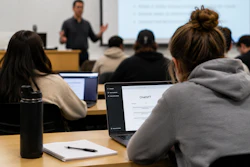
Because of the coronavirus pandemic, the program’s first cohort has six would-be teachers, but it plans to annually accommodate 20-25 residents in the future. All aspiring educators are paired with a veteran teacher who will serve as their mentor and co-teacher in what are now virtual classrooms. Graduates of the program earn a master’s degree in education with an emphasis in curriculum and instruction, plus a single subject credential in STEM, from CSU Bakersfield.
Hands-on mentorship is also a pivotal part of the program.
“One of the great benefits of our residency model – and I tell students this early on – is we become like this very close-knit family,” Cervantes-González said. “We support each other, not just as faculty but as partners. We’re going to do whatever we can to support our students in the process and just help them build their own capacity for learning.”