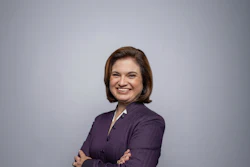
Dr. Karen A. Stout
They are the nation's most democratic institution of higher learning — open to nearly anyone, rooted in every zip code, and trusted to deliver on a promise stretching back to the junior college movement of the early 20th century. Community colleges enroll nearly half of all undergraduates in the United States. They train nurses, electricians, cybersecurity analysts, and early childhood educators. They serve first-generation students, working adults, returning veterans, and displaced workers pivoting from industries that no longer exist.
And increasingly, they are being asked to do all of it on a budget that was never designed to support this scale of ambition. Are community colleges being treated as a public good — institutions worthy of sustained federal and state investment — or are they being quietly repackaged as workforce pipelines, patched together through employer partnerships, competitive grants, and the ingenuity of presidents who have learned to do more with less?
No single data point captures the strain more starkly than this: New Jersey, which ranks 46th in the nation in total state funding for community colleges, provides just $3,454 per full-time enrolled student. The national average is $9,034, barely one-third of what the average state commits. Rather than close that gap, the state's proposed fiscal year 2026 budget would cut community college operating aid by $20 million, returning funding to levels last seen in 2005 — even as more than 60,000 students attend workforce programs at those very colleges.
New Jersey is not an outlier. It is a cautionary tale. In inflation-adjusted dollars, 17 states experienced declines in higher education funding between fiscal years 2023 and 2024, with Vermont, Arizona, and Alabama registering drops between 9 and 10 percent — even as enrollment at public institutions in Arizona and Alabama rose by 6 and 3 percent, respectively.
More students. Less money. The math doesn't work.
For Dr. Frank Harris III, a professor of postsecondary education and director of the Community College Equity Assessment Lab at San Diego State University, the pattern is neither accidental nor politically neutral.
"Community colleges have always served the overwhelming majority of racially minoritized and other disproportionately impacted students," Harris said. "Thus, it is no coincidence that as community college enrollments have increased, state support for these institutions has decreased. This represents both a structural and an ideological crisis."
Structurally, he added, decades of divestment from community colleges have resulted in a "widening resource disparity between these institutions and their university counterparts, particularly flagship research institutions, which have consistently received more state support than regional universities and community colleges." Ideologically, Harris added, policymakers across the U.S. "have questioned the value of postsecondary education because of its democratic aims and have used this as an excuse to avoid adequately funding public education."
The One Big Beautiful Bill Act, signed July 4, 2025, delivered what community college advocates had long sought: Pell Grant eligibility extended to short-term workforce training programs, with grants worth up to $7,395 per year. A proposal within the broader budget framework would cut roughly $980 million in federal work-study funding, shifting those costs directly to colleges — a burden falling disproportionately on open-access institutions already operating on thin margins.
"The pivot toward workforce development has reshaped how community colleges justify their existence to legislators," said Dr. Kenneth Parker, a higher education consultant and former analyst at the U.S. Department of Education. "Texas has moved farthest in formalizing this reorientation, transforming its funding formula through legislation in 2023 and 2025, shifting from enrollment-based support to an outcomes-based model rewarding colleges for producing credentials aligned with labor market demand."
Dr. Karen A. Stout, president and CEO of Achieving the Dream Inc., acknowledged the economic logic driving that shift, but cautioned against taking it too far.
“Community colleges have increasingly been positioned politically and fiscally as workforce engines, and in many ways that shift reflects legitimate economic realities,” Stout said. “Students are rightly asking whether higher education will lead to economic mobility. Policymakers and funders are asking institutions to demonstrate labor market value and return on investment. Community colleges, because of their deep regional connections, are uniquely positioned to respond.”
But Stout resists the framing that positions workforce relevance and public good as competing values. The real danger, she argues, lies not in community colleges paying attention to workforce outcomes, but in how narrowly those outcomes get defined.
“Today's economy does not simply require technical skills,” she said. “It requires adaptable learners, problem solvers, communicators, collaborators, and citizens capable of navigating continuous change. The students most likely to thrive over a lifetime will need both occupational capability and broader human capabilities.”
When institutions become overly focused on short-term labor market responsiveness, Stout warned, the consequences ripple through the student experience: humanities and transfer programs become marginalized fiscally and rhetorically; students receive the message that education only has value if it maps immediately to a specific occupation; and institutions underinvest in the broader developmental experiences that build identity, agency, civic capacity, and long-term adaptability.
Ironically, she added, that narrow framing may undermine workforce goals themselves.
“In a rapidly changing economy shaped by AI, automation, and evolving industries, students will need the capacity to reinvent themselves repeatedly across their lives,” Stout said. “Community colleges are at their best when they help students develop both economic mobility and the broader intellectual and civic capacities necessary to flourish in changing communities and economies.”
Critics argue the outcomes-based model reduces students to economic inputs, subordinating the liberal education mission that once defined the two-year college ideal: civic preparation, critical thinking, and upward mobility across generations. That tension is not new. But it has sharpened as bipartisan goodwill toward community colleges — valued by Republicans for vocational utility and by Democrats for access — has not translated into parity of investment.
Enrollment in community colleges in Massachusetts grew at nearly two and a half times the national average in 2024, after the state invested millions in free community college programs funded through a voter-approved surtax on high earners. The lesson, added Parker, is not complicated. When states treat community colleges as public goods and fund them accordingly, students come.
Who actually attends community colleges tells the story that budget spreadsheets obscure. According to the American Association of Community Colleges, 39 percent of community college students are the first in their families to pursue higher education. Nearly half attend part-time, most work while enrolled, and a disproportionate share come from households earning less than $30,000 a year.
The data on outcomes sharpens the stakes further. Research from the Community College Research Center at Teachers College, Columbia University, consistently shows that completion rates — already lower at two-year institutions than four-year colleges — decline sharply when students lack access to wraparound supports: financial aid advising, mental health services, emergency funds, and childcare.
Stout's vision for the sector goes beyond the workforce-versus-liberal-arts debate.
“Community colleges should not be understood merely as workforce utilities,” she said. “They are anchor institutions for community vibrancy. Their role is not only to fill jobs, but to expand opportunity, strengthen democratic participation, support regional vitality, and help individuals build meaningful and adaptable lives.”
For millions of students — working adults, first-generation strivers, immigrants building new lives, veterans in transition — community colleges remain the most accessible point of entry into the American middle class. But experts like Harris, Parker, and Stout question whether future funding models will ever catch up to this reality.