Dr. Karen A. Stout
The framework, which is being piloted with colleges that collectively educate over 200,000 students, represents a significant shift in how community colleges approach their mission. Rather than focusing solely on graduation rates, the new model emphasizes economic mobility, community impact, and long-term societal gains.
"This is a new roadmap for community college sustainability, a pathway for ensuring relevance with value, and a redefining moment for what the student success movement is all about," says Dr. Karen A. Stout, ATD's president and CEO. Stout will present more details about the framework's implementation at ATD's annual DREAM Conference next week in Philadelphia, where over 2,000 community college leaders and practitioners will gather to share best practices and innovative strategies.
The timing is critical. Community colleges, which educate nearly 44% of all U.S. undergraduates, are facing multiple challenges including enrollment pressures, demographic shifts, and growing skepticism about higher education's value. Despite some recent recovery, overall community college enrollment is just returning to pre-pandemic levels, while remaining well below peak enrollments from the early 2000s. The framework helps institutions respond by connecting their work more directly to community needs and economic outcomes.
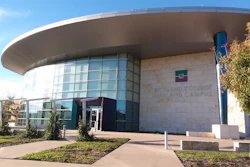
Early results from participating colleges show promising innovations. At Grayson College in Texas, implementation of a Promise Program has led to a 35% increase in direct enrollment from high schools. The college recently secured a $456.5 million facilities bond tied to supporting next-generation talent development, particularly in response to the region's growing semiconductor industry.
Durham Technical Community College in North Carolina has developed new partnerships to create career pathways, including a life sciences training program that helps graduates secure jobs paying $40,000-$50,000 annually. The program provides $10,000 living stipends to participants and organizes them into cohorts with comprehensive support services.
The framework consists of several key components, including intentional outreach to underserved populations, affordable access, early academic momentum, and clear pathways to economic mobility. Colleges are using new metrics to track not just student completion, but also post-graduation employment, wage gains, and broader community impact indicators.
"We want to help students get a job, have a family-sustaining career, and be a more well-rounded citizen," said Dr. Chris Whaley, president of Roane State Community College. "Ultimately, what we want is for enough of those folks in a community to have economic and social mobility so that we're not just lifting up one or two individuals but hopefully lifting up the entire community."
Participating institutions are reimagining their relationships with local partners. Several colleges have developed innovative approaches to serve specific populations, such as justice-impacted individuals and working adults. Others are aligning their programs more closely with regional workforce needs and creating new support systems to ensure student success.
Harper College in Illinois, for example, has found that students who complete five specific milestones in their first-year graduate at a 75% rate. The college has redesigned its first-year experience program around these findings while simultaneously strengthening connections with local employers and community organizations.
The framework is also changing how colleges measure their impact. Instead of focusing solely on enrollment and completion metrics, institutions are tracking broader indicators of community vibrancy, including educational milestones, quality employment opportunities, improved economic outcomes, enhanced social outcomes, and long-term societal gains.
"If there is any sector that can quickly win back public trust for the higher education enterprise, it is the more than 1,000 community colleges that are prized for their localness, student support, and accessibility," notes the ATD report.
ATD plans to expand this approach across its network and beyond, making the framework the backbone of its innovation, coaching, and service delivery efforts. The upcoming DREAM Conference will serve as a crucial platform for sharing early lessons from the framework's implementation and engaging more institutions in this transformative approach.
The framework represents a significant evolution in the community college mission, expanding the definition of student success to encompass not just individual achievement but community transformation. As these fifteen pilot institutions continue to test and refine the model, their experiences will help shape the future of community college education nationwide.