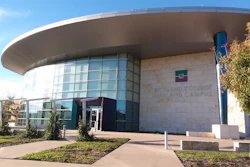
This fall, Maryland will become the latest in a growing number of states to open a “middle college,” or a high school housed on a college campus. Prince George’s Community College will open the Academy of Health Sciences, a high school focusing on allied health services. The school will begin accepting applications this month.
“Students must be looking for a different kind of environment, unlike the structure that exists in most public school programs,” says PGCC President Charlene Dukes. “Middle college provides students with the opportunity to engage in an environment that, we hope, will add to the intellectual stimulation that they already received in their middle schools.”
Students at the Academy will begin their freshman year by taking two college courses alongside their high school coursework. By the time they graduate, students are expected to have accumulated at least 43 college credits. Some students may even graduate with an associate degree as well as a high school diploma, says Dukes.
The middle college is a relatively new concept in higher education, originating in the 1970s. The first middle college was housed on the campus of LaGuardia Community College in Long Island City, N.Y. and focused on “dropout retrieval,” or aiding students who had a high risk of dropping out of high school.
Today, there are at least 35 middle colleges in the Middle College National Consortium (also based in Long Island City) as well as dozens of other similar, dual-enrollment programs.
Most schools aggressively target lower-income and minority students, often requiring that at least 50 percent of enrolled students be from at-risk or disadvantaged backgrounds. Overall, 67 percent of middle college students are eligible to receive Title 1 services. Fifty-three percent are female, and 78 percent are students of color.
“We would expect the student body to be as equally diverse as any high school in the country,” says Sandra Dunnington, PGCC’s vice president for academic affairs.