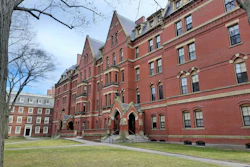
An Emory Law student has been kicked out of the Atlanta-based law school after a series of racist, transphobic and threatening emails and social media posts from the student came to light, The Emory Wheel, a student newspaper at the university, reported late Thursday. Previously, the student had been banned from campus since January but was still taking classes remotely.
The expulsion came after students publicly complained that school officials were not sharing enough information or taking decisive action to ensure the safety of students. Following extensive media coverage of the matter, school officials sent an email to the Emory community on April 23 indicating that the university had dismissed the student after completing its investigation into the matter, according to The Emory Wheel.
Some students are criticizing the law school for not taking action sooner since the university allegedly knew of the students’ concerns as early as September 2025. “Emory Law’s preferred response was inaction and complacency on these points until it went to the news,” former Student Bar Association President Kylie Doyle told the Emory Wheel.

The bigger picture:
The Emory situation raises questions about whether university officials are acting swiftly and decisively enough to keep students safe whenever someone expresses a desire to do harm. Though it’s unclear from news reports if the expelled Emory student specifically threatened to shoot anyone, students at Emory Law say they were worried about exactly that.
“We started out the year with an alleged shooting threat at the Law School. We started the year with police at the Law School,” one student told WSB-TV Atlanta, noting that the banned student had used “multiple racial slurs, thinly veiled Nazi and white supremacist statements, transphobic statements, just horrible, horrible things.”
Whenever a shooting does take place on a college campus in the United States, questions tend to follow about whether there were any warning signs that could have enabled officials to take preventive action. Research shows that in the vast majority of campus shootings, warning signs were in fact evident.
Criminologists James Densley, a professor of criminal justice at Metropolitan State University, and David Riedman, an assistant professor in the Department of Homeland Security and Emergency Services at Idaho State University, say campus shootings often involve gunmen who “communicate intent to do harm in advance.” Densely and Riedman maintain databases that track mass shootings and school shootings, respectively. In the case of Emory, the warning signs had already been reported – students were concerned that those warning signs weren’t being treated with the seriousness that research clearly shows they deserve.
Further, although campus shootings can take place at any time, recent experience shows that final exam week – which began Monday at Emory – can be a time when schools are particularly susceptible to attacks from disgruntled former students or faculty. For instance, the 2025 Brown University shooting – which a former student had been planning for six semesters – took place during finals week.