At the recent Achieving the Dream conference in Portland, Ore., facilitators challenged a dominant narrative surrounding artificial intelligence that faster and easier learning is inherently better. AI excels at producing statistically probable answers quickly, they said. Learning, by contrast, is inherently messy. Meaning emerges through interpretation, disagreement, revision, and context. When AI removes friction from the learning process, the presenters warned, it risks bypassing the very struggle that builds judgment, ethical reasoning, and adaptability.
Throughout the event, which was held March 2-5, educators returned again and again to a deeper concern of not whether students can use AI, but whether they can critically think, judge, and decide in a world increasingly shaped by it. And part of developing students’ thinking, presenters said, is interrogating who is invited in and who is left out by the growing emphasis on AI.
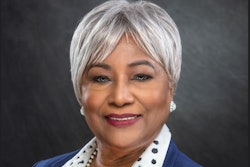
In her opening keynote, Dr. Sarah Elizabeth Lewis, an associate professor of African and African American Studies at Harvard University and the John L. Loeb Associate Professor of the Humanities, connected today’s debates about AI, workforce readiness, and the humanities to a much older struggle over representation and belonging. Lewis recounted the story of her grandfather, Shadrach Emmanuel Lee, who in 1926 questioned why Black Americans were absent from his history textbooks. When told they had done nothing worthy of inclusion, he persisted — and was expelled from school. Dr. Sarah Elizabeth Lewis
Denied formal credentials, Lee turned to a career in art and music, becoming a painter and jazz bassist and creating the images he had been told did not belong. Lewis traced this family history as foundational to her work, framing visual and cultural literacy as forms of civic literacy to the ways societies decide who is recognized, remembered, and valued in public life. The question her grandfather asked nearly a century ago, she suggested, has not disappeared. It has simply migrated into new systems, now embedded in institutions, technologies, and increasingly, AI-driven decision-making.
One session reframed “AI readiness” not as tool mastery, but as human readiness. As AI automates routine writing, coding, and analysis, what becomes valuable is the ability to ask better questions, recognize what is missing, evaluate bias, and decide what matters. One model assignment illustrated this shift: students use AI to generate an initial draft on a local issue, then critique it by identifying missing perspectives and contextual blind spots before conducting interviews in their communities and revising the work. AI becomes a starting point, not a substitute, and students remain responsible for meaning-making.
Humanities as Civic Infrastructure
In a faculty panel featuring Dr. Jason Michael Leggett of Kingsborough Community College and Dr. Donna Hunt of Lorain County Community College. Together, they rejected the notion that the humanities are abstract enrichment separate from workforce preparation. Instead, they positioned humanities education as part of a civic infrastructure that is essential to equity and democratic participation.