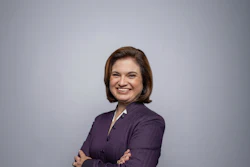
Dr. Sheena C. Howard
Log in to view the full article
Dr. Sheena C. Howard
“There is no bigger award in the space of comics that will give you that kind of affirmation,” Howard says. “It gave me the credibility to get my foot in the door to write comics and that led to Marvel and DC Comics and other things. It’s still something I lead with in the comics industry when I’m trying to pitch and get an opportunity.”
When Howard, who earned her Ph.D. in intercultural and rhetorical communication at Howard University, was in graduate school, she sat with other doctoral students who had clear visions of what they wanted to research for their dissertations. She hadn’t yet decided on a topic, but the message was that the dissertation should add new knowledge.
“I learned to look for where to add value and look for things that people are not doing,” says Howard. A film about her Ph.D. journey is in post-production. “I happened to be reading the ‘Boondocks’ comic strip; it was a comic strip before it was a [TV] show (an animated series focused on a Black family living in a predominantly white suburb). I thought, it doesn’t seem like people are studying comics much. This is culturally relevant, it’s political, it’s speaking to the times.”
Today, Howard is a full professor, calling herself a bit of a unicorn given how few Black women are full professors. “I frequently look up research about Black women and tenure and full professorship,” she notes. “I knew that I had done everything I was supposed to do — doing more than you have to so they can’t say no. I was ready and I got it on the first round.” She feels comfortable in researching areas that interest her, and her work has earned her numerous awards. Howard also enjoys engaging with her students, teaching communication courses such as Social Media and Social Change, Intercultural Communication and Speech Communication. “I found a university that lets me do the work that I want to do,” says Howard, co-writer of the comic book Superb about a teenage superhero with Down Syndrome. She has also been a script writer for Marvel Entertainment and a freelance writer for DC Comics and Lion Forge Comics. Howard’s comic creation “Rent Free” currently appears on Webtoons.com.
“Even if I’m writing comics, I still feel it’s part of my research,” she says. “As a comic book writer, I have the benefit of studying comics from the inside out and not the outside in. It’s one thing to research something, it’s another thing to actually be part of creating it. Those are oftentimes different perspectives. I wanted to be closer to the perspective of what the creators actually thought. … Writing comics gives me more authority to study them.” About six years ago, she became more active on social media, creating Reels about her research and her book Why Wakanda Matters: What Black Panther Reveals About Psychology, Identity, and Communication. Her goal was to make the information available to everyday people, who apparently want to have deep discussions about films like “Black Panther.” It has led to engagement about her work around the world.
“I’ve always looked at research as a creative process,” says Howard. “I’ve learned to lean into that.” Her latest book, Hip-Hop and Comics (University Press of Mississippi), will be published in April. It’s a co-edited book for which multiple people wrote chapters. Howard wrote two, one of which is about Eric Orr, who published the first hip-hop comic, Rappin’ Max Robot, which is now celebrated with a statue that appeared in Columbus Park in Brooklyn, New York, last year.
“I’ve been thinking about this book idea since I finished my dissertation,” she says. “It looks at the parallels between the history of hip-hop and the history of comics and all of the moments where they intersect and thrive off of each other.”