Dr. Larry Summers
Harvard confirmed that Summers will retire at the end of the current academic year, remaining on leave until that time. The departure marks the formal end of a long and often turbulent relationship with the institution he once led.
"I have made the difficult decision to retire from my Harvard professorship at the end of this academic year," Summers said in a statement. "I will always be grateful to the thousands of students and colleagues I have been privileged to teach and work with since coming to Harvard as a graduate student 50 years ago."
The resignation comes after Summers stepped back from his public commitments in November, following the House Oversight Committee's release of documents from Epstein's estate that included dozens of messages between the two men. The correspondence revealed that Summers and Epstein communicated regularly, even after Epstein pleaded guilty to prostitution charges in Florida and prior to his 2019 federal arrest on sex trafficking charges. Summers has not been accused of any wrongdoing.
In the wake of the revelations, Summers also resigned from the board of AI company OpenAI, as well as positions with Bloomberg News, The New York Times, and the Center for American Progress.
Since stepping down as Harvard's president in 2006, Summers had held the Charles W. Eliot University Professorship, one of the institution's most distinguished academic posts. He was also co-director of the Mossavar-Rahmani Center for Business and Government at Harvard's Kennedy School.
"Free of formal responsibility, as President Emeritus and a retired professor, I look forward in time to engaging in research, analysis, and commentary on a range of global economic issues," he said.
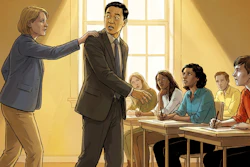
Summers' resignation also brings renewed scrutiny to a career long marked by controversy within academic circles. Most notably, his tenure as Harvard's president from 2001 to 2006 was shadowed by a public and damaging dispute with Dr. Cornel West, one of America's most celebrated public intellectuals. Summers reportedly berated West, questioning the rigor of his scholarship and objecting to his public activism, a confrontation widely viewed as racially charged and emblematic of deeper tensions around race and academic freedom at elite institutions. West ultimately left Harvard for Princeton, and the episode became a defining — and deeply criticized — chapter of Summers' presidency.
Prior to his Harvard presidency, Summers served as Treasury Secretary under President Bill Clinton from 1999 to 2001, and later as Director of the National Economic Council in the Obama administration from 2009 to 2011.
The Epstein controversy extends well beyond Summers. Epstein died by suicide at a federal jail in New York City in 2019. In recent months, the Justice Department has released millions of documents from its Epstein files, sending shockwaves through elite circles on both sides of the Atlantic. In the United Kingdom, the files have contributed to the arrest of former Prince Andrew and the country's former ambassador to the United States, Peter Mandelson, on suspicion of misconduct in public office. Andrew has denied any wrongdoing, while Mandelson's law firm, Mishcon de Reya, has said he intends to cooperate fully with police and clear his name.