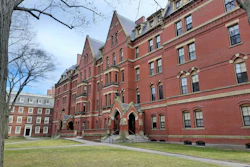
Court documents filed as part of Elon Musk's federal lawsuit against OpenAI CEO Sam Altman reveal that Michigan's early stake carries a target redemption value of $2 billion, a staggering potential return on a $20 million investment. If realized, the windfall would represent a roughly hundredfold return and could redefine how university endowments think about venture capital in the age of artificial intelligence.
Michigan's investment arrived alongside early commitments from Khosla Ventures at $50 million, Reid Hoffman's Aphorism Foundation at $50 million, a Y Combinator fund at $10 million, and the trust of Google's Paul Buchheit at $3 million — all predating Microsoft's initial $1 billion investment in 2019 and the public debut of ChatGPT in November 2022.
AI Exposure Drives Endowment Growth
Michigan's windfall is the headline, but it is not an outlier. Across the country, major university endowments have poured capital into AI companies and AI-adjacent private equity, and the fiscal year 2025 returns reflect it.
Universities with the deepest AI investment exposure — Michigan, MIT, and Stanford — led the nation in endowment returns last year, well outpacing institutions with more conventional portfolios and nearly doubling the national average of roughly 7.7%. Princeton, Yale, Cornell, Brown, and the University of Pennsylvania have all been identified by analysts as carrying notable and growing AI exposure, with Cornell directly holding equity in the crypto firm Ava Labs.
On average, major university endowments allocated 54.5% of their portfolios to alternative investments in 2025, a category that includes the private equity and venture capital vehicles through which most AI bets are made. The numbers are striking, though analysts caution that a significant portion of these returns remain unrealized “paper gains,” based on late-stage venture capital markups rather than actual liquidity events.
The Litigation Paper Trail
The disclosure of Michigan's OpenAI position came not from the university itself, but from a federal courthouse in Oakland, California. The document listing early investors was not the focus of the trial, in which Musk is seeking $150 billion in damages, alleging that OpenAI's conversion from nonprofit to for-profit corporation constituted theft from a charity. Yet it set off a wave of attention in higher education circles and on social media, with one observer on X asking simply: “Best direct investment from an endowment of all time?”
According to the documents, Michigan's investment came with a “target redemption amount” of $2 billion, meaning the public university expects to get that amount back from its investment — though that figure could ultimately prove to be a placeholder, and Michigan's actual return may be even higher depending on market conditions at the time of a public offering.
A Growing Concentration of Capital
Michigan's endowment, which totaled approximately $17.9 billion at the end of fiscal year 2025, has been more aggressive than most in its AI allocation. The university's exposure extends beyond its OpenAI stake: in 2023 it committed $75 million to Hydrazine Capital, a venture fund led by Altman, and by 2024 had increased that commitment to $180 million — representing an unusual concentration of a university endowment around a single individual's investment vehicles.
OpenAI closed a $122 billion funding round in March 2026 at a post-money valuation of $852 billion, with commitments from SoftBank, Andreessen Horowitz, Amazon, and Nvidia. An IPO is anticipated, with internal targets discussed for a filing in the second half of 2026 and a listing that could value the company at one trillion dollars.
From Institutional Stewards to Venture Capitalists
To understand why universities have moved so aggressively into high-risk, high-reward investment strategies, experts say you have to understand what has happened to public funding over the past six decades.
“What we're seeing with Michigan's endowment and its investment in OpenAI is impressive, but it is part of a larger trend in higher education finance,” said Dr. Frank Fernandez, an associate professor of higher education at the University of Wisconsin-Madison.
The numbers tell a stark story: the University of Michigan once received 78% of its general fund budget from the state of Michigan in 1960. By 2025, that figure had fallen to just 12%.
Michigan is not alone. Flagship public universities across the country have watched state appropriations erode for decades, forcing them to seek revenue from hospitals and healthcare systems, tuition increases, corporate partnerships, and — increasingly — their endowments.
“For decades, we've seen endowment managers invest in increasingly risky assets with higher potential returns — for example, international emerging markets,” Fernandez said. “It can seem odd to think of universities investing in things like OpenAI, but they're trying to meet the public's expectations alongside the public's constraints.”
The contradiction at the heart of that dynamic, Fernandez argues, is one of collective making. “We want them to maintain their status as world-class research powerhouses, but we have an inability or unwillingness to provide more public funding for higher education,” he said.
The result is a generation of endowment managers who have had little choice but to behave more like venture capitalists than traditional institutional stewards — chasing returns in private equity, emerging markets, and now artificial intelligence to fill the gap that public disinvestment has left behind.
Financial investment in AI is only one dimension of a transformation underway across American higher education. Universities are also investing in AI through curriculum, partnerships, and physical infrastructure.
The University of Florida has committed to integrating AI literacy into every undergraduate major and graduate program. Arizona State University has partnered with OpenAI directly to provide ChatGPT Enterprise access to its faculty and staff. The Lilly Endowment has allocated up to $500 million for a multi-year initiative to help Indiana colleges develop AI programs.
Michigan's entanglement with the AI economy runs deeper than most. A trio of tech companies — Oracle, OpenAI, and Related Digital, a firm with ties to University of Michigan donor and billionaire Stephen Ross — is planning a data center on farmland in Saline Township, outside of Ann Arbor, estimated to cost over $7 billion. The facility would include three single-story buildings, each sized at 550,000 square feet, on a 250-acre property.
The Integrity Paradox
The windfall narrative carries an unmistakable irony. Universities have spent the past several years wrestling with the challenge AI poses to academic integrity — grappling with students who use tools like ChatGPT to circumvent the core work of learning. Faculty have redesigned assignments, institutions have adopted detection software, and deans have rewritten honor codes — all in response to the same technology their endowment managers have been quietly enriching themselves on.
That tension, experts warn, is unlikely to resolve cleanly, as university balance sheets grow stronger from AI investment returns.