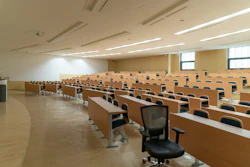
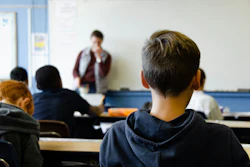
Walking through the residence halls and classrooms at the University of Mount Saint Vincent in the Bronx, it is easy to miss the boundary between the traditional college experience and the university's residential program for students with disabilities. That is entirely by design. At this university, the path to independence for these students does not begin after graduation. It is built into the daily fabric of campus life.
The University of Mount Saint Vincent's Bridge program is a two-year non-degree program that helps students with disabilities experience college life on their road to independence.
Students in the university’s two-year non-degree Bridge program are fully immersed — attending classes, participating in internships, and joining student organizations alongside their peers. They are learning how to live and lead within a shared community. That level of integration reflects a broader shift in how colleges are beginning to define access not as accommodation, but as full participation.
“The primary goal of the Bridge program is to bridge the journey from childhood to young adulthood and independence,” said Erika Greenblatt, director of UMSV’s Bridge program.
In the halls of UMSV, that bridge is being built every day, one budget, one roommate agreement, and one internship at a time. For institutions willing to rethink access—not as accommodation, but as integration—it may signal a new blueprint for higher education itself.
Inclusive Postsecondary Education (IPSE) programs, specifically designed for students with intellectual and developmental disabilities, have more than doubled nationwide since 2009. Today, more than 300 programs exist across the country to respond to a stark reality: only about 17% of individuals with intellectual and developmental disabilities are currently employed. Programs like Bridge are working to change that trajectory.
As a two-year, non-degree certificate program, Bridge serves students ages 18 to 24 which might include intellectual and/or developmental disabilities. The curriculum blends academic exposure with practical life skills. Students take courses in financial planning, employment readiness, and communication while also auditing or enrolling in university-level classes. Beyond the classroom, they participate in internships and live on campus. These experiences mirror a traditional college journey — one that has historically been inaccessible to this population.
Greenblat said that access is foundational to the mission. "Our mission is to give young adults a chance to experience a college community setting," Greenblatt said. She notes that many in the program have Down syndrome or autism and have often lived lives that were not integrated into the bigger world. "The Bridge program not only supports our students, it educates the rest of the world on living in communities with people of different abilities."
Learning Independence and Leading Others
For Olivia Ferre, a current student in the program, independence is not an abstract goal. It is something she practices every day. "The Bridge program covers a lot of different topics like budgeting, tech, and nutrition," she said. "Budgeting and employment skills have been really helpful."
A strong sense of responsibility is reinforced through a layered support system. Each student is paired with a peer mentor who helps them navigate campus life. "I have a peer mentor I meet with every week," Olivia said. "We do activities together. We can also go to study hall and get one-on-one support."
She also points to a course on intimacy and adult relationships where she is learning how to navigate communication in both personal and professional settings. "Communication in the workplace and using my break time" are specific skills she is actively developing.
Much of this learning happens through community leadership. Olivia lives in a dorm with roommates, attends campus events, and serves on the executive board of the Daughters of Christ club. She is also preparing for a significant leadership role on April 11, when the university hosts a Special Olympics basketball event for local high school students. Olivia and several other Bridge students will volunteer as facilitators, working alongside UMSV athletes to run the program. Her role as a facilitator — not just a participant — highlights the program’s success in fostering self-efficacy and leadership.
A Holistic Model of Support
While the program includes academic advising and structured coursework, Greenblatt emphasizes that no single component defines student success. "As a mother with two young adults with different abilities, I can attest to it being a holistic program," she said. "Not only are we teaching students independence, we are also educating parents in releasing control and empowering their children."
Many students enter the program from highly structured environments where daily schedules and responsibilities have long been managed for them. Bridge shifts that dynamic. Students learn to share living spaces, manage their own finances, and advocate for themselves in academic and workplace settings.
That process is guided by a partnership with the Think College Institute for Community Inclusion at the University of Massachusetts Boston. While the program launched in 2020 and is still relatively new, it continues to evolve with national standards in mind. Greenblatt noted that the program is exploring future accreditation and expanded participation in national working groups.
From Campus to Community
The true measure of a "bridge" is where it leads, and the program's alumni are already demonstrating the diverse paths available after completion. For some, like Cole Seem, the program led directly to the workforce and increased autonomy. Cole is currently living semi-independently and working with youth, applying the professional skills he honed in the Bronx to a career in service.
For others, the certificate program serves as a stepping stone to further academic pursuits. Danny Zarro, another Bridge alumnus, leveraged his experience to transition into the Inclusive U program at Syracuse University, where he is now pursuing a bachelor's degree.
These success stories underscore a critical point: IPSE programs are not a "final destination," but a launchpad. Whether the goal is immediate employment or a traditional degree, the foundation remains the same. Students have already discovered their strengths through community engagement, such as volunteering with the elderly or interning with local small businesses in pet grooming and graphic design. These experiences help students understand what they are good at and where that can take them.
Internships are a critical component of that evolution. While many placements are currently based on campus, the program is building relationships with local businesses across the Bronx to expand opportunities. Some students have already transitioned from internships into full-time roles in pet grooming and graphic design.
Others, like Olivia, have discovered new interests through community engagement, such as volunteering with the elderly. These experiences help students understand what they’re good at — and where that can take them.
The program is also expanding its professional ecosystem. Potential partnerships with organizations like the Braven Career and Leadership Accelerator and the Institute for Social Justice aim to deepen workforce pathways, while collaborations with local businesses could further embed students in the Bronx economy. These efforts are designed to ensure students graduate with not only a certificate, but also a network.
Redefining What College Can Be
As higher education continues to grapple with questions of access and workforce readiness, programs like Bridge offer a different model. It expands the definition of who college is for and what success looks like. Students are not separated from the broader campus experience — they are an essential part of it.