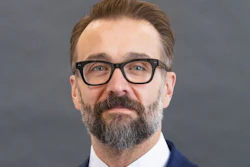
Just days after being unanimously selected by the Clemson University Board of Trustees to become their next president at a base salary of $1.2 million, Dr. Kevin Guskiewicz withdrew his resignation from Michigan State University (MSU), citing "personal reasons.”
The reversal underscored a shifting power dynamic in higher education: the rise of the high-stakes retention counteroffer. To keep their sitting leader from walking out the door, MSU's Budget and Finance Committee announced an authorized a compensation package reaching $1.5 million annually, drawing entirely on non-general fund resources and donor commitments, though some sources report that his actual salary will be one-third higher, at $2 million. This would represent a nearly 100% increase over his previous salary of $1.03 million. His contract, originally set to expire in 2029, was extended to 2031.
But a deeper examination of the final agreement that kept Guskiewicz at Michigan State, the clearer it becomes that the crisis wasn't just about money — it was a full-blown referendum on trustee behavior and university governance. When Guskiewicz initially resigned on May 27, he released a scathing exit letter explicitly citing an “unsustainable situation.” He called out “discouraging behavior by a few trustees” and noted that the administration’s progress was constantly being “hampered when disagreements move from offering alternative perspectives into publicly undermining decisions and putting personal interests above the best interests of the university.” To resolve this and convince him to stay, the board had to completely overhaul its structural rules, tying his final July contract to a new Code of Ethics and Conduct.
The code passed via a majority vote, but trustees Dr. Rema Vassar and Mike Balow flatly refused to sign it, calling it an unconstitutional overreach. In public pushback, Vassar explicitly termed the document a “loyalty pledge” and warned of the dangerous precedent it sets, stating: “If a public university can sanction an elected official for refusing to sign a loyalty pledge, the principle of free democratic representation is at risk.”
Signaling a Deeper Problem
More than just a crisis that left Clemson — which has since named University of Georgia Provost Dr. Benjamin Ayers to the president’s seat — in a tough situation, the dramatic, last-minute reversal by Guskiewicz underscores the structural strain on higher education leadership that exist today.
The modern university presidency has evolved from an academic stewardship into a high-stakes tightrope walk, and the scramble to retain proven leaders points to a shrinking pool of experienced, crisis-tested candidates willing to step into these highly scrutinized roles. According to data from the American Council on Education (ACE), the average tenure of a university president has dropped from 8.5 years in 2006 to less than six years in 2023. As the position has become a lightning rod for political, financial, and cultural battles, candidates who can successfully navigate major research institutions are holding massive leverage.