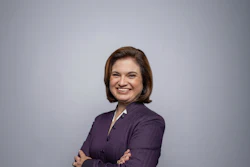
Dr. Tracy Y. Espy
Women make up approximately 58 percent of today’s college students, but many female students do not see themselves reflected in college and university presidents.
Approximately 33 percent of college and university presidents are female with the percentage dropping to around 30 percent at Research 1 institutions, with just 6 percent being women of color. Although these numbers do not mirror today’s higher education demographic, a diverse group of women are having an impact across the country at both public and private institutions.
To gain insights on what it means to be a female president today, The EDU Ledger spoke with three presidents—one from a small private college, one from a public Research 2 institution and one from an HBCU—to understand their experiences and perspectives.
“When students see someone who looks like them in a position of leadership, it expands their sense of what is possible for their own lives,” said Dr. Tracy Y. Espy, president of Mitchell College, a private institution in Connecticut. “For young women of color especially, I hope my presidency signals that they belong in every room where decisions are made.”
 Dr. Berenecea Johnson Eanes
Approximately 61-64 percent of undergraduate students at HBCU institutions are women, but only about 30 percent of HBCU institutions have female leaders. Dr. Aminta H. Breaux is the first female president of Bowie State University, the oldest HBCU in Maryland. “The fact that I am on this campus, in rooms where decisions are made, and not only participating but leading, serves as a visible example of what is possible for our students, women and men alike,” said Breaux, who has been in the position since 2017. “I have been especially pleased to see so many of our students thinking more intentionally about leadership, graduate education and terminal degrees.”