As President-elect Joe Biden prepares to enter the White House, he’s joined by an influx of alumni from historically Black colleges and universities (HBCUs) ascending into government positions.
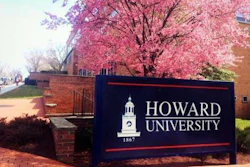
Kamala Harris – soon to be the country’s first female, first Black and first South Asian vice president – attended Howard University. Reverend Dr. Raphael Warnock, a Morehouse College graduate, won a tense runoff election to become Georgia’s first Black senator, aided by voter outreach from Stacey Abrams, a Spelman College alumnus. Cori Bush, the incoming Democratic representative from Ohio, graduated from Harris-Stowe State University and the new Congressional Black Caucus chair, Rep. Joyce Beatty, from Central State University.
HBCU alumni taking on leadership roles is nothing new, said Dr. Robert Palmer, department chair and associate professor of educational leadership and policy studies at Howard. He noted that HBCU graduates led the Civil Rights Movement, including Rev. Dr. Martin Luther King Jr., Medgar Evers, Rosa Parks and Stokely Carmichael, among others.
However, now, the difference is HBCU graduates are reaching high level positions within government, according to Dr. Ravi K. Perry, chair and professor of political science at Howard.
“That really allows [the newly-appointed government officials] to highlight the benefits of their education but also to use the power of their positions hopefully to genuinely invest in HBCUs,” he added. “We have been talking about that as a country for generations and we as a country have failed to invest adequately in our HBCUs.”
This wave of HBCU graduates in the political sphere shines a spotlight on the “everlasting value” of an HBCU education at a time when these institutions are sometimes dismissed as “relics of the past,” Palmer said.
“I think it is important that Black students see this in particular, because even among folks in the Black community, there are some who question the value of HBCUs,” he said. “Some feel you would get a better education attending a predominantly White institution. But I think what we see played out in the past, and what we see playing out now, are HBCUs saying, ‘We prepare students to be leaders. We have always done that, and we will continue to do that.’”