The average cost of attending a four-year college in the United States has reached $38,270 per student annually — and when student loan interest and lost wages are factored in, earning a bachelor's degree can ultimately cost upwards of $500,000, according to a new report tracking higher education expenses through the 2022-23 academic year.
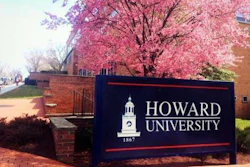
 File photo.
The report found that the average in-state student attending a public four-year institution and living on campus spent $27,146 in the 2022-23 academic year. Out-of-state students at public universities paid $45,708, while students at private, nonprofit universities shelled out $58,628 — with $38,421 of that going toward tuition and fees alone.
The costs compound sharply over time. A student completing a bachelor's degree at a private nonprofit institution in four years faces a total degree cost of $226,512. But only 42 percent of bachelor's degree-seeking students actually graduate in four years, the report noted. Among those who do eventually earn their degree, 97 percent do so within six years, bringing the average cost of attendance at a public in-state institution over that span to $162,876, before accounting for other financial hits.
Those additional hits are substantial. The report calculates that students unable to work full time forfeit a median annual income of $46,748 — equivalent to the median weekly earnings of $899 for a high school graduate. Over four years, that amounts to nearly $187,000 in potential lost wages. Student loan borrowers, meanwhile, pay an average of $2,636 in interest annually and spend roughly 20 years paying off their loans.
"Considering lost income and loan interest, the ultimate price of a typical bachelor's degree may be as high as $562,868," the report states.
College costs have more than doubled since the turn of the century. Between 2000 and 2020 alone, postsecondary tuition inflation outpaced wage inflation by 111.4 percent. The compound annual growth rate of tuition since 2000 stands at 4.04 percent. In 1963, annual tuition at a four-year public college was $243 — the equivalent of about $2,489 in today's dollars. By 2022-23, in-state tuition at a public four-year institution averaged $9,750.
The geographic variation in costs is also significant. Vermont leads the nation for the most expensive in-state public university tuition at $17,600, followed by New Hampshire at $17,019 and Pennsylvania at $16,217. Florida has the least expensive in-state tuition at $4,540, with Wyoming and New Mexico also among the most affordable. The spread between the most and least expensive states totals $13,060.
Among private institutions, the most expensive in the country is the Jewish Theological Seminary of America in New York City, where tuition runs $68,365 per year. Columbia University, also in New York, ranks third at $66,139. At the other end of the spectrum, Turtle Mountain Community College in North Dakota charges just $2,482.
The report also highlights the borrowing habits of today's undergraduates. Each year, 85.2 percent of new undergraduates borrow money to finance their education, with the average federal student loan debt reaching $38,375. The standard federal loan repayment plan spans 10 years, though the average borrower takes roughly 20 years to pay off their loans.
The data arrives as federal student loan policy remains under intense scrutiny in Washington and as institutions across the country face mounting pressure over tuition increases.