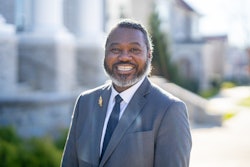
COLUMBIA, Mo. — About five days a week at 5:30 a.m., Hudson Lavender meets a friend in front of her home for an hour-long walk on the MKT Trail. At 52, Lavender, an independent living specialist for low-income seniors, made a goal to stay active for her health, especially after having both of her knees replaced in August 2013.
After recovering from the surgery, another friend introduced her to a health study program, Living Out, Living Actively, known as LOLA. Led by Jane McElroy, a University of Missouri epidemiologist and associate professor, the program was a part of the first national study on healthy weight for lesbian and bisexual women. Lavender found that LOLA not only helped her stay mobile after recovery but encouraged her to live a healthier life.
The Columbia Missourian reports that the national study was prompted by 2007 data from the National Center for Health Statistics in the Centers for Disease Control and Prevention that showed more than 60 percent of adult women in the U.S. are overweight and a little over one-third are obese.
RISK OF DISEASE
Researchers also drew from the annual National Health Interview Survey, which included sexual orientation for the first time in 2013. Conclusions of that survey showed 37 percent of gay or lesbian women and 41 percent of bisexual women were obese. Compared to 28 percent of obese heterosexual women, obese lesbian and bisexual women are more at risk to developing chronic illnesses, including diabetes, cervical cancer and high cholesterol.
In 2013, McElroy began a study on preventing weight-related chronic illnesses in lesbian and bisexual, or LB, women. Instead of focusing on weight loss, McElroy’s research study created programs to foster healthier lifestyle behaviors. The study emphasized the importance of being at a healthy weight, meaning a body size that is physically and mentally healthy. A key idea was to go beyond stepping on a scale to measure health.
Setting the burden of weight loss aside is crucial for the LB community, McElroy said, because there’s a sense that assessing weight by the numbers is not important. That concept and the ideas that arose from the study have helped empower women such as Lavender to embrace beneficial life changes.
In 2011, the Institute of Medicine of the National Academics published ““The Health of Lesbian, Gay, Bisexual, and Transgender People: Building a Foundation for Better Understanding.”“ The report highlighted obesity and weight associated with chronic illnesses specifically for the lesbian community. McElroy said President Barack Obama’s administration supported research addressing health and other issues in the LGBTQ community; that spurred the Office of Women’s Health to engage researchers to study weight-related issues in LB women ages 40 and older.
Teams of researchers from across the nation in Missouri, California, New York and Washington, D.C., developed the study and health programs. Each group and their participants spent 12 or 16 weeks working through programs that focused on health behavior. The overall study had 266 LB women, including 46 women from Columbia and 53 from St. Louis.
Each location had a slightly different program. However, every program had weekly support group meetings, nutritional aspects and some level of physical activity.
STEP BY STEP
Participants in Columbia and St. Louis were introduced to the LOLA program. They were placed in randomized controlled groups: counting steps with a Fitbit pedometer, a one-year gym membership with personal trainer sessions at Optimus Fitness or health education with speakers.
Lavender was placed in the pedometer group, measuring her steps every day with two goals in mind: to increase physical activity and to eat healthier.
““I love measuring what I do. It’s exciting,”“ Lavender said. ““I look at the numbers and think that, yes, I can do more.”“
For 16 weeks, each LOLA participant focused on specific aspects of their health, such as less consumption of sweetened beverages and alcohol, increase in vegetable consumption and more minutes of physical activity.
““We think this level of autonomy the participants had was really important toward success,”“ McElroy said. ““Ninety-five percent achieved at least one goal, but we had a fair number who achieved more than two.”“
In the beginning of the study, about two-thirds of the participants were inactive. By setting goals, half of the LB women achieved a 20 percent increase in physical activity than when they began. The day-to-day changes some participants made could be as small as consciously making the decision to park farther away from an entrance when going to the market or taking a stroll after dinner. In the long run, the modest changes had more impact on participants’ lives, especially when there was no pressure to lower the number on the scale.
The reasoning behind the focus on behavior, rather than weight, stemmed from the cultural view of the LB community having a different attitude toward weight.
““There’s a cultural acceptance of larger body sizes in the LB community,”“ McElroy said. ““And with that acceptance comes better body image and self-esteem.”“
Mickey Eliason, a professor of health education at San Francisco State University, was a part of the research team on the West Coast. Eliason said researchers had taken into consideration the different experiences that LB women had with weight, such as the different types of stress causing weight gain.
THE STRESS FACTOR
For LB women, especially women of color or with disabilities, there is a higher chance of stress being a factor in weight gain. Eliason said ageism, sexism, homophobia and racism could cause stress in women that correlates with gaining weight. Also, their sense of body positivity is another reason women in the LB community are more welcoming to bigger body sizes, Eliason said.
There is also the idea that LB women tend to be politically conscious of their body image. Eliason said they are more politically aware of society’s and the media’s roles in creating an ideal body size and shape for women. Those body size and shape ideals are set to attract heterosexual men, Eliason said – standards LB women tend to not find relevant.
““Many LB women figure out what their natural body type is,”“ Eliason said. ““They let themselves be happy and embrace themselves accepting it.”“
Although this does not apply to the entire community, Eliason said that LB women tend to not emphasize weight when looking for a partner. For the LB community, their open mindset embraced the concept of being heavy and healthy.
““The biggest feature (of the study) is no pressure of weight loss,”“ Lavender said. ““It isn’t about who can lose the most weight but how we can increase our fitness.”“
Being in a group of women with similar backgrounds as herself made Lavender more eager to meet her healthy weight goals. She said people in an already marginalized community tend to have certain values that deviate from mainstream values, such as body image.
As for her own weight, Lavender said weight is not the primary issue. It’s moving comfortably in her body that matters most.
By concentrating on health behaviors, participants acknowledged the health elements that they couldn’t control and those they could.
““Women recognize the factors that are beyond their control and that empowers them to become healthier by making the changes they can make,”“ Eliason said.
For younger generations, McElroy said that mentorship and looking toward the older generation to lead the way can reshape how the LB community views health.
McElroy’s research study opened a new door for further prevention and research. Eliason said that most concepts of the study can be applied to persons of any age. The different approach of not focusing on weight loss might encourage women of all backgrounds to find ways to reach their health goals.
““Understand that weight, getting on the scale as a measure of health, may be less optimal than figuring out what size you can be healthy at,”“ McElroy said. ““We have participants as old as 69 years old in the study. And one of our older participants said it doesn’t really matter what age you are, you can make a change to become healthier. It transcends age.”“
Since finishing LOLA, Lavender continued to incorporate more physical activity into her life. Lavender and her wife, Jane Lavender, bike downtown to grab dinner and drinks when the weather is nice. They have also completed a couple of 5K events. Hudson Lavender said healthy eating comes and goes because that is a truth of life. However, the experience with LOLA has taught her to be more patient with herself and her health.