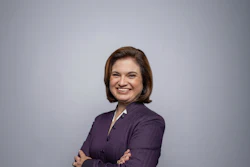
Dr. Michael A. Baston’s comprehensive understanding of what community college students want and need to be successful and his willingness to mentor and uplift others has earned him the 2026 The EDU Ledger Champions Award.
Log in to view the full article
Dr. Michael A. Baston’s comprehensive understanding of what community college students want and need to be successful and his willingness to mentor and uplift others has earned him the 2026 The EDU Ledger Champions Award.
His voice has impact because he speaks as someone who has done the work,” says Dr. Amelia Parnell, president of NASPA (Student Affairs Administrators in Higher Education). “He knows what practitioners need, what campus leaders prioritize, and what students want because he has spent time in roles that gave him firsthand knowledge. He leverages that knowledge to make a clear, consistent and compelling case for why college is such a valuable and transformative experience.”
Since July 2022, Baston has been president and CEO of Cuyahoga Community College (Tri-C®) in Cleveland, the oldest and largest public community college in Ohio. With multiple campuses in Cuyahoga County, Tri-C offers more than 1,000 credit courses in more than 200 career and technical programs.
“Michael is always thinking about what’s next,” says Dr. Helen Castellanos Brewer, president of College of the Mainland in Texas. “In higher education, it is incredibly easy to get bogged down in whatever crisis is happening today, but he is a true futurist.
Drawn to higher education
Baston started his career as a public interest attorney, representing educational corporations, religious institutions and non-profit organizations. He started to teach courses like paralegal studies for some of his academic clients and found his niche was helping prepare future generations to become social engineers.
While he had attended a private college for his undergraduate degree (Iona University), his experiences as a first-generation college student helped him see that his place would be in the community college space. He believes that institutions must provide structured support for first-generation students.
“Believing that the power of possibility happens in community colleges …we have to design an institution that puts people in the best possible position to succeed,” Baston says.
In 1999, he became dean of student development and campus life at Berkeley College in New York, managing student services, a position he held for 10 years. He then became vice president for student affairs and associate provost at LaGuardia Community College in Queens, NY. During his seven years in that position, he earned an Ed.D. in educational leadership and took part in leadership development programs. It was during his time as an Aspen fellow that he met Dr. Maria Harper-Marinick, senior fellow for the College Excellence Program of the Aspen Institute.
“The word that comes to mind is generosity; he wants to be helpful to people,” says Harper-Marinick. “The Michael Baston I met 11 years ago when he was a vice president, is the Michael Baston that is now president of a very large institution. That staying true to himself, true to what he values and how he approaches the work is a unique part of who he is as a leader.”
Presidency
Baston’s first presidency was at Rockland Community College outside of New York City, where he served for five years. Brewer was the vice president for enrollment management and student affairs. “Together, we lived through the pandemic and worked tirelessly to ensure that students were supported and their education was as uninterrupted as possible,” she says. “Working directly for him gave me a front-row seat to how he leads, and I still look up to his thoughtful, measured approach to administration.”
Brewer says the best advice Baston ever gave her was to avoid being transactional. To effect real change within an organization, its people must get to know the leader. Once Baston’s team knew who he was and what he stood for, they became more motivated to move his vision forward.
“It sounds simple, but it completely shifted how I approach the issues I face as a president,” Brewer says. “Because of his example, I try to handle complex campus situations with that same level of care, patience and high integrity. He taught me that you can’t just mandate change, you must take the time to build trust that makes change possible.”
Early in his presidency at Tri-C, Baston put in place initiatives that addressed high priority issues. He believes that retention is a primary driver of enrollment growth, and institutions must design systems that meet students where they are, especially working and part-time students.
“Much of our enrollment growth began with the efforts of moving our retention initiatives, our really thinking deeply about the specific cultures at the campuses, and specifically the programs and services that were really focused on ensuring that students could successfully complete in that semester as well as re-register for subsequent semesters,” Baston notes.
Students participating in non-degree programs — such as short-term credentials or workforce training — were considered potential students for credit programs, making the transition as seamless as possible.
In addition to those students already accessing Tri-C, significant outreach was made to the local K–12 system. Baston worked to strengthen relationships. Instead of random acts of dual enrollment, conversations began with those students so they could see the possibility of continuing at the community college after high school graduation.
“Another important strategy was to talk to the business community, talk to municipal government agencies and really seek out those municipal actors, as an example, who have employees that need upskilling and retraining,” says Baston.
Over these past four years, 24 programs were designed with business and industry that were either on the credit side or the non-degree side, so that new pathways for opportunities exist in Tri-C’s region. There was significant financial support from the government and from philanthropic partners.
Mentoring
“One of the things that helped me when I came to Tri-C was I began to contextualize the work of my predecessors,” says Baston. “Not to criticize it, not to critique it, but to contextualize it. … I didn’t have to knock all that happened before, but I had to bring us into the context of today.”
On a regular basis, Baston shares advice such as this with new presidents and individuals desirous of presidencies. He is a national Guided Pathways and Equity Transfer Initiative coach for the American Association of Community Colleges (AACC) and for the Racial Equity for Adult Credentials in Higher Education Collaborative. He is also a mentor for the rising presidents of the Aspen Fellowship, of which he was once a mentee.
“He can deliver really strong feedback and still do that with care and kindness,” says Harper-Marinick. “That humanity-centered approach that he has, not everybody has. It makes Michael a very special person that he hasn’t adopted a different persona just because he’s a college president, coach or mentor. That kind of authenticity makes him who he is.”
Dr. Larry D. Johnson Jr., president of Bronx Community College (part of the City University of New York), says Baston was instrumental in his preparation for a presidency by helping him understand the nuances of leadership qualities required. This has informed Johnson’s decisions as well as helping him understand what it means to lead as a man of color.
“Dr. Baston put together a forum for African American male presidents and we would convene periodically,” Johnson says. “We would talk about matters impacting men of color in presidencies. We would talk about resources that could help us as leaders. I served as one of the advisors. It was really helpful to bring us together to talk in a space where we could be truly our authentic selves and talk about matters that impacted us as African American presidents.”
Eye to the future
Baston has been featured on Crain’s Cleveland Business Power 150 list and he has been awarded the Blacks in Management Excellence in Leadership Award, the Who’s Who in Black Cleveland Award and the Southern Christian Leadership Conference 2023 Educator of the Year Award. There is no resting on laurels.
“We have critical milestones ahead,” states Baston. “We are moving more aggressively into the baccalaureate space. We know, for example, that the bachelor’s degree is still one of the greatest pathways to the middle class in our country. Many of my students are academically astute but economically fragile.”
With the transition from a community college to a four-year institution cost prohibitive to some of the students, Baston, together with Tri-C’s board of trustees, have decided they will keep bachelor’s degree courses at the same price point as the community college courses. Further, the courses will include embedded experiential learning, to give students a leg up in the marketplace.
Johnson says Baston has a powerful voice on the national level. “He understands the importance of ensuring that as a sector, we always center the voice of students and we understand how to use that student voice in a way that will propel them to a place of success,” says Johnson. “In this whole ecosystem of politics and things that distract us, he’s always been laser-focused on student outcomes, student success and equity.”
Brewer says on a national level Baston serves as a constant reminder of why community college educators do the work. He challenges leaders across the country to focus on high-integrity, purpose-driven leadership. “Because he is so measured and thoughtful, people really listen when he speaks,” she says. “He keeps the national conversation focused on … creating hopeful futures for our students, rather than just reacting to industry problems.”
Harper-Marinick praises Baston’s effective use of social media in sharing his work and opinions, staying connected to the places that conversations about community colleges are happening.
“He speaks about innovations at community colleges so that students who choose to go to a community college are better served,” Harper-Marinick says. “He’s very good at addressing where the gaps are, how we serve all the students and how we do that with innovations. Also, how community colleges embrace and adopt innovations to better serve students.”
David Pluviose contributed to this article.
This article originally appeared in May 7, 2026 edition of The EDU Ledger.