Higher education leaders are warning that proposed federal policy changes could create new barriers for students, particularly women and those from marginalized communities, as the Trump administration moves forward with significant funding cuts and program reclassifications.
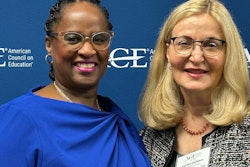
Gloria L. Blackwell, CEO of the American Association of University Women
The proposed reclassification would shift these programs from professional degrees to graduate programs, a move the Education Department says would help control student debt under the "One Big Beautiful Bill Act." Experts, however, warn the change could limit access to higher education and worsen inequities.
"More people are questioning the value of higher education, and there's growing pressure to judge colleges solely by short-term outcomes. There are also efforts underway to tighten federal student loan options and set new borrowing caps," said Gloria L. Blackwell, CEO of the American Association of University Women, who moderated the conversation. "This is not just a technical shift. It's an access question: Who can still start, stay and finish a degree without being pushed out?"
Since taking office last year, the Trump administration has implemented funding freezes and significant cuts to higher education. The reductions total an estimated $3.3 billion to $3.7 billion, factoring in funds already spent, according to a report from the Center for American Progress. The cuts have affected colleges and universities nationwide, targeting diversity, equity and inclusion programs, Pell Grants, student loan programs and federal research funding.
"Resources have always been a challenge. But now to see some spaces on campus and functions on campus that have always struggled, now being completely diminished as far as human and financial resources, is an issue," said Dr. Toby Jenkins, professor of leadership and policies at the University of South Carolina.

Dr. Kimala Price, professor and chair of women's, gender and sexuality studies at San Diego State University, agreed and added context about the challenges students face outside the classroom.
"It's usually nonacademic challenges they are dealing with," she said. "A lot of them are working jobs, 30 hours a week, 20 hours a week to support themselves, and it's not only supporting themselves—families, children, parents, health issues, and that includes mental health issues."
Price emphasized the importance of viewing students as multidimensional human beings who need support beyond the classroom, underscoring the disproportionate impact funding cuts and freezes have had on those who relied on programs that no longer exist.
Jenkins said that through values-based leadership, faculty can still offer support to students as they navigate the current climate.
"You don't need permission to love students and support them. We've been doing that for years, even when our institutions weren't supporting us," Jenkins said. "Many students still want that personal connection with advisors or mentors to help them navigate college. No policy that limits your curriculum can limit your relationships."
She advised faculty to remain committed to what truly matters in their broader lives and not be distracted by fear-driven trends.
"We're exhausted. Many of us are afraid and rightfully frustrated because so many things are coming at us," Jenkins said. "I feel like these external pressures are causing many of us to run wild, feeling angry and disappointed in an environment that really should be the epitome of possibility and hope."
Despite the challenges and concerns about the impact on students and faculty, the panelists expressed optimism and issued a call for action for those both inside and outside higher education.
Price said all is not lost.
"It is important for us to be critical lobbyists, whether we're talking about the administrators, faculty members, people in the community," she said. "It is important who you vote for at all levels—federal, state, local—who are going to support the needs of students and support DEI, because those are important issues."